SNI

SNI

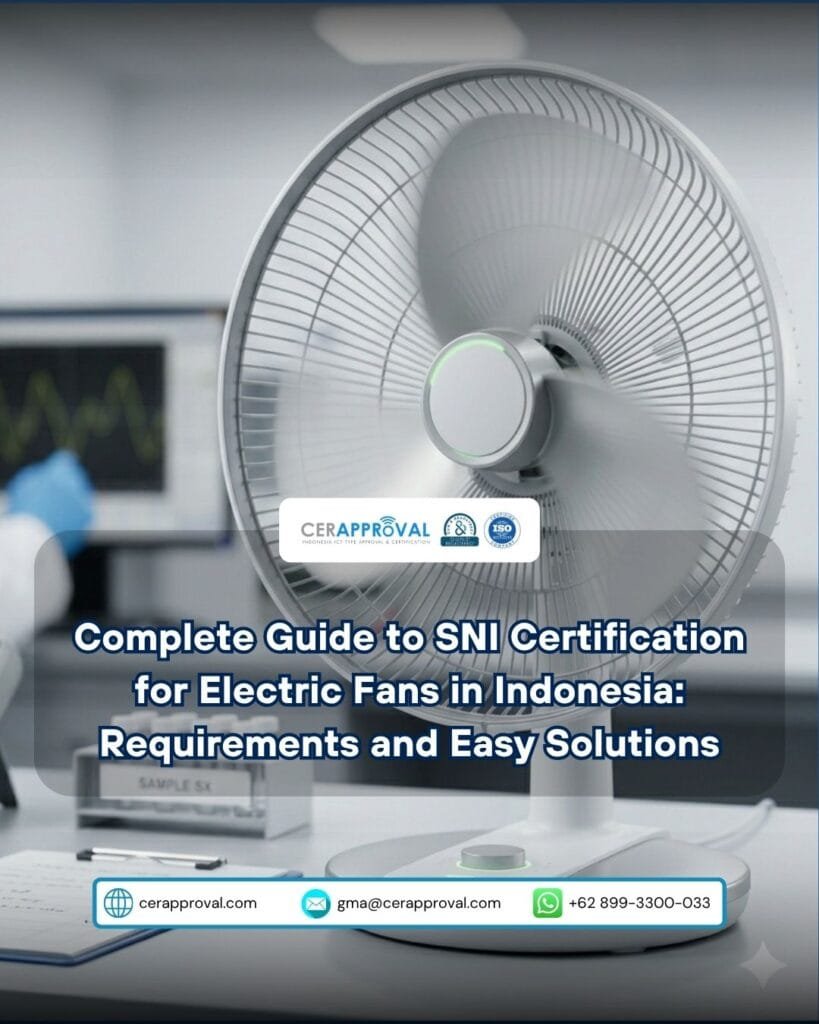
Complete Guide to SNI Certification for Electric Fans in Indonesia: Requirements and Easy Solutions

The electronics market in Indonesia, particularly for cooling appliances like electric fans, continues to experience rapid growth. However, as a business player—whether a local manufacturer or an importer—you cannot simply distribute products in the domestic market without compliance. The Indonesian government strictly enforces product safety standards to protect consumers, primarily through the SNI (Standar Nasional Indonesia) Certification. Electric fans fall under the category of Mandatory SNI (SNI Wajib). This means selling electric fans without an official SNI logo is illegal and can lead to product recalls, fines, and legal sanctions. How can you ensure your product complies with this regulation? Let’s dive into the comprehensive guide below. Why is SNI Certification for Electric Fans Mandatory? The enforcement of SNI for electric fans is based on electrical safety aspects and consumer protection. The standard used generally refers to SNI IEC 60335-2-80 (Particular requirements for fans) or related technical regulations concerning the safety of household electrical appliances. Obtaining an SNI certificate is not just a legal formality; it is a crucial business investment: Step-by-Step Procedure and Requirements for Fan SNI Certification The process of obtaining the Product Certificate for Using the SNI Mark (SPPT SNI) involves several stages that require administrative and technical precision. Here is the general overview of the procedure: 1. Administrative Document Preparation You need to prepare company legality documents, such as: 2. Quality Management System Implementation The factory producing the electric fans (whether located locally or overseas) must implement a Quality Management System (ISO 9001 or equivalent). 3. Product Sample Testing Samples of the electric fan will be drawn and tested in a testing laboratory accredited by KAN (National Accreditation Committee) and designated by the Ministry of Industry. Tests include material durability, voltage protection, and mechanical strength. 4. Factory Audit A registered Product Certification Body (LSPro) will conduct an on-site audit at the production facility to ensure the consistency of the manufacturing quality. 5. Issuance of SPPT SNI If the factory audit is successful and the product samples pass the laboratory test, the LSPro will issue the SPPT SNI certificate for your electric fan products. Streamline Your Electric Fan SNI Certification with Cerapproval We understand that dealing with bureaucracy, laboratory testing, and communicating with LSPro can consume your valuable time and energy. This is where Cerapproval comes in as your strategic partner. As an experienced certification agency, Cerapproval is ready to assist you from the initial document screening, laboratory testing arrangements, factory audit assistance, until the official SNI logo is successfully issued and ready for your products. Contact Cerapproval Today! Do not let regulatory hurdles slow down your business growth. Consult your Electric Fan SNI Certification needs with our expert team for free today. 👉 [Click Here to Consult via WhatsApp / Contact Us] Want your device certified quickly and accurately? Contact Cerapproval today for a free consultation and start your certification process! Contact Us Today:🌐 www.cerapproval.com📧 gma@cerapproval.com📱 WhatsApp: +62 899‑3300‑033
SNI

Step-by-Step SNI Certification Process in Indonesia: The Ultimate Guide

Expanding your business into Indonesia offers immense market potential. However, to legally distribute and sell your products in Southeast Asia’s largest economy, navigating the SNI certification process (Standar Nasional Indonesia) is an absolute necessity. SNI is the nation’s sole applicable standard, ensuring that products meet strict safety, health, and quality benchmarks. In this guide, Cerapproval breaks down the essential steps to get your product SNI-certified smoothly. Understanding the Importance of SNI Before diving into the process, it is vital to distinguish between the two types of SNI mandates: The Core Steps of the SNI Certification Process The pathway to securing an SPPT SNI (Certificate of Product Type Sign) involves a well-structured mechanism: 1. Product Classification and Document Preparation First, you must identify your product’s HS Code to determine the specific SNI parameters applicable. Technical specifications, manufacturing workflows, and company legal documents must be compiled meticulously. 2. Appointing a Product Certification Body (LSPro) Applications are processed through an accredited Product Certification Body (LSPro) recognized by KAN (National Accreditation Committee) and the Indonesian Ministry of Industry. 3. Quality Management System (QMS) Audit Auditors from the LSPro will conduct an on-site evaluation of your manufacturing facility. They will verify whether your production line adheres to a standardized Quality Management System (equivalent to ISO 9001). 4. Sample Testing During the factory audit, random samples of your product will be selected and sent to an accredited laboratory in Indonesia. The product undergoes rigorous testing to verify it complies with Indonesian national safety standards. 5. Evaluation and Issuance of SNI Certificate If the factory audit passes and the laboratory test results meet all requirements, the LSPro will officially grant the SPPT SNI certificate. Your product is now legally certified for the Indonesian market. Validity and Maintenance Key Insight: An SNI certificate is typically valid for 4 years. However, businesses must undergo annual surveillance audits to prove they maintain consistent production and quality standards over time. Streamline Your Indonesian Market Entry with Cerapproval Navigating foreign bureaucracy, arranging laboratory tests, and coordinating international factory audits can be overwhelming. Any minor mistake in the documentation can lead to costly delays at Indonesian customs. Cerapproval is your trusted certification partner. We manage the entire end-to-end SNI certification process for your business—from regulatory mapping and document translation to audit assistance and final certificate issuance. CTA (Call to Action): 🌐 Unlock the Indonesian Market Today! Avoid regulatory delays and accelerate your market entry. [Contact Cerapproval’s Regulatory Experts] for a comprehensive consultation on your SNI Certification journey! Want your device certified quickly and accurately? Contact Cerapproval today for a free consultation and start your certification process! Contact Us Today:🌐 www.cerapproval.com📧 gma@cerapproval.com📱 WhatsApp: +62 899‑3300‑033
SNI

Which Products Are Not Required to Have SNI Certification?

Indonesian National Standard (SNI) certification is a crucial aspect of ensuring the quality, safety, and compliance of products circulating in the Indonesian market. However, not all products are required to have SNI certification. Many business operators, particularly SMEs and importers, still wonder which products are not required to have SNI certification and how to ensure compliance with applicable regulations. Understanding which product categories require SNI certification and which do not is crucial for businesses to operate efficiently without violating government regulations. In this article, Cerapproval will provide a comprehensive overview of products not required to have SNI certification, the regulatory basis, and important tips for business owners. What Is SNI Certification? SNI, or Indonesian National Standards, are technical standards established by the National Standardization Agency (BSN). The primary objectives of implementing SNI are to improve product quality, protect consumers, and support the competitiveness of the national industry. The implementation of SNI is divided into two types: Since not all products fall under the mandatory SNI category, it is important to understand the list and characteristics of exempted products. Which Products Are Not Required to Have SNI Certification? In general, products not listed in the mandatory SNI regulations issued by the relevant ministries are not required to have SNI certification. The following are some categories of products that are generally not subject to SNI certification: 1. Handicrafts Local handicrafts such as woven items, handmade home decor, paintings, and art products are generally not required to have SNI certification. These products emphasize artistic value and creativity over industrial technical standards. However, if a handicraft contains electrical or electronic components, additional regulations may apply. 2. Certain Fashion Products and Accessories Most fashion products, such as bags, fashion shoes, hijabs, ready-to-wear clothing, and accessories, are not included in the list of mandatory SNI standards. However, certain textile products may have specific standards if they are used for industrial or safety purposes. 3. Digital Products and Software Digital products such as apps, software, cloud-based services, digital designs, and information technology services do not require SNI certification because they are not physical products covered by mandatory national standards. 4. Certain Small-Scale MSME Products Not all MSME products are required to have SNI certification. Small-scale homemade food products, for example, focus more on distribution permits such as PIRT or BPOM than on SNI certification. However, if a product evolves into mass production or falls under a specific category regulated by the government, the SNI requirement may apply. 5. Imported Products Not Included in the Mandatory SNI List Importers often assume that all imported goods require SNI certification. In fact, only products listed in the mandatory SNI regulations must meet these standards. Examples of imported products that are often required to have SNI certification include: Outside of these categories, certain imported products may enter the country without mandatory SNI certification. 6. Prototypes or Samples Products used for research, development, laboratory testing, or exhibition samples are generally exempt from SNI requirements as long as they are not sold on a mass scale. Why Is It Important to Verify a Product’s SNI Status? Even if a product is not required to have SNI certification, businesses still need to accurately verify its regulatory status. Misinterpretations can lead to: Therefore, consulting with a professional certification body or agency such as Cerapproval is an important step before marketing a product. Should Non-Mandatory SNI Products Still Be Certified? Although not required, voluntary SNI certification still offers many benefits for businesses, including: Boosting Consumer Confidence Certified products are more trusted because they are considered to meet quality and safety standards. Strengthening Product Competitiveness In the face of intense market competition, the SNI label can serve as a value-added feature that enhances brand image. Facilitating Market Expansion Some distributors, modern retailers, or government projects prefer products that have already obtained standard certification. Ensuring Quality Consistency The certification process helps companies establish a better quality control system. How to Determine Whether a Product Requires SNI Certification To determine whether a product requires SNI certification, businesses can take the following steps: Since regulations are subject to change at any time, keeping this information up to date is crucial. Cerapproval’s Role in the Product Certification Process Cerapproval serves as a trusted certification agency that helps companies fully understand regulatory requirements and the certification process. Cerapproval’s services include: With the support of a professional team, the certification process becomes faster, more efficient, and compliant with regulations. Conclusion Not all products are required to have SNI certification. Handicrafts, software, certain fashion products, and some MSME products generally fall into categories that are not subject to mandatory SNI certification. However, businesses should still verify their products’ regulatory status to avoid legal risks and business obstacles. Furthermore, voluntary certification remains a key strategy for improving quality, consumer trust, and business competitiveness. If you need assistance determining whether your product requires SNI certification or need guidance through the certification process, Cerapproval is ready to assist you with professional and reliable services. Want your device certified quickly and accurately? Contact Cerapproval today for a free consultation and start your certification process! Contact Us Today:🌐www.cerapproval.com📧 gma@cerapproval.com📱 WhatsApp: +62 899‑3300‑033

SNI

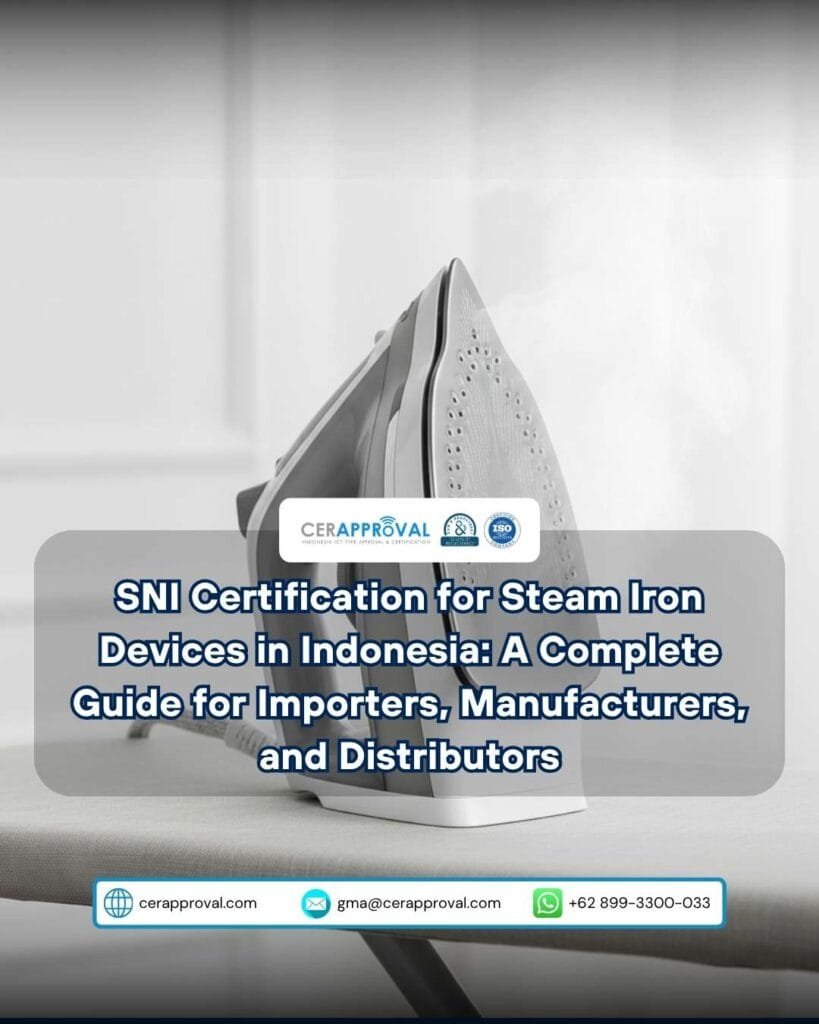
SNI Certification for Steam Iron Devices in Indonesia: A Complete Guide for Importers, Manufacturers, and Distributors

As the Indonesian market for home appliances continues to grow, steam iron devices are becoming increasingly popular among households, garment businesses, hotels, laundries, and retail consumers. Their efficiency, convenience, and improved fabric care make them a preferred solution compared to conventional ironing equipment. However, before entering the Indonesian market, businesses must understand a critical compliance requirement: SNI certification for steam iron devices in Indonesia. For importers, local manufacturers, and distributors, compliance with Standar Nasional Indonesia (SNI) is more than just a regulatory obligation. It is also a strategic business advantage that demonstrates product safety, quality assurance, and market readiness. In a competitive landscape, products that meet Indonesian standards are more likely to gain trust from retailers, distributors, e-commerce platforms, and end users. Why SNI Certification for Steam Iron Devices Matters Steam iron devices fall under the broader category of electrical household appliances, which can pose safety risks if they do not meet recognized technical standards. Common risks may include: Because of these risks, SNI certification for steam iron devices plays an essential role in ensuring that products meet applicable safety and performance requirements before being sold in Indonesia. The certification process helps verify whether the product design, electrical components, labeling, and construction are suitable for safe use. From a commercial perspective, certification also offers important benefits: Is SNI Certification Mandatory for Steam Iron Devices? Whether SNI certification is mandatory depends on several factors, including: For steam iron devices, businesses should verify whether the product falls under a regulated category of household electrical appliances. In many cases, electrical consumer products require a structured conformity assessment process that may include: Since regulatory interpretation can vary depending on product configuration, working with a specialized certification consultant like Cerapproval can significantly reduce errors and delays. SNI Certification Process for Steam Iron Devices in Indonesia Below is a general overview of the SNI certification process for steam iron devices in Indonesia: 1. Product Classification and Regulatory Review The first step is to assess the product details, such as: This step is essential to determine the correct compliance route and identify the relevant SNI standard. 2. Document Preparation Commonly required documents may include: 3. Laboratory Testing The product may undergo technical evaluation and testing based on safety and performance criteria, including: 4. Factory Audit (If Required) Depending on the certification scheme, a factory inspection or manufacturing audit may be required. This step helps confirm that the tested sample accurately represents the mass-produced product and that quality consistency is maintained. 5. Evaluation and Certificate Issuance If the product passes all required assessments, the certification body can proceed with final evaluation and issue the relevant certificate. Once approved, the product can move forward for compliant market entry in Indonesia. Common Challenges in Steam Iron SNI Certification Many businesses encounter avoidable issues during the certification process, such as: These challenges can delay product launches and increase operational costs. That is why many businesses choose Cerapproval as their certification partner. Why Choose Cerapproval for SNI Certification? As a trusted certification agency, Cerapproval supports businesses with: With a structured and practical approach, Cerapproval helps clients minimize risk, avoid unnecessary revisions, and accelerate time-to-market for regulated products. Conclusion SNI certification for steam iron devices in Indonesia is a critical step for businesses that want to sell safe, compliant, and competitive electrical products in the Indonesian market. It supports both legal compliance and long-term commercial credibility. If you are preparing to import, distribute, or manufacture steam iron devices for Indonesia, Cerapproval is ready to assist you from the initial review stage through final certification. Contact Cerapproval today to simplify your SNI certification for steam iron devices in Indonesia with expert guidance, faster coordination, and professional support. Want your device certified quickly and accurately? Contact Cerapproval today for a free consultation and start your certification process! Contact Us Today:🌐www.cerapproval.com📧 gma@cerapproval.com📱 WhatsApp: +62 899‑3300‑033

SNI

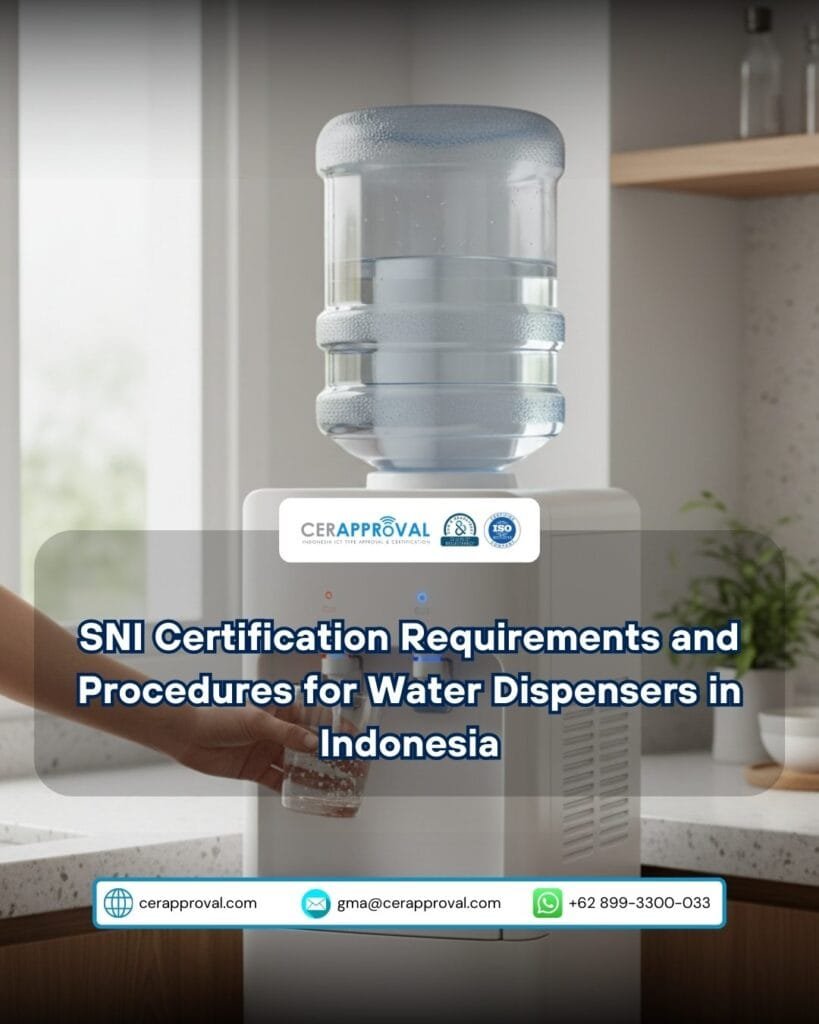
SNI Certification Requirements and Procedures for Water Dispensers in Indonesia

Importance of SNI Certification for Dispenser Products In Indonesia, the Indonesian National Standard (SNI) certification serves as an official guarantee that a product meets the required safety, quality, and performance standards established by the government. For household electrical appliances such as water dispensers, SNI certification plays a crucial role because these products are directly related to consumer safety and product reliability. Obtaining SNI certification helps manufacturers and importers ensure that their products comply with national regulations while also enhancing consumer trust and market competitiveness. Products bearing the SNI mark are generally perceived as safer and more reliable by Indonesian consumers. Regulatory Framework for Dispenser Certification Water dispensers fall under the category of household electrical appliances, which must comply with electrical safety standards. These standards are typically aligned with international benchmarks such as those from the International Electrotechnical Commission (IEC). During the certification process, several aspects of the dispenser are evaluated, including: These evaluations ensure that the dispenser can be used safely in everyday household environments. Requirements for SNI Certification of Dispensers To obtain SNI certification, manufacturers or importers must prepare several administrative and technical requirements. 1. Company Legal Documents Applicants must provide official company documents such as: 2. Technical Product Documentation Technical documentation is required to describe the product in detail, including: 3. Product Samples Manufacturers or importers must provide product samples for testing in an accredited laboratory. 4. Quality Management System In certain certification schemes, companies must demonstrate that they maintain a consistent production quality control system. SNI Certification Process for Water Dispensers The SNI certification process typically includes the following steps: 1. Application Submission The applicant submits a certification request to an accredited Product Certification Body (LSPro) along with the required documents. 2. Document Review The certification body reviews all submitted administrative and technical documents. 3. Product Testing The dispenser samples are tested in a laboratory accredited by the National Accreditation Committee (KAN) to verify compliance with SNI standards. 4. Factory Audit (If Applicable) Depending on the certification scheme, auditors may conduct a factory inspection to ensure the manufacturer maintains a consistent quality management system. 5. Issuance of SNI Certificate If all requirements are met and the product passes the laboratory tests, the SNI certificate will be issued, allowing the company to place the SNI mark on the dispenser products. Benefits of SNI Certification Obtaining SNI certification offers several advantages for manufacturers and importers: Certified products are also more likely to be accepted by large retailers and e-commerce platforms. Conclusion SNI certification for water dispensers is an essential step for companies that want to legally distribute their products in Indonesia. By fulfilling all certification requirements and passing the required testing procedures, businesses can ensure that their products meet national safety and quality standards. Working with a professional certification consultancy can significantly simplify the certification process and ensure compliance with all regulatory requirements. Want your device certified quickly and accurately? Contact Cerapproval today for a free consultation and start your certification process! Contact Us Today:🌐 www.cerapproval.com 📧 gma@cerapproval.com📱 WhatsApp: +62 899‑3300‑033

SNI

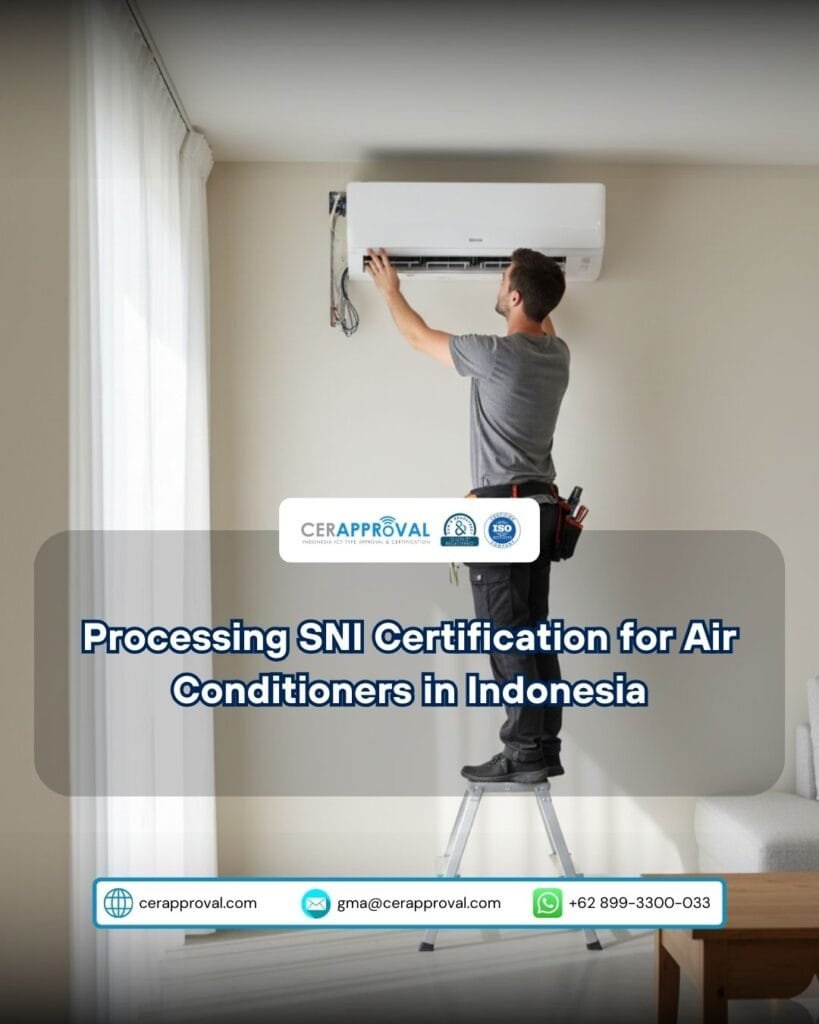
Processing SNI Certification for Air Conditioners in Indonesia

The demand for air conditioning systems in Indonesia continues to grow rapidly as residential, commercial, and industrial sectors expand. With the rising need for indoor comfort, air conditioners have become essential appliances in homes, offices, shopping centers, and public facilities. However, before air conditioning products can be legally distributed in Indonesia, manufacturers and importers must ensure that their products comply with national safety and quality standards. One of the most important regulatory requirements is SNI Certification (Standar Nasional Indonesia). SNI certification ensures that air conditioners meet strict safety, performance, and energy efficiency standards established by the Indonesian government. For businesses entering the Indonesian market, obtaining SNI certification is not only a legal obligation but also a strategic advantage. As a professional certification agency, Cerapproval assists local and international companies in navigating the certification process efficiently. Why SNI Certification for Air Conditioners Matters Obtaining SNI certification provides several benefits for manufacturers and importers. Regulatory ComplianceCertain electrical appliances, including air conditioners, must comply with mandatory SNI standards before being sold in Indonesia. Consumer Safety and TrustProducts with the SNI mark have passed quality and safety testing, giving consumers confidence in the product. Market CompetitivenessCertified products gain stronger credibility and are more competitive in the Indonesian market. Energy Efficiency StandardsAir conditioners must comply with energy efficiency testing, helping reduce electricity consumption and supporting sustainability goals. Requirements for SNI Certification To apply for SNI certification for air conditioners, companies typically need to prepare the following documentation: These documents will be reviewed by certification bodies before the product testing stage begins. SNI Certification Process The certification process usually involves several key steps. 1. Certification Application Manufacturers or importers submit an application through a certification body or certification consultancy such as Cerapproval. 2. Document Review Technical and administrative documents are reviewed to verify compliance. 3. Product Testing Air conditioner units are tested in accredited laboratories according to the relevant SNI standards. 4. Factory Audit In some cases, inspectors conduct factory audits to verify production quality control systems. 5. Issuance of SNI Certificate Once the product meets all requirements, the SNI certificate is issued and the product can carry the official SNI mark. Challenges in the Certification Process Companies often face several challenges when applying for SNI certification: Working with a professional certification agency can significantly simplify this process. How Cerapproval Can Help Cerapproval provides comprehensive certification support services, including: With extensive experience in product certification services, Cerapproval helps companies streamline the certification process and avoid costly delays. Conclusion SNI certification for air conditioners is an essential requirement for entering the Indonesian market. It ensures compliance with safety, quality, and energy efficiency standards while strengthening consumer trust. By partnering with Cerapproval, companies can navigate the certification process smoothly and ensure their products meet Indonesian regulatory requirements. CTA Ready to obtain SNI Certification for your air conditioner products in Indonesia? Contact Cerapproval today for professional certification assistance. Want your device certified quickly and accurately? Contact Cerapproval today for a free consultation and start your certification process! Contact Us Today:🌐www.cerapproval.com📧 gma@cerapproval.com📱 WhatsApp: +62 899‑3300‑033

SNI

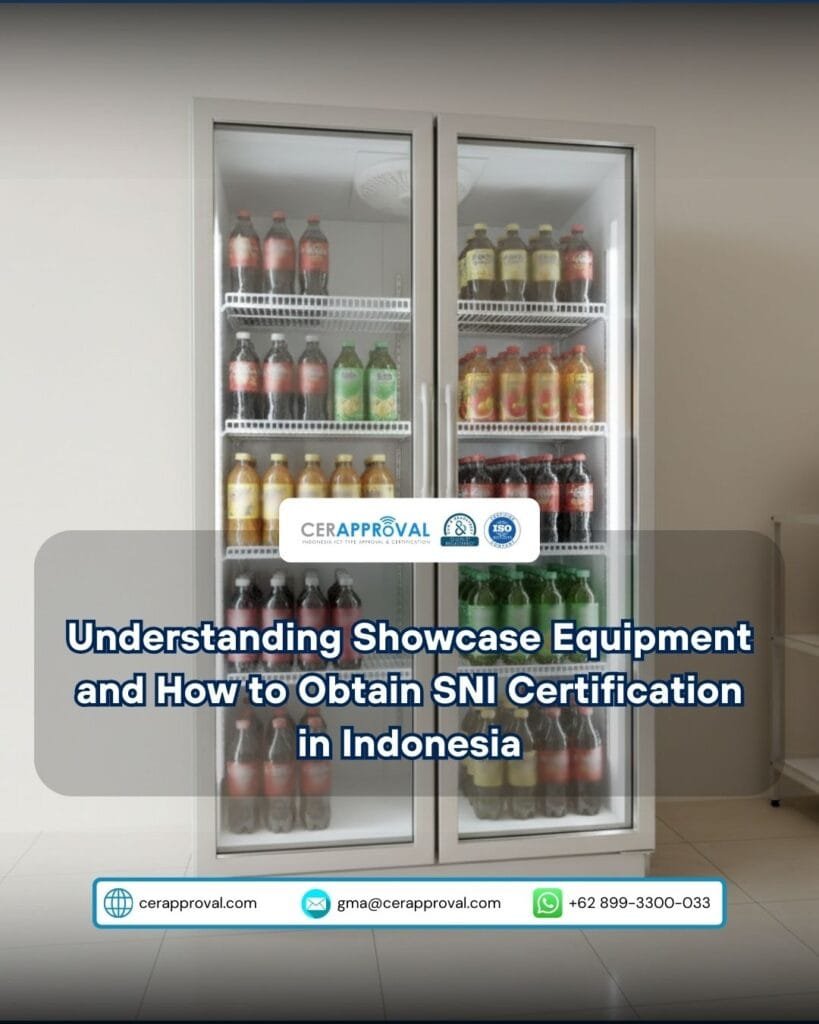
Understanding Showcase Equipment and How to Obtain SNI Certification in Indonesia

What Is Showcase Equipment? Showcase equipment refers to transparent refrigeration units designed to display and preserve products such as beverages, dairy items, frozen food, and other perishable goods. These units are commonly used in supermarkets, convenience stores, restaurants, hotels, and retail outlets. Beyond visual merchandising, showcase refrigerators play a critical role in maintaining product freshness, food safety, and temperature stability. Because they involve electrical and refrigeration systems, showcase equipment must comply with safety and quality standards before being distributed in Indonesia. One of the key compliance requirements is SNI Certification (Standard National Indonesia). Is SNI Certification Mandatory for Showcase? In Indonesia, certain electrical and electronic products are subject to mandatory SNI certification under regulations issued by the Ministry of Industry and the National Standardization Agency (BSN). Commercial refrigeration equipment, including certain types of showcase units, may fall under mandatory SNI categories depending on their specifications and classification. SNI certification ensures that products: Non-compliant products may face import restrictions, market withdrawal, or administrative sanctions. SNI Certification Process for Showcase Equipment The general certification process includes: 1. Product Classification Identify the HS Code and applicable technical regulations for the specific showcase model. 2. Laboratory Testing The product must undergo testing at an accredited laboratory recognized by KAN (National Accreditation Committee). Testing covers electrical safety, energy consumption, cooling performance, and structural durability. 3. Factory Audit A factory inspection is conducted to evaluate the manufacturer’s quality management system and production consistency. 4. Issuance of SPPT-SNI Upon successful testing and audit, the Product Certification Body (LSPro) issues the SPPT-SNI certificate. 5. Surveillance Audit Periodic surveillance ensures continuous compliance with SNI standards. Required Documents Common documentation includes: Requirements may vary depending on the certification scheme. Timeline and Certification Cost The SNI certification process typically takes 3-4 months, depending on documentation readiness and laboratory scheduling. Certification costs vary based on: Consulting a professional certification agency such as Cerapproval ensures accurate cost estimation and smoother processing. Why Choose Cerapproval? Cerapproval provides end-to-end certification support, including: Our experienced team ensures faster approval, minimized risk, and full regulatory compliance in Indonesia. CTA (Call To Action) Need SNI Certification for your showcase equipment?Contact Cerapproval today for a FREE consultation and receive a clear certification roadmap for your product. Want your device certified quickly and accurately? Contact Cerapproval today for a free consultation and start your certification process! Contact Us Today:🌐www.cerapproval.com📧 gma@cerapproval.com📱 WhatsApp: +62 899‑3300‑033

SNI

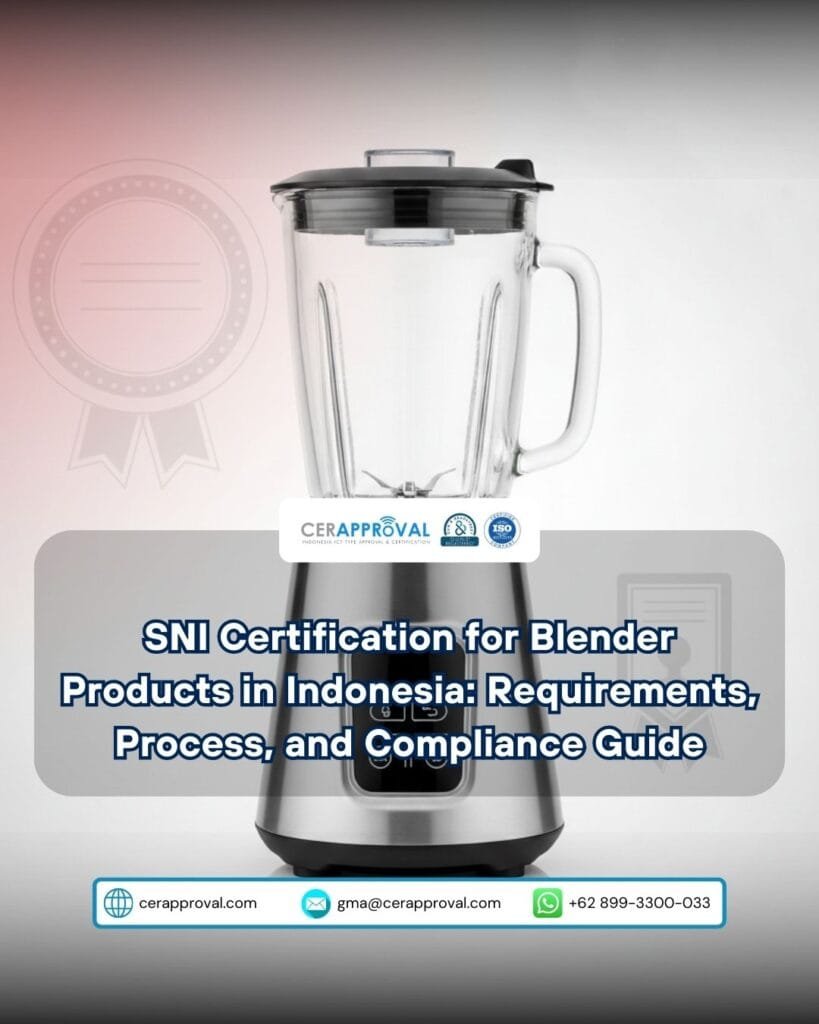
SNI Certification for Blender Products in Indonesia: Requirements, Process, and Compliance Guide

Blenders are widely used household electrical appliances in Indonesia, both for domestic use and commercial food businesses. Due to their electrical components and direct consumer usage, blender products must comply with Indonesia’s safety and quality standards before being legally distributed in the market. In Indonesia, certain electrical appliances including blenders are subject to mandatory SNI certification. Understanding the regulatory requirements is essential for manufacturers, importers, and brand owners who intend to sell blender products in the Indonesian market. What Is SNI Certification? SNI (Standar Nasional Indonesia) is the national standard established by Badan Standardisasi Nasional (BSN). It ensures that products meet specific requirements related to safety, quality, performance, and consumer protection. For electrical household appliances such as blenders, SNI certification generally focuses on: Many SNI standards for electrical appliances align with international IEC standards to ensure global compatibility. Is SNI Certification Mandatory for Blenders? Yes. Blenders fall under the category of low-voltage household electrical appliances. If classified under mandatory SNI regulations, both locally manufactured and imported blender products must obtain SNI certification before entering the Indonesian market. Without SNI certification, products may: Requirements for SNI Certification of Blender Products To apply for SNI certification, companies must prepare both administrative and technical documents.1. Administrative Documents 2. Technical Documents SNI Certification Process for Blender Products The certification process typically involves the following steps: 1. Application to an Accredited Certification Body The manufacturer or importer submits an application to a Product Certification Body (LSPro) accredited by Indonesia’s national accreditation system. 2. Product Testing Samples of the blender are tested in an accredited laboratory to verify compliance with applicable SNI standards. Testing usually covers: 3. Factory Audit (If Required) For manufacturers, a factory audit may be conducted to assess production consistency and quality management systems. 4. Evaluation and Certification Issuance If all requirements are met, the SNI certificate is issued, and the product is authorized to bear the SNI mark. How Long Does the SNI Process Take? The certification process generally takes between: 3-4 months, depending on: Working with an experienced certification consultant can significantly streamline the process and reduce potential delays. Special Considerations for Imported Blenders Imported blender products must also comply with SNI regulations. Importers are responsible for ensuring certification is completed before distribution. Non-compliant products may be held at customs and cannot legally enter the market. Risks of Non-Compliance Selling blender products without SNI certification can result in: Compliance is not only a legal obligation but also a strategic move to protect brand credibility and consumer trust. Professional Assistance for SNI Certification Managing regulatory requirements can be complex, particularly for overseas manufacturers or new importers. Professional certification agencies can assist with: Proper guidance ensures the process remains efficient, structured, and fully compliant with Indonesian regulations. Conclusion SNI certification for blender products in Indonesia is a critical regulatory requirement designed to ensure safety, product quality, and consumer protection. Manufacturers and importers must understand the certification process, documentation requirements, and compliance risks before entering the Indonesian market. By securing SNI certification, businesses not only fulfill legal obligations but also strengthen their market credibility and competitiveness. Want your device certified quickly and accurately? Contact Cerapproval today for a free consultation and start your certification process! Contact Us Today:🌐 www.cerapproval.com📧 gma@cerapproval.com📱 WhatsApp: +62 899‑3300‑033
SNI

Stages of SNI Certification Process in Indonesia and Its Requirements

SNI Certification (Indonesian National Standard) is an official assurance that a product, service, or system complies with quality, safety, and security standards established by the Indonesian government. For businesses, SNI certification is not only a regulatory obligation for certain products but also a strategic tool to enhance market credibility and competitiveness. With Cerapproval as a professional certification agency, the SNI certification process becomes more efficient, structured, and compliant with regulations. What Is SNI Certification? SNI Certification is a conformity assessment process conducted by an accredited Product Certification Body (LSPro) to ensure that products meet applicable SNI standards. Some products are subject to mandatory SNI requirements, while others apply SNI voluntarily to increase product value and consumer trust. Stages of the SNI Certification Process in Indonesia The general stages of obtaining SNI Certification include: Requirements for SNI Certification Common requirements include: Benefits of SNI Certification SNI Certification provides several advantages: CTA (Call to Action) Looking for a reliable SNI certification partner? Contact Cerapproval today for professional guidance from application to certification issuance. Want your device certified quickly and accurately? Contact Cerapproval today for a free consultation and start your certification process! Contact Us Today:🌐www.cerapproval.com📧 gma@cerapproval.com📱 WhatsApp: +62 899‑3300‑033

SNI

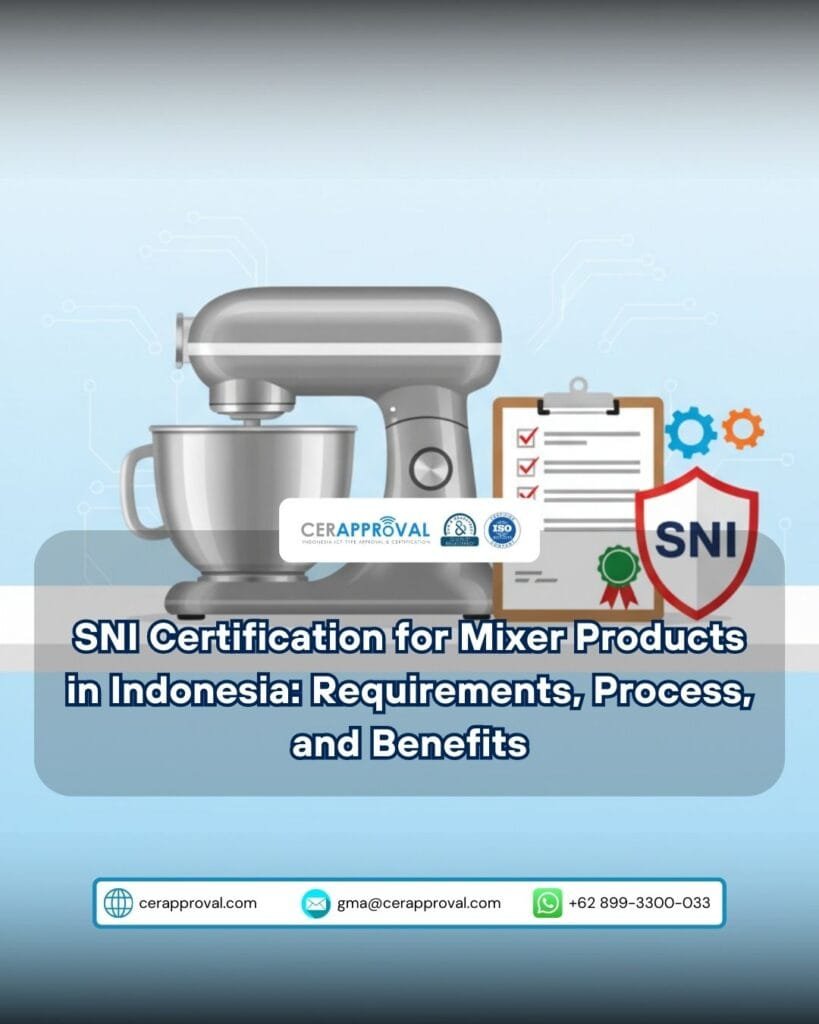
SNI Certification for Mixer Products in Indonesia: Requirements, Process, and Benefits

Mixer products are widely used in Indonesia, ranging from household kitchens to commercial food and beverage industries. Due to their electrical nature and direct interaction with users, mixer products must comply with Indonesian National Standards (SNI) to ensure safety, quality, and performance. This article provides a complete guide to SNI Certification for Mixer Products in Indonesia, including regulations, requirements, certification steps, and the benefits for manufacturers and importers. What Is SNI Certification for Mixer Products? SNI Certification is a conformity assessment process ensuring that products meet standards set by the National Standardization Agency of Indonesia (BSN). For mixer products, SNI covers: Certified products are authorized to use the SNI mark, which is mandatory for certain categories. Regulations Governing Mixer Products in Indonesia Mixer products fall under household electrical appliances, regulated by: Both locally manufactured and imported mixers must comply with applicable SNI regulations before entering the Indonesian market. Requirements for SNI Certification of Mixer Products To apply for SNI Certification, companies must prepare: Cerapproval ensures all requirements are aligned with current regulations. Benefits of SNI Certification for Mixer Products Obtaining SNI Certification provides several advantages: Why Choose Cerapproval for SNI Certification? Cerapproval is a trusted certification agency offering: CTA (Call To Action) Need SNI Certification for your mixer products in Indonesia? 👉 Contact Cerapproval today for a FREE consultation! Want your device certified quickly and accurately? Contact Cerapproval today for a free consultation and start your certification process! Contact Us Today:🌐 www.cerapproval.com📧 gma@cerapproval.com📱 WhatsApp: +62 899‑3300‑033
Flag Counter
Scroll to Top