DJIDCertification

K3L

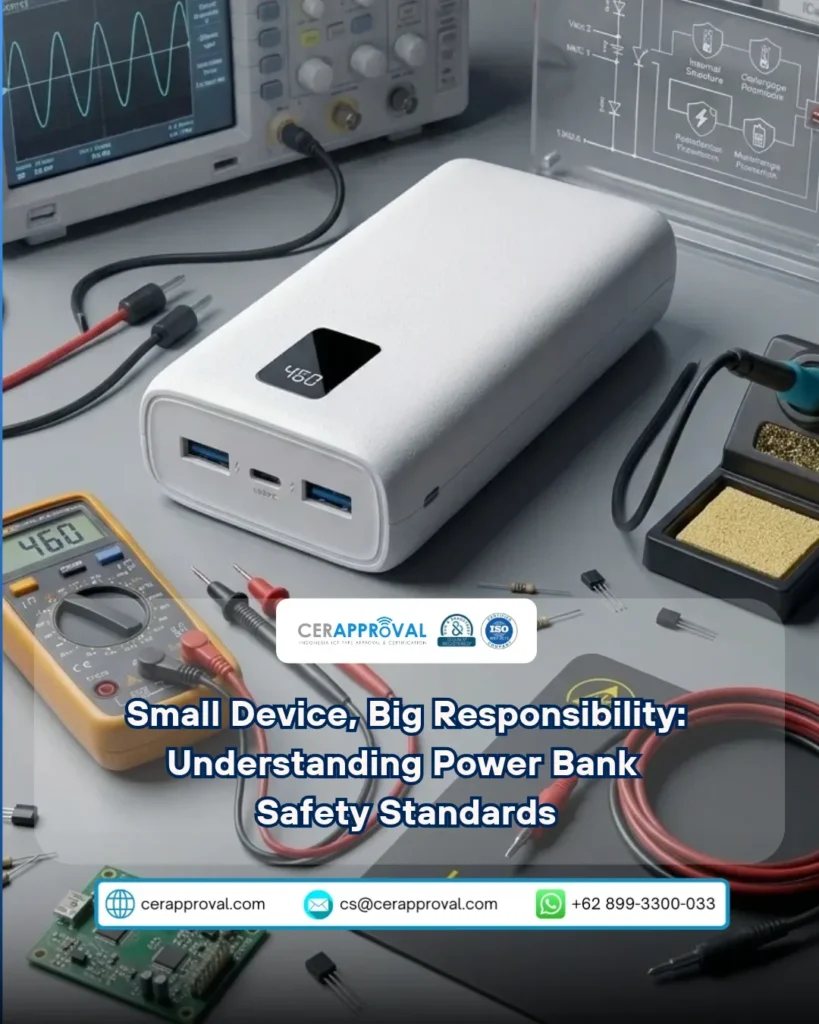
Small Device, Big Responsibility: Understanding Power Bank Safety Standards

Power Bank Safety Standards in Indonesia are important for manufacturers, importers, and distributors. Power banks are now common accessories for smartphones, tablets, and other electronic devices. They are small, easy to carry, and useful when people need extra power. However, power banks contain rechargeable lithium batteries. Poor battery quality can cause overheating, swelling, or even fire. Therefore, manufacturers must pay attention to battery safety and product quality. In addition, businesses must understand Indonesian product regulations before selling power banks. These rules may involve SNI standards, K3L registration, and Postel/DJID certification. This article explains power bank safety, proper usage, and the certification process in Indonesia. 1. What Are Power Banks and How Do They Work? A power bank is a portable device that stores electricity. It uses a rechargeable battery to charge other electronic devices. Most modern power banks use lithium-ion or lithium-polymer batteries. These batteries store a large amount of energy in a small space. A typical power bank has five main parts: Battery cells: Store electrical energy. Battery Management System (BMS): Controls battery charging and discharging. Input port: Receives power when users charge the power bank. Output port: Sends power to smartphones and other devices. Protection circuit: Helps prevent electrical problems. Moreover, some power banks offer fast charging and wireless charging. Others include LED displays and smart charging features. These features make power banks more useful. However, wireless functions may also create additional certification requirements. 2. Why Are Power Bank Safety Standards in Indonesia Important? Lithium batteries need proper protection. Without it, a battery may become unsafe during charging or normal use. One major risk is thermal runaway. This happens when a battery produces too much heat. As a result, the temperature can rise quickly and damage the battery. Several factors can cause battery problems: Using an unsuitable charger. Charging a damaged battery. Using poor-quality battery cells. Dropping or crushing the power bank. Leaving the device in a hot place. Using damaged charging cables. Therefore, manufacturers should follow suitable battery safety standards. These standards help improve product quality and reduce safety risks. In addition, proper safety testing helps businesses build customer trust. It also supports product compliance before market entry. 3. SNI Requirements for Power Bank Safety Standards in Indonesia Indonesia has a specific national standard for lithium-ion power banks. One important standard is SNI 8785:2019 – Lithium-Ion Power Bank: Part 1, General Safety Requirements. This standard covers general safety requirements for portable lithium-ion power banks. BSN lists this standard as active. Another related standard is SNI IEC 62133-2:2017. It covers safety requirements for portable rechargeable lithium battery cells and batteries. These standards provide technical guidance for battery safety and product quality. However, businesses must understand the difference between an active SNI standard and mandatory SNI certification. An active standard does not automatically mean that every power bank needs mandatory SNI certification. Therefore, importers and manufacturers should check the latest mandatory SNI regulations before selling their products in Indonesia. 4. How to Use a Power Bank Safely Proper use can reduce battery risks. It can also help power banks last longer. Here are six important safety tips. 1. Use the Right Charger First, use a charger and cable that match the manufacturer’s instructions. Avoid poor-quality charging accessories. 2. Avoid High Temperatures Next, keep your power bank away from direct sunlight. Do not leave it inside a hot car because high temperatures can damage the battery. 3. Check the Battery Condition Also, inspect your power bank regularly. Stop using it if you notice swelling, leakage, unusual smells, or physical damage. 4. Avoid Overloading Make sure your devices follow the power bank’s input and output limits. In addition, avoid using damaged cables. 5. Keep It Away from Water Water can damage electrical parts. Therefore, keep your power bank in a dry place. 6. Follow the User Manual Finally, read the product instructions before charging or storing the device. Follow the recommended safety steps from the manufacturer. These simple habits can help prevent battery accidents. 5. Does a Power Bank Need K3L Registration in Indonesia? K3L stands for Keamanan, Keselamatan, Kesehatan, dan Lingkungan Hidup. The Indonesian Ministry of Trade regulates K3L goods registration under Minister of Trade Regulation No. 33 of 2025. This regulation covers 42 categories of goods. These include 20 chemical-related categories and 22 electrical and electronic categories. However, not every electronic product automatically needs K3L registration. The requirement applies to products listed in Appendix III of the regulation. Both local and imported products must follow the rule when their product categories are included. Therefore, businesses must check their exact product type and classification before applying. For products covered by the regulation, the application may require: Self Declaration of Conformity. Laboratory test reports. Product brand and model information. Physical product photographs. Distributor and importer information. Furthermore, businesses submit new K3L registration applications through OSS. The Ministry of Trade provides an online registration process for eligible products. K3L registration is different from SNI and DJID certification. Each process has a separate purpose. 6. Does a Power Bank Need Postel/DJID Certification? Not all power banks need Postel/DJID certification. The requirement depends on the product’s technical features. For example, a standard wired power bank uses USB ports to transfer electricity. It does not automatically need DJID certification simply because it contains a battery. However, a wireless power bank uses Wireless Power Transmission (WPT) technology. This technology transfers electrical energy without a physical cable. Indonesia regulates WPT through Ministerial Decision No. 46 of 2025. This regulation sets radio frequency and technical requirements for wireless power transmission devices. In addition, the official DJID database contains examples of certified wireless power banks. This confirms that certain wireless power bank products require telecommunications equipment certification. sertifikasi.postel.go.id Therefore, businesses should check the wireless functions and technical specifications before importing these products. 7. How to Obtain Postel/DJID Certification for Wireless Power Banks Businesses that import or distribute regulated wireless power banks must follow the applicable DJID certification process. The general process includes six steps. Step 1: Identify the […]
SDPPI

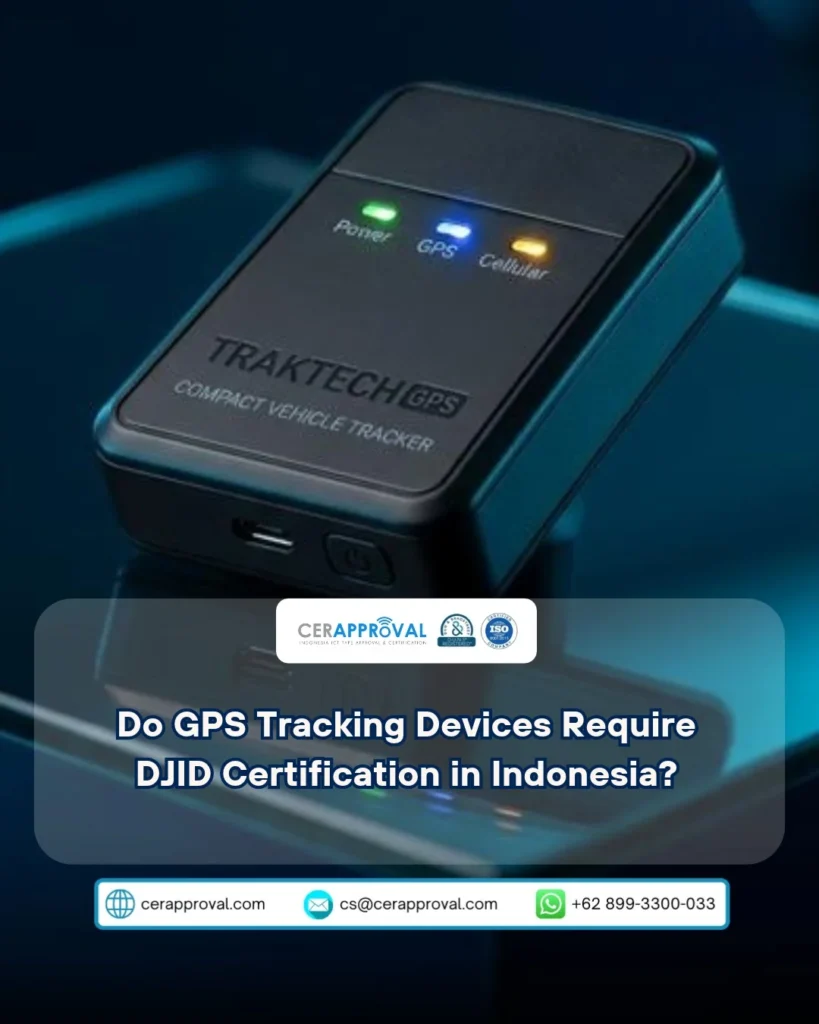
Do GPS Tracking Devices Require DJID Certification in Indonesia?

DJID Certification for GPS Tracking Devices is an important requirement to check before importing or selling GPS trackers in Indonesia. These devices help users track vehicles, goods, people, and other assets. However, not all GPS tracking devices use the same technology. Some devices only receive signals from satellites. Others also send data through cellular networks, Wi-Fi, or Bluetooth. These extra features can affect the certification requirements. This guide explains how GPS trackers work, when they may need DJID certification, and how to apply for certification in Indonesia. DJID Certification for GPS Tracking Devices: Is It Required? The need for DJID certification depends on the device’s communication features. A basic GPS receiver only receives signals from navigation satellites. It does not send radio signals to other devices. Therefore, GPS reception alone does not automatically mean that the product needs DJID certification. However, many GPS trackers can also send location data to a server or mobile application. They may use cellular networks, Wi-Fi, or Bluetooth to share this data. These wireless features may fall under Indonesia’s telecommunications equipment certification rules. Importers and brand owners should check the product’s technical details before they bring it into Indonesia. In short, DJID Certification for GPS Tracking Devices depends on the product’s radio functions, supported bands, and applicable technical standards. What Is a GPS Tracking Device and How Does It Work? A GPS tracking device uses signals from satellites to find its location. It then processes the signals and calculates its position. Many trackers also have a communication module. This module sends location data to a server or mobile application. For example, a vehicle tracker can help a company monitor its fleet. A logistics company can use a tracker to check the location of goods during delivery. In addition, users can view location updates through a mobile application. A typical GPS tracking device may include: A GPS or GNSS receiver. A cellular, Wi-Fi, or Bluetooth module. An antenna. A processor and memory. A power source or battery. Software for location tracking. Each wireless feature may have different technical requirements. Therefore, the applicant should review the full product specifications. Documents Required for DJID Certification Applicants should prepare the technical and administrative documents before starting the process. The exact list may depend on the product type and certification requirements. Common documents include: Product specifications and technical data sheet. User manual in English or Indonesian, as required. Product photos showing the device and its labels. Brand and model information. Radio frequency and communication details. Test reports from an accepted laboratory, where applicable. Company and importer documents. Authorization letter from the manufacturer or brand owner, if required. Complete documents can help reduce delays during the review stage. How to Apply for DJID Certification in Indonesia The applicant can follow these general steps: Check the product features. Identify all wireless functions, frequency bands, and communication modules. Prepare the documents. Collect the technical and company documents. Review the requirements. Check the applicable DJID rules and technical standards. Arrange product testing. Complete the required tests at an accepted laboratory. Submit the application. Upload the required information and documents through the applicable certification system. Follow the evaluation. Respond to any questions or requests for additional documents. Receive the certificate. The authority issues the certificate after the product meets the applicable requirements. The actual process may vary based on the product’s technology and the rules that apply. Why Is DJID Certification Important? DJID certification helps confirm that telecommunications equipment meets the applicable technical requirements in Indonesia. It also helps businesses prepare their products for import and sale. More importantly, an early review can help importers avoid delays caused by missing documents or unsuitable test reports. Therefore, businesses should check DJID Certification for GPS Tracking Devices before they plan product shipments or market launches. Get Assistance from Cerapproval Checking certification requirements can be difficult, especially when a GPS tracker has several wireless functions. Cerapproval can help businesses review product documents, identify the applicable requirements, coordinate testing, and manage the certification process. Contact Cerapproval for support with your product certification needs. Contact Us Today: Website: https://www.cerapproval.com/ Email: gma@cerapproval.com WhatsApp: +62 899-3300-033 Conclusion GPS tracking devices do not all have the same certification requirements. A basic GPS receiver only receives satellite signals. However, a tracker with cellular, Wi-Fi, or Bluetooth features may need DJID certification. For this reason, businesses should review the product’s technical features before importing or selling it in Indonesia. Proper preparation can make the certification process clearer and help prevent delays.

SDPPI

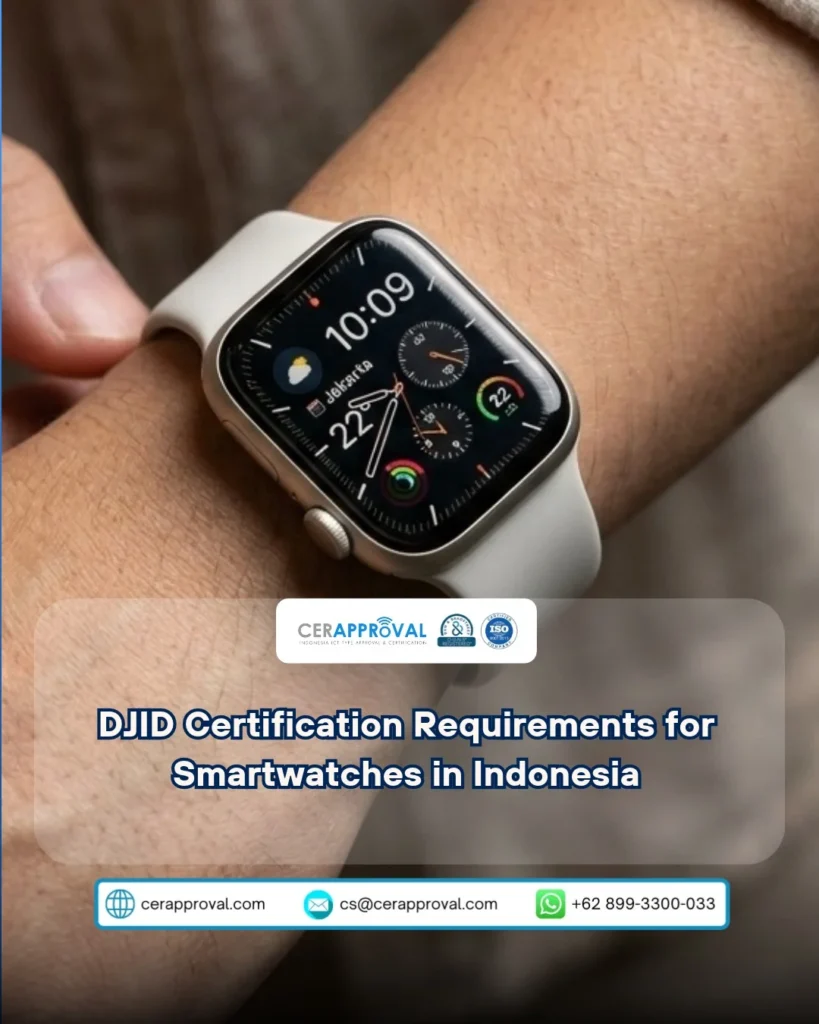
DJID Certification Requirements for Smartwatches in Indonesia

Smartwatches are now popular in Indonesia. People use them to track exercise, check health data, read messages, and make calls. However, some models use wireless features that may require official approval before they can be sold in Indonesia. DJID Certification Requirements for Smartwatches are important for importers, manufacturers, and technology brands. DJID is the Directorate General of Digital Infrastructure under Indonesia’s Ministry of Communication and Digital Affairs. It checks whether covered communication devices meet the required technical standards. Therefore, businesses should review these requirements before importing or selling smartwatches. This article explains how smartwatches work, which features may require certification, and how to apply for Postel certification in Indonesia. What Is DJID Certification for Smartwatches? DJID certification is an approval process for communication devices covered by Indonesian regulations. It helps ensure that these products meet the required technical standards. Many smartwatches use Bluetooth, Wi-Fi, or cellular networks. These features allow users to connect their watches to phones, access online services, and make calls. As a result, some smartwatch models may need DJID certification. However, requirements can differ between models. For example, a basic smartwatch may have different requirements from a model with cellular service. For this reason, businesses should check each product’s technical details before applying. For official information, visit the DJID certification portal. How Do You Use a Smartwatch? A smartwatch is a wearable device that offers useful features for daily activities. Most models connect to a smartphone. Some can also access the internet directly. Common smartwatch functions include: Track daily activity: Count steps and record exercise. Check messages: Read alerts from phones and apps. Connect to a phone: Pair devices through Bluetooth. Check health data: View heart rate and sleep records, if available. Make calls: Use calling features on supported models. Use navigation: Check locations through GPS, if available. First, charge the smartwatch and turn it on. Next, install the required phone app. Then, follow the instructions to connect both devices. After pairing, you can set the watch face, manage alerts, and review activity records. Always follow the user manual. Also, remember that smartwatch health features do not replace advice from a health professional. DJID Certification Requirements for Smartwatches in Indonesia The certification requirements depend on the product’s features and the regulations that apply. For example, Bluetooth, Wi-Fi, and cellular functions use radio signals to send and receive data. Therefore, these features may require a technical review under Indonesian regulations. However, having a wireless feature does not automatically confirm the final certification requirement. The product type and technical specifications must also be reviewed. Before importing a smartwatch, check: Brand and model. Wireless communication features. Radio frequency specifications. Technical test reports. Applicable Indonesian standards. This review helps businesses identify the correct approval process. It can also reduce delays during import and distribution. What Documents Are Needed for Postel Certification? Good preparation makes the certification process easier. First, collect the product information from the manufacturer. Next, check that every document shows the correct brand and model. Depending on the application, required documents may include: Business Identification Number (NIB). Access to the OSS system. Test report from an accepted laboratory. Smartwatch technical specifications. Declaration of Conformity, where required. Product photos showing the brand and model. Other supporting company or product documents. Some models may need additional technical documents. Therefore, check the latest requirements before applying. Read the official DJID certification requirements for further details. How to Apply for DJID Certification in Indonesia The Postel certification process involves several steps: Check the smartwatch: Confirm the brand, model, manufacturer, and wireless features. Review the regulations: Identify the technical standards and approval rules that apply. Prepare the documents: Collect product details, photos, test reports, and company documents. Arrange product testing: If required, use an accepted testing laboratory. Submit the application: Follow the official process through the relevant OSS and DJID systems. Follow up: Monitor the application status and provide additional documents if requested. Proper preparation can help make each step easier to manage. For more details, visit the official DJID certification procedure. Why Choose Cerapproval for Smartwatch Certification? Indonesian product regulations can be challenging, especially for overseas manufacturers and local importers. In addition, different smartwatch models may have different technical requirements. Cerapproval helps businesses understand product certification requirements in Indonesia. Our services include: Product regulation review. Document checking and preparation. Product testing coordination. Certification process assistance. Application monitoring and follow-up. With the right support, businesses can plan the certification process more clearly. Learn more about Cerapproval certification services. Conclusion DJID certification requirements for smartwatches depend on the product’s features and applicable regulations. Some models use wireless functions that may require Postel certification. Therefore, businesses should review product specifications before importing or selling smartwatches in Indonesia. Early document preparation can also help reduce delays and make the approval process easier. Call to Action Planning to Import or Sell Smartwatches in Indonesia? Contact Cerapproval for assistance with DJID certification requirements. Our team can review your product, check the required documents, and guide you through the certification process. Contact Cerapproval Today Website: https://cerapproval.com/ Email: gma@cerapproval.com WhatsApp: +62 899-3300-033

K3L

K3L Requirements for Imported Household and Consumer Products in Indonesia

K3L Requirements for Imported Products in Indonesia are important for businesses that import and sell household goods. Before selling these products, importers must check the rules that apply to them. They must also review product safety, health, and environmental risks. K3L stands for Keamanan, Keselamatan, Kesehatan, dan Lingkungan Hidup. These rules help protect consumers from unsafe products. They also support the safe use of goods in the Indonesian market. However, not every imported product needs K3L registration. The rules apply to certain goods listed by the Ministry of Trade. Therefore, importers should check their product type before starting the process. What Are K3L Requirements for Imported Products in Indonesia? K3L registration is a government process for certain goods sold in Indonesia. It helps the government track products and protect consumers from possible harm. The rules cover selected products that may pose safety, health, or environmental risks. Under Minister of Trade Regulation No. 33 of 2025, the list includes 42 types of goods. These goods fall into two main groups: 20 types of goods that contain hazardous chemicals. 22 types of electrical and electronic goods. The rules apply to both local products and imported products listed in the regulation. Therefore, importers must check the product list before selling their goods. For example, some household appliances and consumer electronics may fall under the K3L rules. However, the product category and technical details still matter. You can read more on the Ministry of Trade website. Which Imported Products Need K3L Registration? Not all household and consumer products need K3L registration. The requirement depends on the official product list. Importers should check these details first: Product name and category. Brand and model. Main materials and chemical content. Product use and function. Whether the product appears in the current K3L list. For example, certain electrical appliances may fall under the rules. Some goods that contain hazardous chemicals may also need registration. Do not assume that every electronic product needs K3L registration. Instead, compare the product with the list in the current regulation. This check can help you avoid delays and extra costs. What Documents Are Needed for K3L Registration? Importers should prepare the required documents before submitting an application. Clear and complete files can help prevent errors. The general requirements include: Self-declaration of conformity: A statement that the product meets the applicable requirements. Laboratory test report: The report must show the product brand and type or model. It must also be issued no more than six months before the application date. Product photos: Provide clear photos of the actual product. Distribution list: Include the names and addresses of distributors, agents, wholesalers, and retailers. Some product types may need extra documents. For example, certain textile goods may need proof of K3L registration for their raw materials and other supporting statements. Therefore, check the latest document list before applying. Also, make sure the brand and model match across all files. How to Apply for K3L Registration in Indonesia The application process depends on the type of request. New registration and changes to an existing registration use different online systems. Follow these steps to prepare your application. Step 1: Check the Product List First, compare your product with the goods listed under the current K3L regulation. Check its category, brand, model, and intended use. Step 2: Prepare the Required Documents Next, collect the self-declaration, test report, product photos, and distribution details. Check the issue date of the test report as well. Step 3: Submit a New Registration Through OSS For a new K3L registration, submit the application online through the OSS system. Make sure the information is correct before you submit the form. Incomplete files may delay the review. Step 4: Follow Up on the Application After submission, monitor the application status. Respond if the reviewing team asks for more information or corrections. Step 5: Complete the Registration Process According to the Ministry of Trade, a complete and correct application can receive its registration within a maximum of three working days. For changes or re-registration, use the INATRADE system. Both systems use the OSS single sign-on access. Step 6: Display the K3L Registration Number After approval, place the K3L registration number on the product or its packaging. The number must be easy to see and read. It must also stay clear and not wear off easily. For official guidance, visit the Ministry of Trade K3L information page. How Should Imported Household Products Be Used? Product safety does not end with registration. Consumers also need clear instructions to use each product safely. For electrical appliances, users should follow the product manual. They should check the voltage and power rating before use. They should also keep the product away from water when the manual requires it. For chemical products, users should read the label first. They must follow the safety warnings and storage instructions. They should also keep hazardous products away from children. Importers should review product labels before selling their goods. Where required, labels should use clear Bahasa Indonesia. They should explain safe use and show the right warnings. Clear instructions help consumers understand how to use a product. They can also reduce the risk of accidents. Does Your Product Need Postel/DJID Certification? K3L registration and Postel/DJID certification are different. Each process has its own rules and purpose. K3L registration applies to goods listed under the Ministry of Trade rules. Postel/DJID certification applies to telecommunications equipment covered by the relevant regulations. For example, some products with Bluetooth, Wi-Fi, or cellular features may need DJID certification. However, the exact requirement depends on the product and its technical features. A product may need more than one type of approval. Therefore, importers should check each rule that applies to their goods. A K3L registration number does not replace Postel/DJID certification. Likewise, DJID certification does not replace K3L registration. To learn more, visit the official DJID certification portal. Why Choose Cerapproval for K3L Registration? Import rules can be difficult to follow. Some products may also need more than one approval. As a […]

TKDN

TKDN Requirements for Tablets in Indonesia: Complete Guide

TKDN requirements for tablets in Indonesia are important for businesses that sell tablets. Before selling a tablet, check the rules. You should also check Postel/DJID certification. Both are important, but they serve different purposes. So, check both before you enter the Indonesian market. What Are TKDN Requirements for Tablets in Indonesia? TKDN stands for Tingkat Komponen Dalam Negeri. It measures local content in a product under Indonesian rules. For example, the review may cover local parts, labor, and production. However, the rules can vary by product. Not every tablet needs TKDN certification. So, check the latest rules before you apply. You can find more details on the Ministry of Industry website. What Documents Do You Need? First, check your tablet model and manufacturer. Then, find out which documents you need. You may need these documents: Product details and parts lists. Details of the production process. Cost records and supplier data. Company licenses and other proof. Next, check each file. Make sure all details match. This can help prevent errors. It may also help you avoid delays. Does Your Tablet Need Postel/DJID Certification? Many tablets use Wi-Fi, Bluetooth, or mobile networks. Because of these features, some tablets may need Postel/DJID certification in Indonesia. However, the rules depend on the device. So, check the rules for your tablet model before you apply. TKDN and Postel/DJID certification are different. TKDN covers local content. In contrast, Postel/DJID certification covers telecom equipment. Meeting one rule does not mean you meet the other. For more details, visit the official DJID certification portal. How to Apply for Postel/DJID Certification Follow these steps to prepare your application. Identify your tablet. Check its brand, model, maker, and wireless features. Check the rules. Find out which rules apply to your device. Prepare your files. Gather the required product details and company records. Check testing needs. Find out if lab tests or test reports are needed. Submit your application. Follow the official process once your files are ready. Complete the review. Reply to any request for more information. These steps can help you prepare. Also, check your files before you apply. This may help reduce errors and delays. Why Choose Cerapproval? Product rules can be hard to follow. Missing files can also slow down the process. Cerapproval helps businesses understand product certification in Indonesia. We can guide you through document checks and the next steps. As a result, you can better understand what your product needs. You can also prepare your application with more confidence. Learn more about our Cerapproval certification services. Conclusion TKDN requirements for tablets in Indonesia depend on the product and the rules that apply. Some tablets may also need Postel/DJID certification because they use wireless features. So, check your product before you import or sell it in Indonesia. If you need help, Cerapproval can guide you through the process. Call to Action Want your device certified quickly and accurately? Contact Cerapproval today for a free consultation. We can help you understand the rules and plan your next steps. For more details, visit the official DJID certification portal. Contact Us Today: Website: www.cerapproval.comEmail: gma@cerapproval.comWhatsApp: +62 899-3300-033

SDPPI / DJID

Why Do Radio Frequency Devices Need POSTEL Certification and How Is It Processed?

The rapid proliferation of wireless technology is everywhere. Radio Frequency (RF) devices are now an integral part of modern life. Devices range from Wi-Fi routers and Bluetooth headsets to smart home hubs. Industrial IoT gateways and agricultural drones also rely on radio waves. Consequently, POSTEL Certification is managed by the Directorate General of Digital Infrastructure (DJID under Komdigi). Obtaining this certificate is mandated for international manufacturers and importers. Why Radio Frequency Devices Need POSTEL Certification and Process Guide Obtaining POSTEL certification is far more than a routine requirement. In fact, vital technical and regulatory purposes are served by this process: Preventing Harmful Frequency Interference: The radio spectrum is recognized as a finite national resource. Therefore, strict operation within authorized frequency bands is ensured by mandatory type approval. Disruption to critical networks like aviation navigation is completely prevented. Ensuring Health & Product Safety: Electromagnetic radiation levels (SAR) are thoroughly verified during certification testing. Furthermore, electrical safety standards are strictly checked. Compliance with safety thresholds is maintained to protect consumers. Indonesian Customs Clearance Compliance: Imported wireless electronics are strictly inspected by Indonesian Customs (Bea Cukai). As a result, non-certified shipments are immediately detained or slated for re-export. Market Legality and Consumer Trust: Severe legal penalties can be caused by unapproved RF equipment. Goods may be confiscated by authorities. Long-term brand damage is also risked. Step-by-Step Process to Obtain POSTEL / DJID Certification Navigating the POSTEL certification workflow involves key steps: Document Dossier Preparation: First, technical datasheets and RF block diagrams are compiled. Photos, ISO 9001 certificates, and the local NIB are also required. RF and EMC Testing: Next, testing is conducted at accredited local laboratories. Alternatively, valid international test reports are accepted under the MRA framework. Online Portal Application: Subsequently, the complete technical dossier is submitted via the official DJID online portal. Government Fee Payment (SP2): Then, non-tax state revenue (PNBP) fees are settled upon receiving the official SP2 invoice. Certificate Issuance & Mandatory Labeling: Finally, the certificate is officially issued. The DJID approval mark and QR code must be affixed onto all units and packaging. In summary, an SDPPI (Postel) certificate must be obtained for RF devices. Order in the radio spectrum is maintained. Consumers and national networks are kept protected. In contrast, significant risks are created if devices are left uncertified: Signal Interference (Radio Interference): Non-standard radio waves may be emitted by non-certified devices. Consequently, interference is caused to aviation radar, emergency communications, and cellular signals. Potential Electrical and Health Hazards: EMC and electrical safety are tested during certification. If devices are uncertified, risks of overheating are greatly increased. Dangerous radiation may also be emitted. Legal Violations & Criminal Penalties: Indonesia’s Telecommunications Law is directly violated by uncertified equipment. As a result, administrative sanctions and heavy fines are imposed on violators. Immediate confiscation of goods is also executed. Seizure by Customs / Import Rejection: Imported devices without certificates are detained at customs. Local market distribution is strictly prohibited. Streamline Your Regulatory Compliance with Cerapproval Navigating local testing rules and government filings requires expert guidance. Fortunately, end-to-end type approval services are offered by Cerapproval. Fast, compliant, and hassle-free market entry is achieved for your devices. Need assistance securing POSTEL / DJID certification for your products? Smooth market entry can be guaranteed for your wireless electronics! Partner with Cerapproval today for expert type approval services. Contact Cerapproval today for a free consultation and start your certification process! Get a free consultation for your certification. Download the complete guide to the KOMDIGI certification process. Schedule a meeting with the Cerapproval expert team today! Contact Us Today: 🌐 www.cerapproval.com 📧 gma@cerapproval.com 📱 WhatsApp: +62 899‑3300‑033

SNI

SNI Certification for Electric Fans & Step-by-Step SDPPI/DJID Approval Guide

SNI certification for electric fans is mandatory for makers and importers entering the Indonesian market. Furthermore, selling home appliances in Indonesia offers big business opportunities. However, companies must follow clear safety and trade rules. First, basic cooling fans must meet mandatory Standar Nasional Indonesia (SNI) rules. In addition, smart models with Wi-Fi or Bluetooth need Directorate General of Digital Infrastructure (DJID/SDPPI) approval. 1. Mandatory SNI Certification for Electric Fans Basically, the Ministry of Industry sets safety rules for home devices. Therefore, SNI certification for electric fans protects users from electric shocks, broken parts, and fire risks. Key Safety Standards SNI IEC 60335-2-80 / SNI 7609: Safety rules for table, wall, stand, ceiling, and duct fans. SNI 7859 / SNI IEC 60335-1: General electric safety rules for home appliances. SNI IEC 60879: Energy efficiency standards and official SKEM labels. Step-by-Step SNI Process First, send your application to an accredited Product Certification Body (LSPro). Next, auditors inspect your factory Quality Management System (ISO 9001). Then, lab experts test sample units for safety and durability. Finally, get your SPPT SNI certificate and register a Product Number (NPB) with the Ministry of Trade. 2. How to Get SDPPI / DJID Approval for Smart Fans For example, if your fan uses Wi-Fi, Bluetooth, or remotes, it acts as a radio device. For this reason, you must get DJID Type Approval along with your SNI certification for electric fans. Step-by-Step SDPPI / DJID Process First, collect tech specs, RF charts, ISO 9001 papers, and local business IDs (NIB). Next, run tests at an approved Indonesian lab or send valid test reports. After that, upload all lab reports and legal forms to the official DJID web portal. Subsequently, pay the non-tax fee (PNBP) right after you get your SP2 bill. Finally, download your official certificate and print the DJID logo and QR code on product boxes. Streamline Compliance with Cerapproval Indeed, handling dual approvals can feel hard and slow. However, Cerapproval offers simple end-to-end help. As a result, we manage lab tests, factory checks, and government filings for top brands. Specifically, do you need fast help with your SNI certification for electric fans or SDPPI approval? Contact Cerapproval today for a free advice session to start your market entry! Website: www.cerapproval.com Email: gma@cerapproval.com WhatsApp: +62 899-3300-033

Flag Counter
Scroll to Top