Author name: Adit

SNI

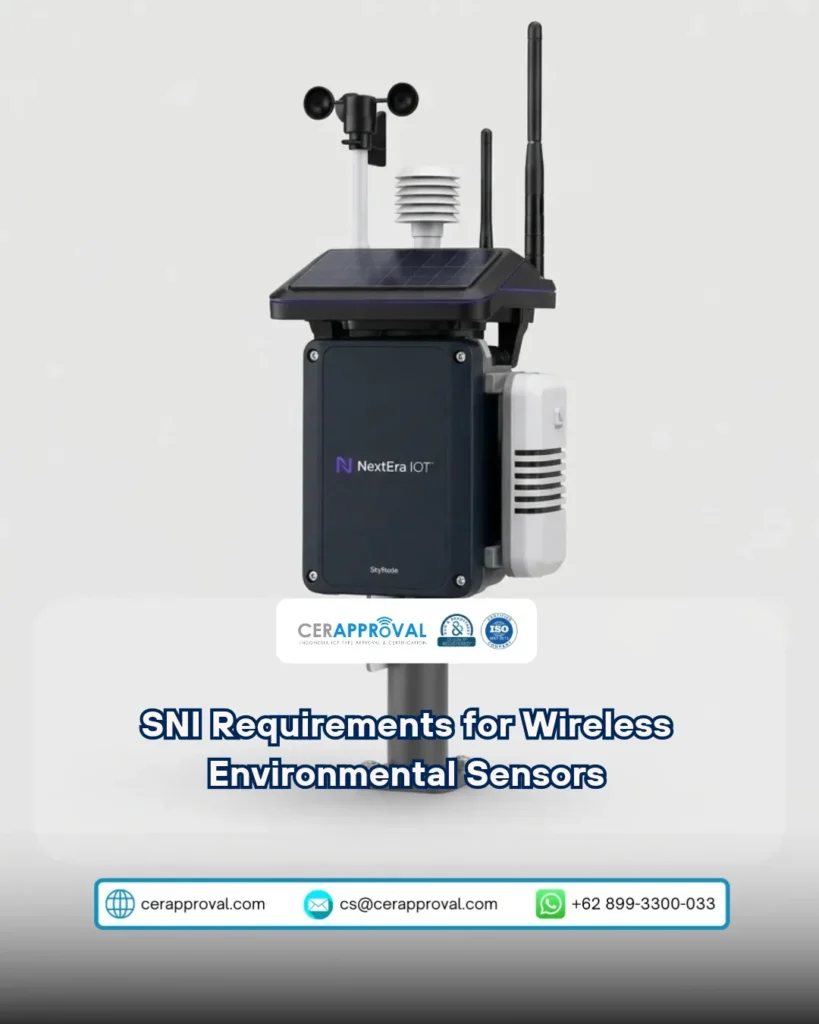
SNI Requirements for Wireless Environmental Sensors

SNI Requirements for Wireless Environmental Sensors are important for businesses that want to import or sell these products in Indonesia. These sensors measure temperature, humidity, air quality, and other conditions. They also send data through wireless networks. Therefore, companies should check the rules before selling their products. However, SNI and DJID certification have different purposes. SNI covers product standards. DJID covers radio and telecommunications rules. Depending on the product, businesses may need to meet both requirements. What Are Wireless Environmental Sensors? Wireless environmental sensors measure conditions around them. They collect data and send it to other devices without cables. For example, these sensors can measure: Temperature and humidity. Air quality and pollution. Carbon dioxide (CO2). Dust and small particles. Gas levels in factories. Conditions in farms and greenhouses. Many sensors use Wi-Fi, Bluetooth, Zigbee, or LoRa. These technologies send data to computers, mobile phones, or cloud platforms. As a result, users can monitor changes from different locations. These devices are also useful in factories, buildings, farms, and other work areas. SNI Requirements for Wireless Environmental Sensors in Indonesia SNI stands for Standar Nasional Indonesia, or Indonesian National Standard. It sets rules for product quality, safety, and performance. However, not every product needs SNI certification. Some standards are voluntary. Others are mandatory under government rules. First, companies must identify the correct product category. Then, they should check whether a mandatory SNI rule applies. If a mandatory rule exists, the product must meet that standard. The rules may cover safety, materials, performance, and testing. In addition, companies may choose voluntary SNI certification. This can help build customer trust and show that a product meets a recognized standard. Companies can learn more about SNI certification in Indonesia before preparing their documents. How to Use Wireless Environmental Sensors Wireless environmental sensors are easy to use. However, users must install them correctly to get good results. First, place the sensor in a suitable location. Choose an area that reflects the conditions you want to measure. For example, an air quality sensor needs enough airflow. Next, connect the device to a power source. Some sensors use batteries. Others need an external power supply. Then, connect the sensor to a wireless network. Depending on the model, it may use Wi-Fi, Bluetooth, Zigbee, or LoRa. After setup, the sensor starts collecting data. It sends the results to an app, computer, or cloud platform. Finally, users can check the readings and track changes over time. Regular care also helps keep the sensor accurate. For this reason, users should follow the manufacturer’s instructions. Do Wireless Environmental Sensors Need DJID Certification? Wireless environmental sensors may need DJID certification if they use radio features covered by Indonesian rules. For example, devices with Wi-Fi, Bluetooth, Zigbee, or other radio technologies may require technical evaluation. The rules depend on the radio technology, frequency, power, and antenna. Therefore, companies should check their product specifications before import or sale. SNI and DJID certification are not the same. SNI covers product standards. Meanwhile, DJID covers radio and telecommunications rules. As a result, one certificate does not replace the other. Companies should check the rules for each product. Read more about DJID certification requirements before starting the process. Documents Required for DJID Certification Companies should prepare the required documents before applying. These may include: Product technical specifications. User manual and datasheet. Product photos showing the brand and model. Radio frequency and power details. Test report from an accepted laboratory. Declaration of Conformity, if required. Company and applicant documents. In addition, all documents should show the same product information. The brand and model must match the product label, technical files, and test report. This is important because errors may delay the application. Therefore, companies should check every document before submission. For a full checklist, read our guide to documents required for DJID certification. How to Apply for DJID Certification The certification process usually follows five steps. 1. Product Review First, check the model, radio technology, frequency, and power. This helps identify the correct technical rules. 2. Document Preparation Next, prepare the technical and company documents. Review them carefully to avoid errors. 3. Product Testing Then, arrange testing at an accepted laboratory. The test checks whether the device meets the required standards. 4. Application Submission After testing, submit the test report and supporting documents through the required certification system. 5. Evaluation and Certificate Issuance Finally, DJID reviews the application. If the product meets the rules, the certificate can be issued. Companies should check the latest process before applying. This helps them prepare the right documents and avoid delays. Official Regulations and Technical References Companies should also review official rules before starting certification. For example, Indonesia’s technical standards for Short Range Devices cover several radio technologies. These include Bluetooth, NFC, RFID, and other short-range devices. Read Ministerial Decree No. 260 of 2024 on Short Range Device technical standards. In addition, Ministerial Regulation No. 2 of 2023 covers radio use under class licensing. Therefore, companies should check the correct rules for each wireless technology before applying. Get Help with SNI and DJID Certification Understanding SNI Requirements for Wireless Environmental Sensors can help businesses prepare before entering the Indonesian market. However, each product may have different rules. Therefore, companies should check the requirements before importing, distributing, or selling their devices. Cerapproval helps businesses review regulations, prepare documents, coordinate laboratory testing, and manage product certification. Our team can help you understand the rules and guide you through the process. Contact Cerapproval today for a free consultation. Let our team help you identify the certification requirements for your wireless environmental sensors in Indonesia. Call To Action Need Help with SNI or DJID Certification? Cerapproval helps businesses understand Indonesian product regulations, prepare certification documents, coordinate product testing, and manage certification applications. Contact our team today for a free consultation. Website: www.cerapproval.comEmail: gma@cerapproval.comWhatsApp: +62 899-3300-033


SNI

SNI Certification for Retro Vinyl Speakers in Indonesia: Requirements and DJID Process

Retro vinyl speakers combine classic style with modern sound features. They let users enjoy vinyl records and digital music through one device. Some models also support Bluetooth, USB, and AUX connections. However, businesses must check Indonesian rules before importing or selling these products. SNI Certification for Retro Vinyl Speakers is an important requirement to review. Importers and manufacturers must also check DJID certification if their products use Bluetooth or other wireless features. This guide explains how to use retro vinyl speakers and how to check their SNI and DJID requirements. It also covers the steps businesses must take before selling these products in Indonesia. What Are Retro Vinyl Speakers? Retro vinyl speakers are audio devices with a classic look and modern sound features. Most models combine a record player with built-in speakers. Depending on the model, they may have: Vinyl playback: Plays music from vinyl records. Bluetooth: Connects to phones, tablets, and laptops. USB: Plays supported digital music files. AUX: Connects to other audio devices with a cable. Built-in speakers: Plays music without extra speakers. However, each model may have a different design. Therefore, businesses should check the product details before starting the certification process. How to Use a Retro Vinyl Speaker Using a retro vinyl speaker is simple. First, place the device on a flat surface. Then, connect the power cable or charge its battery. For Vinyl Playback Place a compatible record on the turntable. Next, lift the tonearm and carefully place the stylus on the record. After that, adjust the volume to a comfortable level. For Bluetooth Playback Turn on Bluetooth mode. Then, open the Bluetooth settings on your phone or laptop. Select the speaker from the device list. Once connected, you can play music wirelessly. For USB and AUX Playback You can also use the USB or AUX input. Simply connect your device and select the correct input mode. Finally, turn off the speaker after use. Keep it away from water, dust, and high heat. These simple steps help protect the device and maintain its performance. SNI Certification for Retro Vinyl Speakers: Requirements Indonesia applies mandatory SNI rules to certain audio and video products. One key regulation is Minister of Industry Regulation No. 75 of 2024. This regulation covers standalone active speakers that are not part of another product. It also sets SNI IEC 62368-1:2014 as the required safety standard for products within its scope. However, a retro vinyl speaker with a built-in turntable may have a different product classification. Therefore, businesses should not assume that every model has the same SNI requirements. Before applying, check the following details: Product type and main function. Brand and model. Technical specifications. Power supply and electrical features. Applicable HS code. Whether the product falls under the mandatory SNI list. For this reason, a product review is an important first step. It helps businesses choose the correct certification route and avoid extra costs. You can also learn about Cerapproval’s SNI Certification Services in Indonesia for support with product checks, document preparation, and testing. How to Process SNI Certification for Retro Vinyl Speakers Once the product falls within the mandatory SNI scope, the business can start the certification process. Step 1: Product Identification First, identify the product type, brand, model, and technical details. Then, check the HS code and the relevant SNI rules. Step 2: Document Preparation Next, prepare the company and product documents. These may include business licenses, product photos, a datasheet, a user manual, and factory details. Step 3: Application to an LSPro After that, submit the application to an authorized Product Certification Body (LSPro). The LSPro will review the documents and confirm the required certification scheme. Step 4: Factory Audit and Product Sampling Next, the LSPro may arrange a factory audit and product sampling. The audit checks the factory’s quality system and production controls. Step 5: Product Testing Then, the selected samples go to a laboratory for testing. The laboratory checks the product against the relevant safety standard, including SNI IEC 62368-1:2014 when applicable. Step 6: Evaluation and Certificate Issuance Finally, the LSPro reviews the audit results and test report. If the product meets all requirements, the certification body can issue the SNI certificate. After that, the business must follow the applicable SNI marking and surveillance rules. DJID (Postel) Certification for Bluetooth Retro Vinyl Speakers SNI and DJID certification have different purposes. SNI focuses on product safety. Meanwhile, DJID covers technical rules for telecommunications and radio equipment. For example, some retro vinyl speakers have Bluetooth or Wi-Fi features. These functions use radio signals to connect with other devices. Therefore, businesses must check whether DJID certification applies. The requirements depend on the wireless function, frequency, and product specifications. Bluetooth devices must be checked against the relevant Short Range Device (SRD) rules. The DJID certification process generally includes these steps: Step 1: Technical Review First, check the Bluetooth or Wi-Fi features. Record the operating frequency and wireless module details. Step 2: Document Preparation Next, prepare the datasheet, user manual, product photos, company documents, and available test reports. Step 3: Testing or Document Evaluation Then, check the correct testing route. Some eligible products may use accepted international test reports. Other products may need local laboratory testing. Step 4: Application Submission After the technical documents are ready, submit the application through the applicable DJID certification system. Step 5: Technical Evaluation The authority reviews the application and supporting documents. If any information is missing, the applicant may need to provide more details. Step 6: Certificate Issuance Finally, the DJID certificate can be issued once the product meets the applicable requirements. For more information, visit Cerapproval’s DJID Certification Services. The team can help review technical documents, coordinate testing, and manage the application process. Why Choose Cerapproval for SNI and DJID Certification? Preparing product documents can be difficult for importers and manufacturers. Incorrect product data or missing documents can delay an application. Therefore, Cerapproval helps businesses manage their certification needs in Indonesia. Our services include: Product identification and regulatory checks. SNI and DJID document preparation. […]

SDPPI

Do Wireless Sensors Used in Factories Need DJID Certification?

Many factories use wireless sensors to check their machines. These devices check heat, pressure, moisture, and vibration. They also send data by radio. But companies must check Indonesian rules before they import or sell these products. Some wireless sensors need approval from DJID, once called SDPPI. DJID Certification for Wireless Sensors depends on the device’s radio features and related rules. So, companies should check each model before import. For professional assistance, visit our DJID Certification Services page. What Is DJID Certification for Wireless Sensors? DJID certification shows that a device follows Indonesian tech rules. It checks the device’s radio features. It also helps prevent radio signal problems. Wireless sensors may use: Wi-Fi Bluetooth Zigbee LoRa and LPWAN 4G and 5G networks These tools let sensors send data to machines and control systems. But not all factory sensors need this certificate. Wired sensors without radio features may follow different rules. So, companies must check each product before they apply. Learn more about our DJID Certification Services. Which Wireless Sensors May Need DJID Certification? Factories use many kinds of wireless sensors. Each type has its own job. 1. Temperature Sensors These devices measure heat in machines and storage areas. Wireless models send data to a system that tracks heat. 2. Pressure Sensors These sensors measure gas or liquid pressure. Some models send d ata to control systems by radio. 3. Vibration Sensors These devices check machine movement. They help workers spot unusual movement and find machine problems early. 4. Humidity Sensors These sensors measure moisture in factories and warehouses. Wireless models send readings to connected systems. 5. Industrial IoT Sensors Industrial Internet of Things (IoT) sensors connect machines to digital systems. They may use Wi-Fi, Bluetooth, Zigbee, or LoRa. DJID Certification for Wireless Sensors depends on the device’s radio features and design. So, companies must check each device, not just its name. Documents Required for DJID Certification Companies should prepare all needed files before they apply. Under Ministerial Regulation No. 3 of 2024, companies may need: Product test report Technical specifications Declaration of Conformity Color photos showing the brand and model TKDN documents, if applicable Personal use statement, when required DJID may also ask for more files. Also, all files must show the right brand and model. The brand and model must match the product label and test report. Good file checks can help prevent delays. For more information, visit the Cerapproval FAQ page. Technical Requirements for Wireless Sensors Before applying for DJID Certification for Wireless Sensors, check its radio features. First, find out which wireless technology the device uses. Wi-Fi, Bluetooth, Zigbee, and LoRa can use different radio bands. Next, check the operating frequency and transmitter power. Also, check the antenna and radio module. Some sensors have a radio module inside. Others use a separate wireless part. Therefore, each design may need a different review. Finally, check that product details match the files. This helps prevent errors during the review. How to Apply for DJID Certification in Indonesia There are five main steps to apply. 1. Product Review First, check the sensor model and radio features. This helps find the right tech rules. 2. Document Preparation Next, get the product and business files ready. Make sure all details are correct. 3. Product Testing Then, arrange tests at an approved lab. The test checks if the device meets the rules. 4. Application Submission After the test, get the test report and other files ready. Businesses submit applications through OSS, which links to the DJID service. 5. Review and Certificate Issuance Finally, DJID reviews the application. If the product follows the rules, DJID can issue a certificate. For more details, see Ministerial Regulation No. 3 of 2024. You can also visit the official DJID certification portal. Why Is Early Certification Preparation Important? Early planning helps companies avoid import and sales problems. First, companies can check the rules before they ship their products. This helps them plan what to do. Next, they can prepare samples and files early. As a result, they can avoid delays caused by missing documents. Also, early planning helps companies manage costs and time. It also gives them more time to fix product issues. Most of all, companies should check each product’s radio features. Different wireless sensors may have different rules. Why Choose Cerapproval? DJID certification needs product checks, tests, and official steps. Cerapproval helps businesses handle these steps. We offer: Product and rule checks Technical document reviews Lab test coordination Certification application support Application tracking and follow-up Our team also helps you understand the rules before you apply. We also guide you through each step. Visit Cerapproval Services to learn more about our support. Conclusion Wireless sensors help factories check machines and improve daily work. However, companies must follow Indonesian rules before importing or selling these devices. DJID Certification for Wireless Sensors may be needed for regulated wireless devices. The rules depend on its radio features and related standards. Therefore, check each product before import. Good planning can reduce delays and make the process easier. Need Help with DJID Certification? Do you plan to sell or import wireless sensors in Indonesia? Contact Cerapproval for free advice. Our team can check your product and files, then guide you through certification. Contact Us Today: Website: Cerapproval Email: gma@cerapproval.com WhatsApp: +62 899-3300-033 You can also Contact Cerapproval to talk about your product. Start your certification with Cerapproval.

K3L

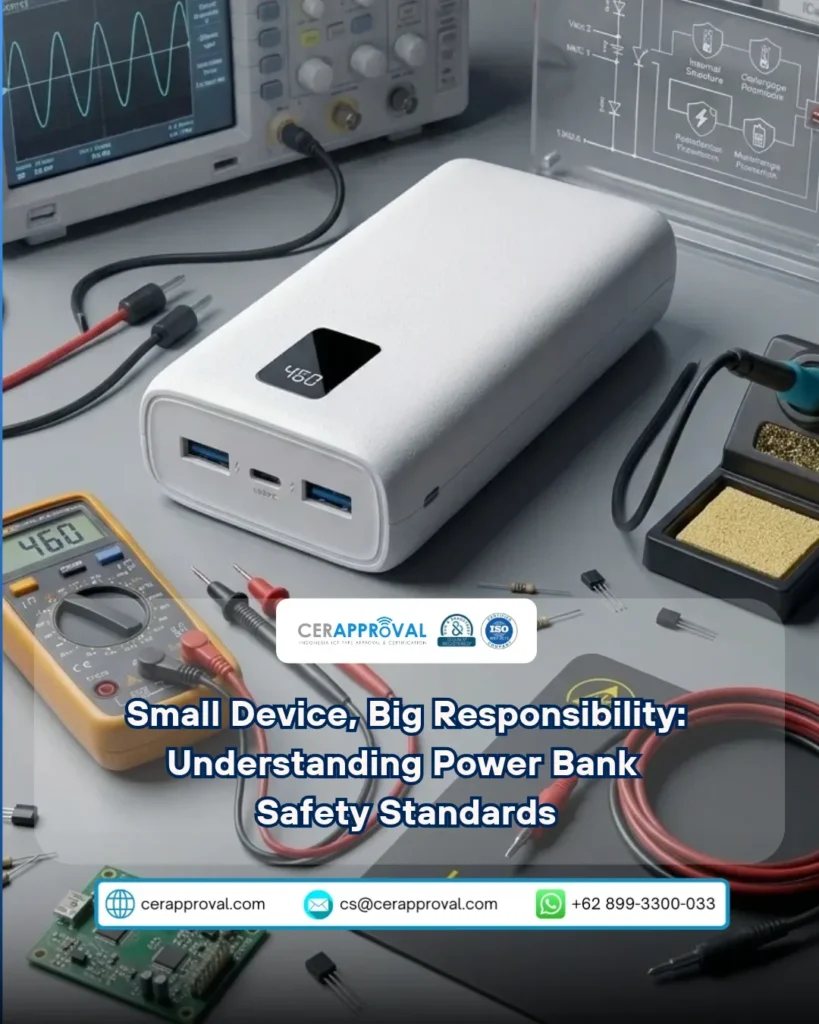
Small Device, Big Responsibility: Understanding Power Bank Safety Standards

Power Bank Safety Standards in Indonesia are important for manufacturers, importers, and distributors. Power banks are now common accessories for smartphones, tablets, and other electronic devices. They are small, easy to carry, and useful when people need extra power. However, power banks contain rechargeable lithium batteries. Poor battery quality can cause overheating, swelling, or even fire. Therefore, manufacturers must pay attention to battery safety and product quality. In addition, businesses must understand Indonesian product regulations before selling power banks. These rules may involve SNI standards, K3L registration, and Postel/DJID certification. This article explains power bank safety, proper usage, and the certification process in Indonesia. 1. What Are Power Banks and How Do They Work? A power bank is a portable device that stores electricity. It uses a rechargeable battery to charge other electronic devices. Most modern power banks use lithium-ion or lithium-polymer batteries. These batteries store a large amount of energy in a small space. A typical power bank has five main parts: Battery cells: Store electrical energy. Battery Management System (BMS): Controls battery charging and discharging. Input port: Receives power when users charge the power bank. Output port: Sends power to smartphones and other devices. Protection circuit: Helps prevent electrical problems. Moreover, some power banks offer fast charging and wireless charging. Others include LED displays and smart charging features. These features make power banks more useful. However, wireless functions may also create additional certification requirements. 2. Why Are Power Bank Safety Standards in Indonesia Important? Lithium batteries need proper protection. Without it, a battery may become unsafe during charging or normal use. One major risk is thermal runaway. This happens when a battery produces too much heat. As a result, the temperature can rise quickly and damage the battery. Several factors can cause battery problems: Using an unsuitable charger. Charging a damaged battery. Using poor-quality battery cells. Dropping or crushing the power bank. Leaving the device in a hot place. Using damaged charging cables. Therefore, manufacturers should follow suitable battery safety standards. These standards help improve product quality and reduce safety risks. In addition, proper safety testing helps businesses build customer trust. It also supports product compliance before market entry. 3. SNI Requirements for Power Bank Safety Standards in Indonesia Indonesia has a specific national standard for lithium-ion power banks. One important standard is SNI 8785:2019 – Lithium-Ion Power Bank: Part 1, General Safety Requirements. This standard covers general safety requirements for portable lithium-ion power banks. BSN lists this standard as active. Another related standard is SNI IEC 62133-2:2017. It covers safety requirements for portable rechargeable lithium battery cells and batteries. These standards provide technical guidance for battery safety and product quality. However, businesses must understand the difference between an active SNI standard and mandatory SNI certification. An active standard does not automatically mean that every power bank needs mandatory SNI certification. Therefore, importers and manufacturers should check the latest mandatory SNI regulations before selling their products in Indonesia. 4. How to Use a Power Bank Safely Proper use can reduce battery risks. It can also help power banks last longer. Here are six important safety tips. 1. Use the Right Charger First, use a charger and cable that match the manufacturer’s instructions. Avoid poor-quality charging accessories. 2. Avoid High Temperatures Next, keep your power bank away from direct sunlight. Do not leave it inside a hot car because high temperatures can damage the battery. 3. Check the Battery Condition Also, inspect your power bank regularly. Stop using it if you notice swelling, leakage, unusual smells, or physical damage. 4. Avoid Overloading Make sure your devices follow the power bank’s input and output limits. In addition, avoid using damaged cables. 5. Keep It Away from Water Water can damage electrical parts. Therefore, keep your power bank in a dry place. 6. Follow the User Manual Finally, read the product instructions before charging or storing the device. Follow the recommended safety steps from the manufacturer. These simple habits can help prevent battery accidents. 5. Does a Power Bank Need K3L Registration in Indonesia? K3L stands for Keamanan, Keselamatan, Kesehatan, dan Lingkungan Hidup. The Indonesian Ministry of Trade regulates K3L goods registration under Minister of Trade Regulation No. 33 of 2025. This regulation covers 42 categories of goods. These include 20 chemical-related categories and 22 electrical and electronic categories. However, not every electronic product automatically needs K3L registration. The requirement applies to products listed in Appendix III of the regulation. Both local and imported products must follow the rule when their product categories are included. Therefore, businesses must check their exact product type and classification before applying. For products covered by the regulation, the application may require: Self Declaration of Conformity. Laboratory test reports. Product brand and model information. Physical product photographs. Distributor and importer information. Furthermore, businesses submit new K3L registration applications through OSS. The Ministry of Trade provides an online registration process for eligible products. K3L registration is different from SNI and DJID certification. Each process has a separate purpose. 6. Does a Power Bank Need Postel/DJID Certification? Not all power banks need Postel/DJID certification. The requirement depends on the product’s technical features. For example, a standard wired power bank uses USB ports to transfer electricity. It does not automatically need DJID certification simply because it contains a battery. However, a wireless power bank uses Wireless Power Transmission (WPT) technology. This technology transfers electrical energy without a physical cable. Indonesia regulates WPT through Ministerial Decision No. 46 of 2025. This regulation sets radio frequency and technical requirements for wireless power transmission devices. In addition, the official DJID database contains examples of certified wireless power banks. This confirms that certain wireless power bank products require telecommunications equipment certification. sertifikasi.postel.go.id Therefore, businesses should check the wireless functions and technical specifications before importing these products. 7. How to Obtain Postel/DJID Certification for Wireless Power Banks Businesses that import or distribute regulated wireless power banks must follow the applicable DJID certification process. The general process includes six steps. Step 1: Identify the […]

SDPPI

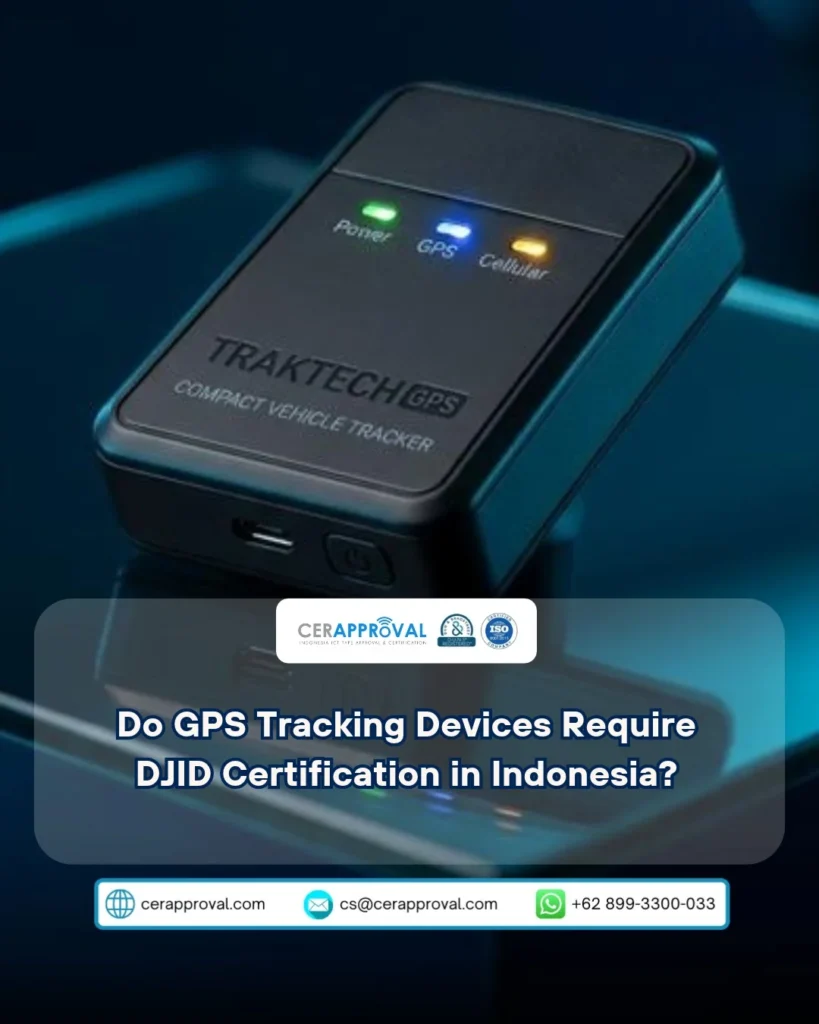
Do GPS Tracking Devices Require DJID Certification in Indonesia?

DJID Certification for GPS Tracking Devices is an important requirement to check before importing or selling GPS trackers in Indonesia. These devices help users track vehicles, goods, people, and other assets. However, not all GPS tracking devices use the same technology. Some devices only receive signals from satellites. Others also send data through cellular networks, Wi-Fi, or Bluetooth. These extra features can affect the certification requirements. This guide explains how GPS trackers work, when they may need DJID certification, and how to apply for certification in Indonesia. DJID Certification for GPS Tracking Devices: Is It Required? The need for DJID certification depends on the device’s communication features. A basic GPS receiver only receives signals from navigation satellites. It does not send radio signals to other devices. Therefore, GPS reception alone does not automatically mean that the product needs DJID certification. However, many GPS trackers can also send location data to a server or mobile application. They may use cellular networks, Wi-Fi, or Bluetooth to share this data. These wireless features may fall under Indonesia’s telecommunications equipment certification rules. Importers and brand owners should check the product’s technical details before they bring it into Indonesia. In short, DJID Certification for GPS Tracking Devices depends on the product’s radio functions, supported bands, and applicable technical standards. What Is a GPS Tracking Device and How Does It Work? A GPS tracking device uses signals from satellites to find its location. It then processes the signals and calculates its position. Many trackers also have a communication module. This module sends location data to a server or mobile application. For example, a vehicle tracker can help a company monitor its fleet. A logistics company can use a tracker to check the location of goods during delivery. In addition, users can view location updates through a mobile application. A typical GPS tracking device may include: A GPS or GNSS receiver. A cellular, Wi-Fi, or Bluetooth module. An antenna. A processor and memory. A power source or battery. Software for location tracking. Each wireless feature may have different technical requirements. Therefore, the applicant should review the full product specifications. Documents Required for DJID Certification Applicants should prepare the technical and administrative documents before starting the process. The exact list may depend on the product type and certification requirements. Common documents include: Product specifications and technical data sheet. User manual in English or Indonesian, as required. Product photos showing the device and its labels. Brand and model information. Radio frequency and communication details. Test reports from an accepted laboratory, where applicable. Company and importer documents. Authorization letter from the manufacturer or brand owner, if required. Complete documents can help reduce delays during the review stage. How to Apply for DJID Certification in Indonesia The applicant can follow these general steps: Check the product features. Identify all wireless functions, frequency bands, and communication modules. Prepare the documents. Collect the technical and company documents. Review the requirements. Check the applicable DJID rules and technical standards. Arrange product testing. Complete the required tests at an accepted laboratory. Submit the application. Upload the required information and documents through the applicable certification system. Follow the evaluation. Respond to any questions or requests for additional documents. Receive the certificate. The authority issues the certificate after the product meets the applicable requirements. The actual process may vary based on the product’s technology and the rules that apply. Why Is DJID Certification Important? DJID certification helps confirm that telecommunications equipment meets the applicable technical requirements in Indonesia. It also helps businesses prepare their products for import and sale. More importantly, an early review can help importers avoid delays caused by missing documents or unsuitable test reports. Therefore, businesses should check DJID Certification for GPS Tracking Devices before they plan product shipments or market launches. Get Assistance from Cerapproval Checking certification requirements can be difficult, especially when a GPS tracker has several wireless functions. Cerapproval can help businesses review product documents, identify the applicable requirements, coordinate testing, and manage the certification process. Contact Cerapproval for support with your product certification needs. Contact Us Today: Website: https://www.cerapproval.com/ Email: gma@cerapproval.com WhatsApp: +62 899-3300-033 Conclusion GPS tracking devices do not all have the same certification requirements. A basic GPS receiver only receives satellite signals. However, a tracker with cellular, Wi-Fi, or Bluetooth features may need DJID certification. For this reason, businesses should review the product’s technical features before importing or selling it in Indonesia. Proper preparation can make the certification process clearer and help prevent delays.

SDPPI

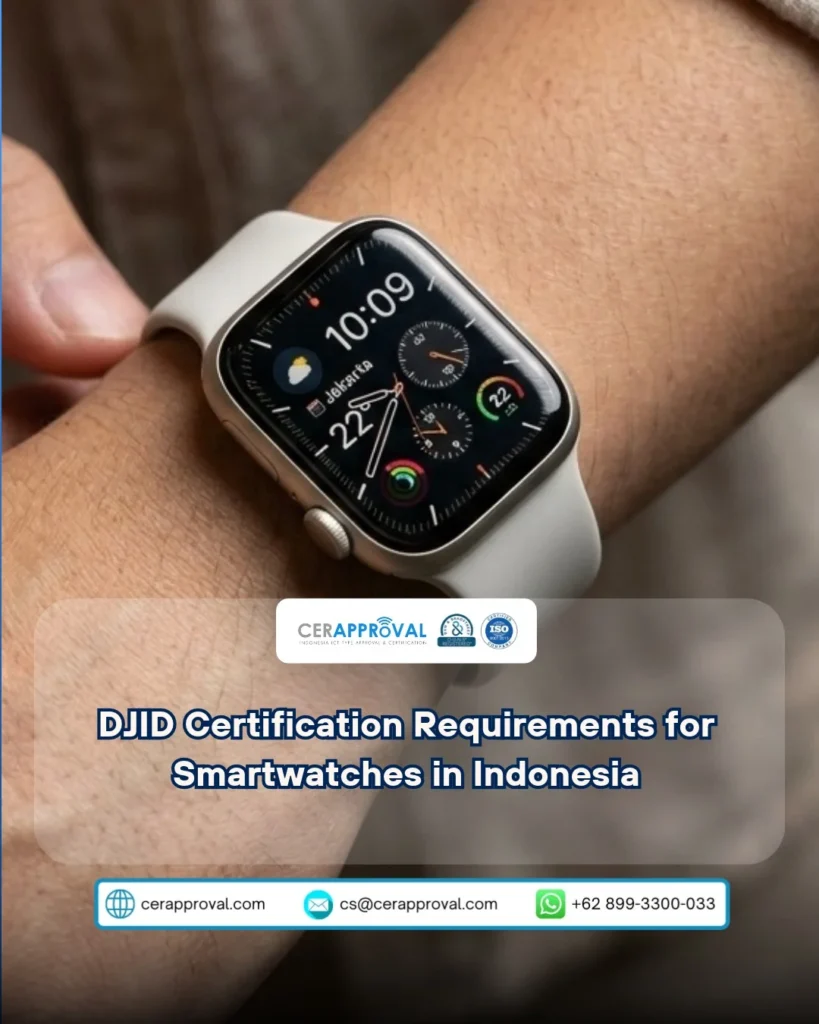
DJID Certification Requirements for Smartwatches in Indonesia

Smartwatches are now popular in Indonesia. People use them to track exercise, check health data, read messages, and make calls. However, some models use wireless features that may require official approval before they can be sold in Indonesia. DJID Certification Requirements for Smartwatches are important for importers, manufacturers, and technology brands. DJID is the Directorate General of Digital Infrastructure under Indonesia’s Ministry of Communication and Digital Affairs. It checks whether covered communication devices meet the required technical standards. Therefore, businesses should review these requirements before importing or selling smartwatches. This article explains how smartwatches work, which features may require certification, and how to apply for Postel certification in Indonesia. What Is DJID Certification for Smartwatches? DJID certification is an approval process for communication devices covered by Indonesian regulations. It helps ensure that these products meet the required technical standards. Many smartwatches use Bluetooth, Wi-Fi, or cellular networks. These features allow users to connect their watches to phones, access online services, and make calls. As a result, some smartwatch models may need DJID certification. However, requirements can differ between models. For example, a basic smartwatch may have different requirements from a model with cellular service. For this reason, businesses should check each product’s technical details before applying. For official information, visit the DJID certification portal. How Do You Use a Smartwatch? A smartwatch is a wearable device that offers useful features for daily activities. Most models connect to a smartphone. Some can also access the internet directly. Common smartwatch functions include: Track daily activity: Count steps and record exercise. Check messages: Read alerts from phones and apps. Connect to a phone: Pair devices through Bluetooth. Check health data: View heart rate and sleep records, if available. Make calls: Use calling features on supported models. Use navigation: Check locations through GPS, if available. First, charge the smartwatch and turn it on. Next, install the required phone app. Then, follow the instructions to connect both devices. After pairing, you can set the watch face, manage alerts, and review activity records. Always follow the user manual. Also, remember that smartwatch health features do not replace advice from a health professional. DJID Certification Requirements for Smartwatches in Indonesia The certification requirements depend on the product’s features and the regulations that apply. For example, Bluetooth, Wi-Fi, and cellular functions use radio signals to send and receive data. Therefore, these features may require a technical review under Indonesian regulations. However, having a wireless feature does not automatically confirm the final certification requirement. The product type and technical specifications must also be reviewed. Before importing a smartwatch, check: Brand and model. Wireless communication features. Radio frequency specifications. Technical test reports. Applicable Indonesian standards. This review helps businesses identify the correct approval process. It can also reduce delays during import and distribution. What Documents Are Needed for Postel Certification? Good preparation makes the certification process easier. First, collect the product information from the manufacturer. Next, check that every document shows the correct brand and model. Depending on the application, required documents may include: Business Identification Number (NIB). Access to the OSS system. Test report from an accepted laboratory. Smartwatch technical specifications. Declaration of Conformity, where required. Product photos showing the brand and model. Other supporting company or product documents. Some models may need additional technical documents. Therefore, check the latest requirements before applying. Read the official DJID certification requirements for further details. How to Apply for DJID Certification in Indonesia The Postel certification process involves several steps: Check the smartwatch: Confirm the brand, model, manufacturer, and wireless features. Review the regulations: Identify the technical standards and approval rules that apply. Prepare the documents: Collect product details, photos, test reports, and company documents. Arrange product testing: If required, use an accepted testing laboratory. Submit the application: Follow the official process through the relevant OSS and DJID systems. Follow up: Monitor the application status and provide additional documents if requested. Proper preparation can help make each step easier to manage. For more details, visit the official DJID certification procedure. Why Choose Cerapproval for Smartwatch Certification? Indonesian product regulations can be challenging, especially for overseas manufacturers and local importers. In addition, different smartwatch models may have different technical requirements. Cerapproval helps businesses understand product certification requirements in Indonesia. Our services include: Product regulation review. Document checking and preparation. Product testing coordination. Certification process assistance. Application monitoring and follow-up. With the right support, businesses can plan the certification process more clearly. Learn more about Cerapproval certification services. Conclusion DJID certification requirements for smartwatches depend on the product’s features and applicable regulations. Some models use wireless functions that may require Postel certification. Therefore, businesses should review product specifications before importing or selling smartwatches in Indonesia. Early document preparation can also help reduce delays and make the approval process easier. Call to Action Planning to Import or Sell Smartwatches in Indonesia? Contact Cerapproval for assistance with DJID certification requirements. Our team can review your product, check the required documents, and guide you through the certification process. Contact Cerapproval Today Website: https://cerapproval.com/ Email: gma@cerapproval.com WhatsApp: +62 899-3300-033

K3L

K3L Requirements for Imported Household and Consumer Products in Indonesia

K3L Requirements for Imported Products in Indonesia are important for businesses that import and sell household goods. Before selling these products, importers must check the rules that apply to them. They must also review product safety, health, and environmental risks. K3L stands for Keamanan, Keselamatan, Kesehatan, dan Lingkungan Hidup. These rules help protect consumers from unsafe products. They also support the safe use of goods in the Indonesian market. However, not every imported product needs K3L registration. The rules apply to certain goods listed by the Ministry of Trade. Therefore, importers should check their product type before starting the process. What Are K3L Requirements for Imported Products in Indonesia? K3L registration is a government process for certain goods sold in Indonesia. It helps the government track products and protect consumers from possible harm. The rules cover selected products that may pose safety, health, or environmental risks. Under Minister of Trade Regulation No. 33 of 2025, the list includes 42 types of goods. These goods fall into two main groups: 20 types of goods that contain hazardous chemicals. 22 types of electrical and electronic goods. The rules apply to both local products and imported products listed in the regulation. Therefore, importers must check the product list before selling their goods. For example, some household appliances and consumer electronics may fall under the K3L rules. However, the product category and technical details still matter. You can read more on the Ministry of Trade website. Which Imported Products Need K3L Registration? Not all household and consumer products need K3L registration. The requirement depends on the official product list. Importers should check these details first: Product name and category. Brand and model. Main materials and chemical content. Product use and function. Whether the product appears in the current K3L list. For example, certain electrical appliances may fall under the rules. Some goods that contain hazardous chemicals may also need registration. Do not assume that every electronic product needs K3L registration. Instead, compare the product with the list in the current regulation. This check can help you avoid delays and extra costs. What Documents Are Needed for K3L Registration? Importers should prepare the required documents before submitting an application. Clear and complete files can help prevent errors. The general requirements include: Self-declaration of conformity: A statement that the product meets the applicable requirements. Laboratory test report: The report must show the product brand and type or model. It must also be issued no more than six months before the application date. Product photos: Provide clear photos of the actual product. Distribution list: Include the names and addresses of distributors, agents, wholesalers, and retailers. Some product types may need extra documents. For example, certain textile goods may need proof of K3L registration for their raw materials and other supporting statements. Therefore, check the latest document list before applying. Also, make sure the brand and model match across all files. How to Apply for K3L Registration in Indonesia The application process depends on the type of request. New registration and changes to an existing registration use different online systems. Follow these steps to prepare your application. Step 1: Check the Product List First, compare your product with the goods listed under the current K3L regulation. Check its category, brand, model, and intended use. Step 2: Prepare the Required Documents Next, collect the self-declaration, test report, product photos, and distribution details. Check the issue date of the test report as well. Step 3: Submit a New Registration Through OSS For a new K3L registration, submit the application online through the OSS system. Make sure the information is correct before you submit the form. Incomplete files may delay the review. Step 4: Follow Up on the Application After submission, monitor the application status. Respond if the reviewing team asks for more information or corrections. Step 5: Complete the Registration Process According to the Ministry of Trade, a complete and correct application can receive its registration within a maximum of three working days. For changes or re-registration, use the INATRADE system. Both systems use the OSS single sign-on access. Step 6: Display the K3L Registration Number After approval, place the K3L registration number on the product or its packaging. The number must be easy to see and read. It must also stay clear and not wear off easily. For official guidance, visit the Ministry of Trade K3L information page. How Should Imported Household Products Be Used? Product safety does not end with registration. Consumers also need clear instructions to use each product safely. For electrical appliances, users should follow the product manual. They should check the voltage and power rating before use. They should also keep the product away from water when the manual requires it. For chemical products, users should read the label first. They must follow the safety warnings and storage instructions. They should also keep hazardous products away from children. Importers should review product labels before selling their goods. Where required, labels should use clear Bahasa Indonesia. They should explain safe use and show the right warnings. Clear instructions help consumers understand how to use a product. They can also reduce the risk of accidents. Does Your Product Need Postel/DJID Certification? K3L registration and Postel/DJID certification are different. Each process has its own rules and purpose. K3L registration applies to goods listed under the Ministry of Trade rules. Postel/DJID certification applies to telecommunications equipment covered by the relevant regulations. For example, some products with Bluetooth, Wi-Fi, or cellular features may need DJID certification. However, the exact requirement depends on the product and its technical features. A product may need more than one type of approval. Therefore, importers should check each rule that applies to their goods. A K3L registration number does not replace Postel/DJID certification. Likewise, DJID certification does not replace K3L registration. To learn more, visit the official DJID certification portal. Why Choose Cerapproval for K3L Registration? Import rules can be difficult to follow. Some products may also need more than one approval. As a […]

TKDN

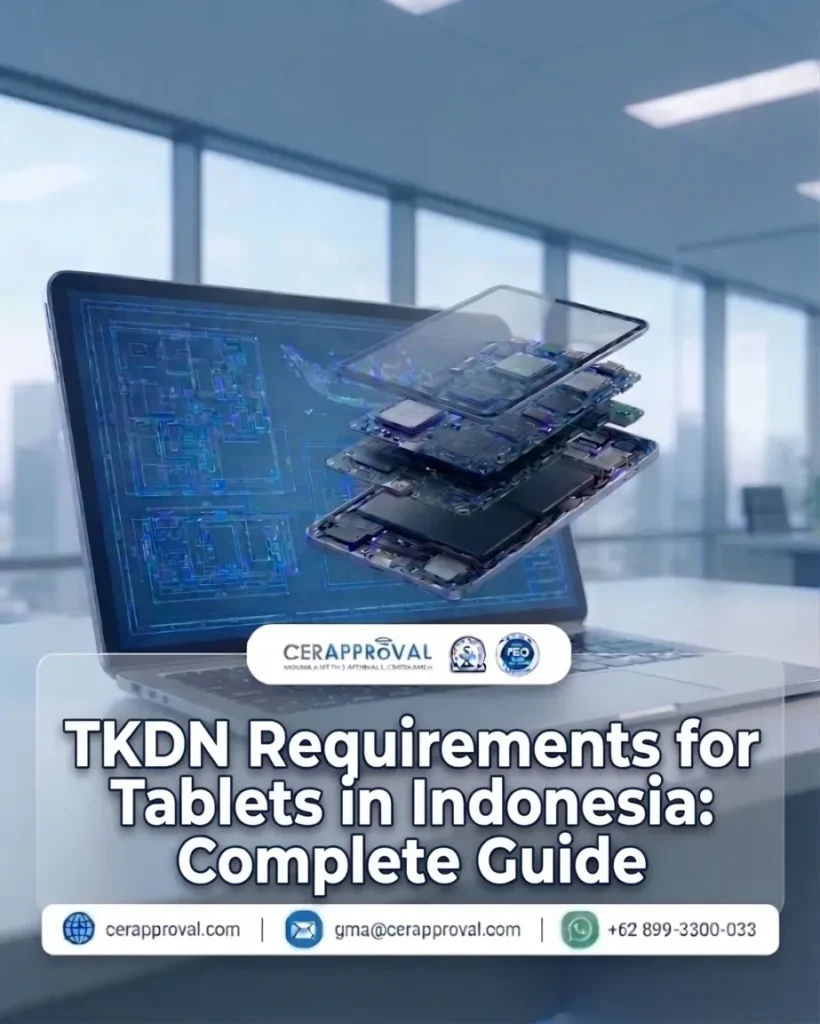
TKDN Requirements for Tablets in Indonesia: Complete Guide

TKDN requirements for tablets in Indonesia are important for businesses that sell tablets. Before selling a tablet, check the rules. You should also check Postel/DJID certification. Both are important, but they serve different purposes. So, check both before you enter the Indonesian market. What Are TKDN Requirements for Tablets in Indonesia? TKDN stands for Tingkat Komponen Dalam Negeri. It measures local content in a product under Indonesian rules. For example, the review may cover local parts, labor, and production. However, the rules can vary by product. Not every tablet needs TKDN certification. So, check the latest rules before you apply. You can find more details on the Ministry of Industry website. What Documents Do You Need? First, check your tablet model and manufacturer. Then, find out which documents you need. You may need these documents: Product details and parts lists. Details of the production process. Cost records and supplier data. Company licenses and other proof. Next, check each file. Make sure all details match. This can help prevent errors. It may also help you avoid delays. Does Your Tablet Need Postel/DJID Certification? Many tablets use Wi-Fi, Bluetooth, or mobile networks. Because of these features, some tablets may need Postel/DJID certification in Indonesia. However, the rules depend on the device. So, check the rules for your tablet model before you apply. TKDN and Postel/DJID certification are different. TKDN covers local content. In contrast, Postel/DJID certification covers telecom equipment. Meeting one rule does not mean you meet the other. For more details, visit the official DJID certification portal. How to Apply for Postel/DJID Certification Follow these steps to prepare your application. Identify your tablet. Check its brand, model, maker, and wireless features. Check the rules. Find out which rules apply to your device. Prepare your files. Gather the required product details and company records. Check testing needs. Find out if lab tests or test reports are needed. Submit your application. Follow the official process once your files are ready. Complete the review. Reply to any request for more information. These steps can help you prepare. Also, check your files before you apply. This may help reduce errors and delays. Why Choose Cerapproval? Product rules can be hard to follow. Missing files can also slow down the process. Cerapproval helps businesses understand product certification in Indonesia. We can guide you through document checks and the next steps. As a result, you can better understand what your product needs. You can also prepare your application with more confidence. Learn more about our Cerapproval certification services. Conclusion TKDN requirements for tablets in Indonesia depend on the product and the rules that apply. Some tablets may also need Postel/DJID certification because they use wireless features. So, check your product before you import or sell it in Indonesia. If you need help, Cerapproval can guide you through the process. Call to Action Want your device certified quickly and accurately? Contact Cerapproval today for a free consultation. We can help you understand the rules and plan your next steps. For more details, visit the official DJID certification portal. Contact Us Today: Website: www.cerapproval.comEmail: gma@cerapproval.comWhatsApp: +62 899-3300-033
SDPPI / DJID

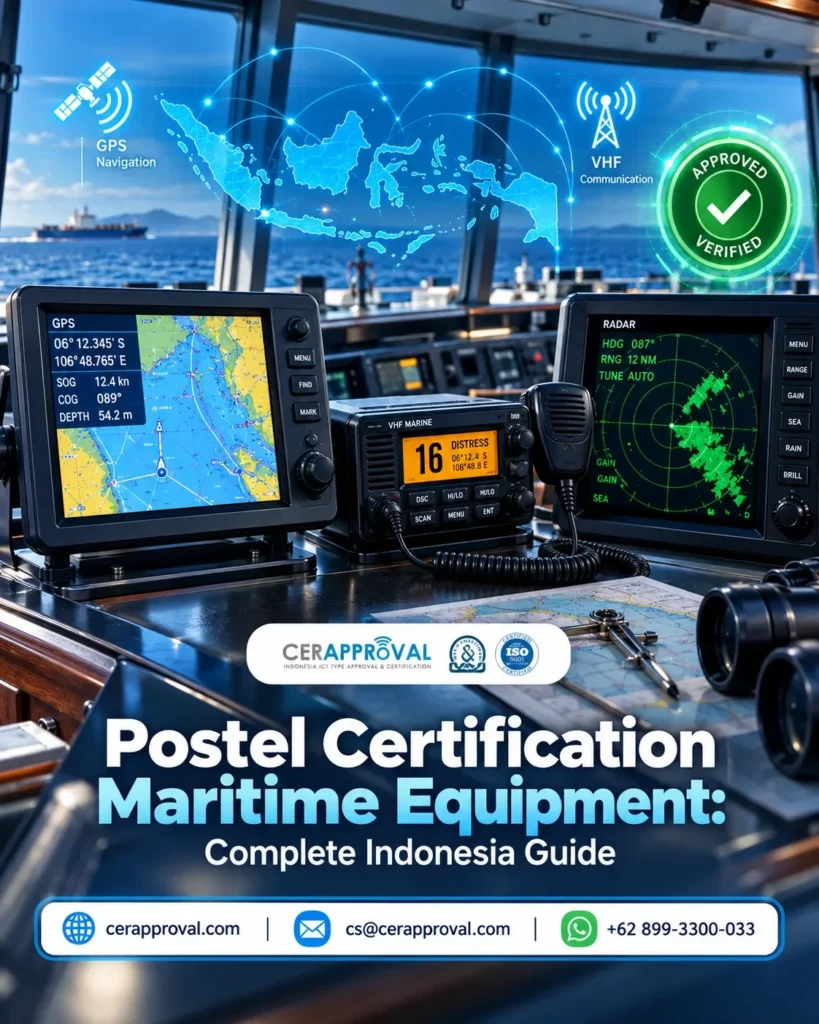
Postel Certification Maritime Equipment: Complete Indonesia Guide

Maritime communication systems are vital for maintaining safety across ocean routes. Therefore, you must secure official Postel Certification Maritime Equipment approval from the Directorate General of SDPPI in Indonesia. You need to complete this process before importing or selling radio devices. If you skip this legal step, customs officers will block your products at the port. Furthermore, harbor authorities can deny sailing permits for your vessels. For this reason, Cerapproval provides this simple step by step guide to help your business succeed. Why Do You Need Postel Certification Maritime Equipment? First of all, securing Postel Certification Maritime Equipment is a mandatory legal standard in Indonesia. The government enforces this rule to keep marine radio channels safe. Consequently, your navigation electronics will not interfere with distress signals. Here are three key reasons why you need this certificate: Prevents Signal Interference: Your devices will not block emergency frequency channels. Ensures Technical Compliance: Your radio power output meets exact national standards. Secures Easy Importation: Customs will clear your shipments without operational delays. Key Requirements for Postel Certification Maritime Equipment Next, you must collect all required paperwork before submitting your application. Proper preparation always speeds up your approval timeframe. 1. Local Business Requirements You must supply an active Business Identification Number (NIB). You need to present an Indonesian Corporate Tax ID (NPWP). Our team will verify your local Business License documents. 2. Technical Product Documents Technical Datasheet: This file lists operating frequencies and output power specs. Lab Test Reports: You must submit valid test reports for Postel Certification Maritime Equipment. Product Photographs: You need clear photos of the device, serial number, and exterior label. Step by Step Approval Process in Indonesia Then, you can follow this practical workflow to apply for your Postel Certification Maritime Equipment: Selecting the Testing Route: First, you select either local lab testing or document evaluation (paperwork). Registering Your Account: Next, you register your business on the official SDPPI e-Sertifikasi portal. Auditing Documents: Then, SDPPI evaluators review your technical parameters. Paying Government Fees: After passing document checks, you pay the official SP2 invoice. Issuing the Certificate: Finally, SDPPI issues your certificate and you attach the required QR Code label to your product. Smooth Regulatory Compliance with Cerapproval However, obtaining Postel Certification Maritime Equipment on your own can become confusing. Complex technical language and changing local laws often delay product launches. Therefore, Cerapproval offers full consultancy support to guide your project smoothly. We help you obtain Postel Certification Maritime Equipment quickly and reliably. You can check official telecom laws on the Official SDPPI DJID Portal or read more on our Cerapproval SDPPI Services Page. Want your device certified quickly and accurately? Contact Cerapproval today for a free consultation and start your certification process!Get a free consultation for your certification.Download the complete guide to the KOMDIGI certification process.Schedule a meeting with the Cerapproval expert team today! Contact Us Today: 🌐 www.cerapproval.com 📧 gma@cerapproval.com 📱 WhatsApp: +62 899‑3300‑033

SDPPI / DJID

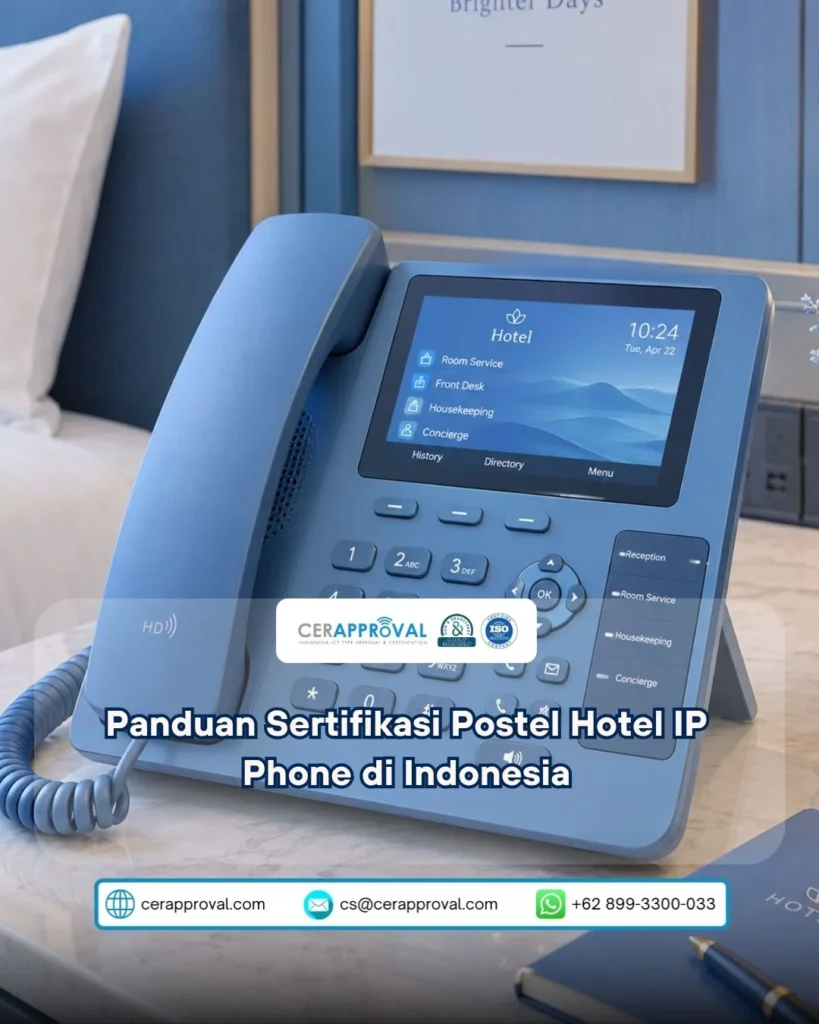
Panduan Sertifikasi Postel Hotel IP Phone di Indonesia

Pelajari cara sertifikasi postel untuk perangkat hotel ip phone secara lengkap bersama Cerapproval. Saat ini, bisnis hotel membutuhkan alat komunikasi yang resmi. Telepon jaringan kini menjadi standar wajib di setiap hotel. Oleh karena itu, Anda harus memahami cara sertifikasi postel untuk perangkat hotel ip phone dengan benar. 1. Mengenal Perangkat Hotel IP Phone dan Fungsi Utamanya Perangkat ini adalah telepon jaringan berbasis protokol IP. Selain itu, alat ini mempermudah tamu saat menghubungi resepsionis. Sistem ini mengubah suara menjadi data digital. Selanjutnya, jaringan mengirim data ke server PBX secara aman. 2. Panduan Cara Menggunakan Perangkat Hotel IP Phone Anda dapat memasang perangkat ini dengan langkah mudah berikut: Koneksi Kabel PoE: Pertama, hubungkan perangkat ke port PoE memakai kabel LAN. Konfigurasi Server SIP: Kedua, atur alamat IP dan daftarkan akun SIP ke server PBX. Integrasi Sistem PMS: Selanjutnya, hubungkan telepon ke sistem PMS hotel. Pengoperasian Tamu: Akhirnya, tamu dapat memakai tombol pintas layanan kamar. 3. Mengapa Wajib Memahami Cara Sertifikasi Postel untuk Perangkat Hotel IP Phone? Pemerintah wajibkan izin resmi untuk semua alat jaringan. Oleh sebab itu, importir harus menyelesaikan izin ini. Mencegah Interferensi Sinyal: Sebab, uji lab memastikan frekuensi alat tidak mengganggu sinyal lain. Jaminan Keamanan Listrik & EMC: Selain itu, uji lab menjamin keamanan listrik perangkat. Kelancaran Impor & Hukum: Hasilnya, izin resmi mencegah penahanan barang di Bea Cukai. 4. Alur Langkah Cara Sertifikasi Postel untuk Perangkat Hotel IP Phone Proses izin alat ini berjalan mudah bersama tim Cerapproval: Pemeriksaan Dokumen Teknis: Pertama, berkas awal alat diperiksa oleh tim ahli. Pengujian Laboratorium Lokal: Kedua, sampel alat diuji di lab resmi lokal. Penerbitan Test Report: Selanjutnya, lab resmi menerbitkan Laporan Uji. Pengajuan Permohonan Online: Kemudian, berkas diunggah ke portal resmi Komdigi. Penerbitan Sertifikat Resmi: Akhirnya, pemerintah menerbitkan Sertifikat Postel resmi. 5. Rekomendasi Tautan (Internal & Outbound Links) Gunakan struktur link berikut untuk CMS Anda: Internal Link 1: Arahkan kata kunci Layanan Sertifikasi SDPPI ke halaman layanan Cerapproval. Internal Link 2: Arahkan kata kunci Konsultasi Perizinan Perangkat ke halaman kontak Cerapproval. Outbound Link: Arahkan kata kunci Regulasi SDPPI Komdigi ke situs resmi pemerintah.

Flag Counter
Scroll to Top