Author name: Adit

SDPPI / DJID

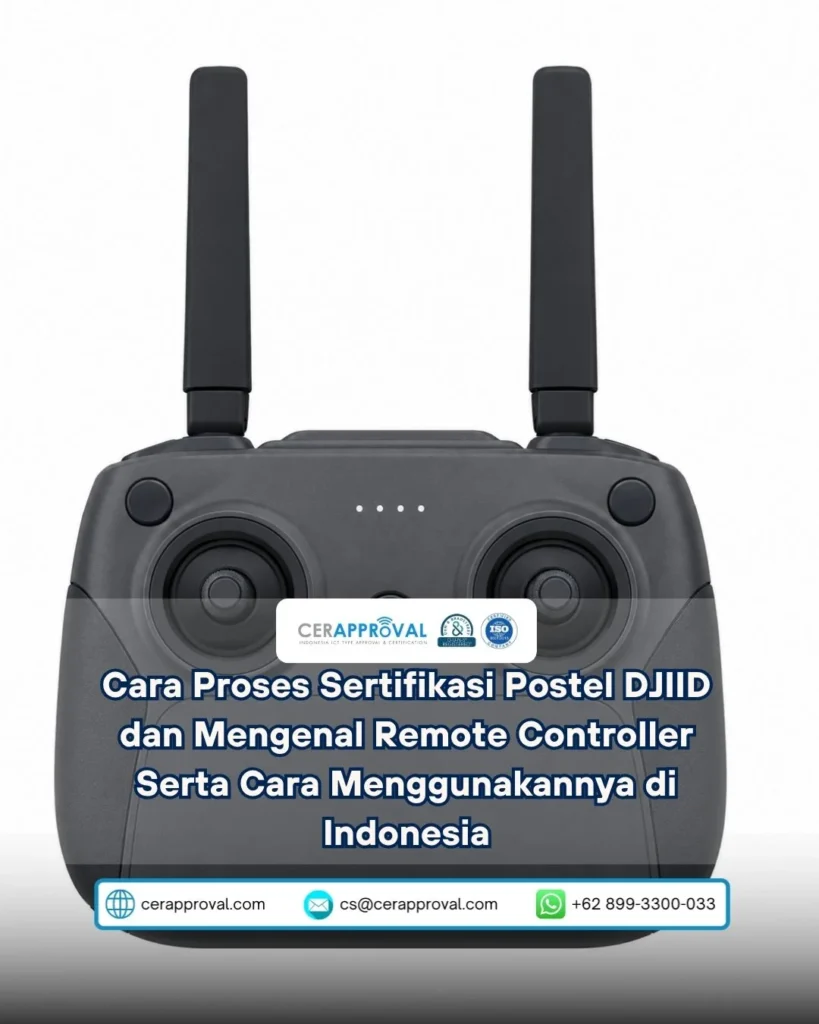
Cara Proses Sertifikasi Postel DJIID dan Mengenal Remote Controller Serta Cara Menggunakannya di Indonesia

Sertifikasi Postel remote controller merupakan perangkat elektronik yang digunakan untuk mengendalikan peralatan dari jarak jauh. Perangkat ini banyak ditemukan pada televisi, pendingin ruangan, drone, peralatan industri, hingga sistem rumah pintar. Seiring berkembangnya teknologi komunikasi nirkabel, remote controller kini memiliki beragam fungsi dan menggunakan teknologi yang berbeda-beda. Perusahaan yang ingin mengimpor, mendistribusikan, atau memasarkan remote controller di Indonesia perlu memahami fungsi produk sekaligus aturan telekomunikasi. Hal ini penting terutama ketika produk memakai Bluetooth, Wi-Fi, atau pemancar radio lainnya. Perusahaan perlu memeriksa kebutuhan Sertifikasi Postel/DJID untuk remote controller melalui mekanisme sertifikasi alat dan/atau perangkat telekomunikasi yang berlaku di Indonesia. Artikel ini menjelaskan jenis remote controller, cara penggunaannya, persyaratan yang perlu diperhatikan, dan gambaran proses sertifikasi DJID bersama Cerapproval. Apa Itu Sertifikasi Postel Remote Controller? Remote controller mengirimkan perintah kepada perangkat lain melalui teknologi komunikasi tertentu. Pengguna tidak perlu menyentuh perangkat tujuan secara langsung untuk menjalankan fungsi yang tersedia. Teknologi komunikasi yang dipakai bergantung pada desain dan fungsi produk. Jenis Remote Controller 1. Remote Controller Infrared Remote inframerah memakai cahaya inframerah untuk mengirimkan perintah kepada sensor penerima. Pengguna sering menemukan jenis ini pada televisi dan pendingin ruangan. Agar perintah sampai dengan baik, pengguna biasanya perlu mengarahkan remote ke sensor perangkat tujuan. 2. Remote Controller Radio Frequency (RF) Remote RF memakai gelombang radio untuk mengirimkan sinyal. Teknologi ini mendukung perangkat otomasi, sistem kendali tertentu, dan peralatan industri. Saat mengevaluasi persyaratan teknis, perusahaan perlu memperhatikan karakteristik frekuensi dan daya pancar produk. 3. Remote Controller Bluetooth Remote Bluetooth mengendalikan perangkat melalui koneksi Bluetooth. Contohnya meliputi pengendali presentasi, perangkat multimedia, dan sejumlah perangkat elektronik pintar. 4. Remote Controller Wi-Fi Remote berbasis Wi-Fi mengendalikan perangkat yang terhubung ke jaringan. Pengguna dapat menjalankan fungsi kendali melalui aplikasi, jaringan lokal, atau sistem rumah pintar yang kompatibel. 5. Remote Controller Drone Remote drone mengirimkan perintah kendali kepada pesawat tanpa awak. Perangkat ini dapat memakai sistem komunikasi radio khusus atau teknologi nirkabel lain sesuai spesifikasi produk. Setiap teknologi memiliki karakteristik berbeda. Karena itu, nama produk saja tidak cukup untuk menentukan karakteristik teknis dan kebutuhan sertifikasinya. Bagaimana Cara Menggunakan Remote Controller? Cara penggunaan remote controller bergantung pada perangkat tujuan. Namun, pengguna dapat mengikuti beberapa langkah umum berikut. Langkah 1: Periksa kompatibilitas Pastikan remote controller cocok dengan perangkat tujuan. Periksa merek, model, protokol komunikasi, dan panduan produsen. Remote universal mungkin memerlukan konfigurasi tambahan sebelum berfungsi. Langkah 2: Pastikan daya mencukupi Periksa kondisi baterai atau sumber daya perangkat. Baterai lemah dapat membuat sinyal tidak stabil, mengurangi jangkauan, atau mencegah perangkat tujuan menerima perintah. Langkah 3: Hubungkan remote dengan perangkat Untuk remote infrared, arahkan pemancar ke sensor penerima. Untuk remote Bluetooth, lakukan proses pairing sesuai instruksi produsen. Remote Wi-Fi mungkin memerlukan koneksi jaringan dan pengaturan melalui aplikasi. Pada remote RF tertentu, pasangkan pemancar dengan penerima sebelum mengoperasikannya. Ikuti petunjuk resmi produsen untuk menghindari kesalahan konfigurasi. Langkah 4: Gunakan sesuai fungsi Tekan tombol, gerakkan joystick, atau gunakan kontrol lain sesuai petunjuk. Jika memakai remote drone atau remote peralatan industri, pahami batas jangkauan, kondisi lingkungan, dan prosedur keselamatan sebelum mulai mengoperasikan perangkat. Langkah 5: Lakukan perawatan Periksa baterai, tombol, antena, koneksi, dan pembaruan perangkat lunak jika tersedia. Perawatan berkala membantu menjaga kinerja perangkat dan mengurangi gangguan saat penggunaan. Apakah Remote Controller Wajib Memiliki Sertifikasi Postel/DJID? Nama produk saja tidak cukup untuk menentukan kebutuhan sertifikasi. Penilaian perlu mempertimbangkan fungsi perangkat, teknologi komunikasi, karakteristik teknis, dan ketentuan yang berlaku. Di Indonesia, Peraturan Menteri Komunikasi dan Informatika Nomor 3 Tahun 2024 mengatur sertifikasi alat dan/atau perangkat telekomunikasi. Pasal 3 menetapkan kewajiban pemenuhan standar teknis bagi alat dan/atau perangkat telekomunikasi yang dibuat, dirakit, atau dimasukkan ke wilayah Indonesia untuk diperdagangkan dan/atau digunakan. Perusahaan dapat membaca peraturan resmi melalui JDIH Komdigi. Untuk remote controller dengan pemancar radio, perusahaan perlu memeriksa teknologi, frekuensi kerja, dan standar teknis yang relevan. Remote inframerah memiliki karakteristik berbeda, sehingga perusahaan tetap perlu menilai kebutuhan sertifikasinya berdasarkan ketentuan yang berlaku. Sebelum mengajukan sertifikasi, perusahaan sebaiknya menyiapkan informasi berikut: Merek dan model perangkat. Fungsi utama dan tujuan penggunaan. Teknologi komunikasi yang dipakai. Rentang frekuensi dan daya pancar, jika relevan. Spesifikasi teknis serta konfigurasi modul radio. Laporan hasil uji atau test report yang tersedia. Dokumen pendukung sesuai kategori pemohon. Pemeriksaan awal membantu perusahaan memilih jalur sertifikasi yang sesuai sebelum memulai pengujian atau pengajuan. Bagaimana Proses Sertifikasi Postel/DJID untuk Remote Controller? Perusahaan perlu menyesuaikan proses sertifikasi dengan karakteristik perangkat dan persyaratan yang berlaku. Secara umum, perusahaan dapat mengikuti tahapan berikut. 1. Periksa spesifikasi produk Identifikasi fungsi dan spesifikasi teknis remote controller. Informasi ini membantu perusahaan menentukan standar teknis yang relevan dan kebutuhan pengujian. 2. Siapkan dokumen Untuk permohonan sertifikat baru melalui portal resmi e-Sertifikasi, pemohon perlu menyiapkan dokumen sesuai persyaratan yang berlaku. Dokumen tersebut antara lain NIB dan akses OSS, laporan hasil uji yang memenuhi ketentuan, spesifikasi teknis perangkat, deklarasi kesesuaian terhadap standar teknis, foto berwarna yang menampilkan merek dan model, serta pernyataan kebenaran dan kelengkapan dokumen. Kategori pemohon, kepemilikan merek, penunjukan distributor, dan karakteristik perangkat dapat memengaruhi kebutuhan dokumen tambahan. Periksa daftar persyaratan terbaru melalui kanal resmi sebelum mengajukan permohonan. 3. Uji perangkat Jika aturan mewajibkannya, perusahaan perlu membawa perangkat ke balai uji yang berwenang atau diakui sesuai ketentuan. Evaluasi laporan hasil uji yang sudah tersedia sebelum menentukan kebutuhan pengujian tambahan. 4. Ajukan sertifikasi Postel Ajukan permohonan melalui kanal resmi yang berlaku, termasuk OSS dan e-Sertifikasi sesuai prosedur terkait. Pastikan informasi pada formulir sesuai dengan dokumen teknis dan identitas produk. 5. Tindak lanjuti verifikasi permohonan Pihak berwenang memeriksa permohonan dan dokumen pendukung. Jika petugas menemukan kekurangan, pemohon perlu memperbaiki dokumen sesuai arahan yang diberikan. 6. Perhatikan penerbitan sertifikat dan kewajiban lanjutan Setelah pihak berwenang menyetujui permohonan, mekanisme resmi menerbitkan sertifikat. Pemegang sertifikat perlu memperhatikan kewajiban pelabelan, QR code, tanda peringatan, dan pelaporan sesuai ketentuan yang berlaku. Biaya dan waktu proses dapat berbeda menurut jenis produk, kesiapan dokumen, kebutuhan pengujian, dan jalur permohonan. Mengapa Memilih Cerapproval untuk Konsultasi Sertifikasi Postel? Importir, distributor, dan pemilik merek dapat mengurangi risiko kesalahan dokumen serta keterlambatan persiapan pemasaran dengan memahami persyaratan sejak awal. Cerapproval dapat membantu perusahaan melakukan konsultasi awal, memeriksa dokumen, mengidentifikasi kebutuhan sertifikasi, dan mengoordinasikan persiapan pengajuan sesuai karakteristik perangkat. Dengan persiapan yang […]

SDPPI / DJID

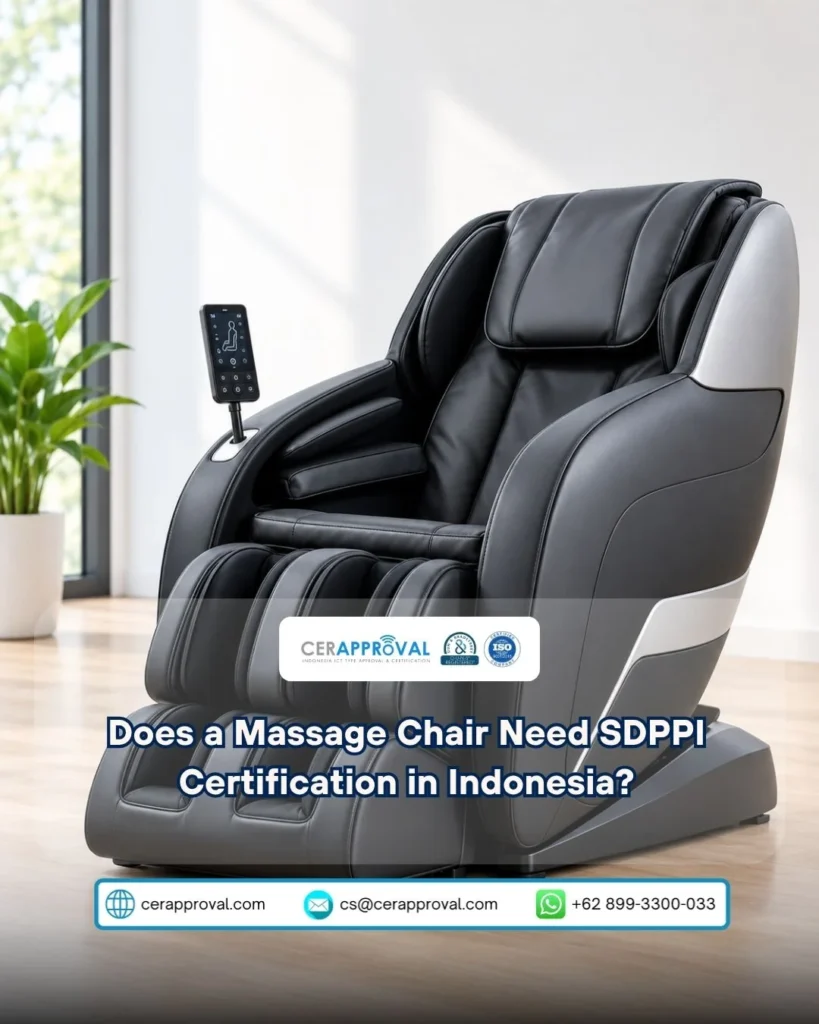
Does a Massage Chair Need SDPPI Certification in Indonesia? How to Apply

Massage chairs are becoming more popular in Indonesia. Many consumers use them for relaxation and wellness. Modern massage chairs may include electric motors, control panels, Bluetooth, Wi-Fi, and smartphone apps. If you plan to import or sell massage chairs in Indonesia, you may have an important question: Does a massage chair need SDPPI certification? The answer depends on the product’s technical features and the applicable Indonesian regulations. For example, a basic massage chair may have different requirements from a model with Bluetooth or Wi-Fi. Therefore, businesses should check their products before importing them. In this guide, Cerapproval explains the certification requirements, necessary documents, and application process. What Is SDPPI Certification in Indonesia? SDPPI certification is a common term for Indonesian telecommunications equipment certification. The system was historically managed by the Directorate General of Resources and Equipment of Post and Information Technology. However, Indonesia’s regulatory structure has changed. The Ministry of Communication and Digital Affairs, known as Komdigi, is now the relevant ministry-level authority. The certification requirements depend on the product type, technical features, and current regulations. Not every electronic product needs telecommunications certification. Therefore, businesses should check the product’s actual features before deciding whether certification is required. Does a Massage Chair Need SDPPI Certification? The answer depends on the massage chair’s features. Some models use only electric motors and internal controls. Others include wireless communication technology. For this reason, businesses should assess each product individually. The following sections explain the main factors to consider. 1. Massage Chairs Without Bluetooth or Wi-Fi A standard massage chair usually has electric motors, massage rollers, mechanical parts, and an electronic control system. If the chair has no radio communication features, it may not require SDPPI telecommunications certification. However, this depends on the product’s classification and the applicable regulations. Therefore, importers should not assume that every massage chair is exempt. They should review the technical specifications before making a compliance decision. 2. Massage Chairs With Bluetooth Connectivity Some massage chairs use Bluetooth to connect to smartphones or wireless audio devices. Bluetooth allows devices to communicate wirelessly. As a result, Bluetooth can affect the product’s certification requirements. Businesses should check the Bluetooth module and the finished product. Important details include the module manufacturer, model number, operating frequency, and technical specifications. In addition, importers should review any existing certification documents. However, a certificate for a wireless module does not automatically cover the finished massage chair. Businesses must confirm whether the existing certificate applies to their specific product. 3. Massage Chairs With Wi-Fi and Smartphone Apps Some advanced massage chairs allow users to control massage settings through a smartphone app. These features may use Wi-Fi or other wireless technologies. If a massage chair includes Wi-Fi, businesses should check the applicable Indonesian technical requirements. They should also identify the wireless technologies used in the product. For example, a massage chair may use Bluetooth for audio and Wi-Fi for internet access. In this case, both communication functions should be reviewed. Therefore, checking the product’s wireless features is an important step before importing it. 4. Massage Chairs With Built-In Wireless Modules Some massage chairs contain wireless modules inside the product. These components may not be visible from the outside. For this reason, visual inspection alone cannot confirm whether certification is required. Businesses should request technical specifications and wireless module information from the manufacturer. They should also obtain the product manual and other supporting documents. With this information, importers can better understand the applicable requirements. They can also identify whether further testing or documentation may be necessary. Why Is Certification Important for Massage Chair Importers? Checking certification requirements early can help businesses prepare for the Indonesian market. It also helps importers avoid unnecessary delays. Here are some important benefits. Identify the Applicable Requirements First, businesses can check whether their massage chairs fall within the scope of telecommunications equipment certification. This step helps them understand which rules may apply to their products. Prepare the Required Documents Next, businesses can collect the necessary technical documents. Early preparation also helps identify missing information before submitting an application. Plan Testing Requirements Some products may need technical testing or evaluation. However, the requirements depend on the product’s wireless features and the applicable certification process. Therefore, importers should confirm the testing requirements for their specific products. Reduce Administrative Delays Incomplete documents can slow down the certification process. For example, inconsistent model numbers or missing technical specifications may lead to additional questions. By checking the documents early, businesses can reduce avoidable problems. Improve Market Entry Planning Understanding certification requirements helps businesses plan their product launches. It also helps them coordinate purchasing, shipping, and distribution. However, telecommunications certification is only one part of product compliance. Depending on the product and business activity, import rules, electrical safety, labeling, and other regulations may also apply. Documents Required for Massage Chair SDPPI Certification The required documents depend on the product type and certification process. However, businesses can prepare several documents before starting an application. Here is an initial checklist. Applicant information: The legal details of the company applying for certification. Manufacturer information: The manufacturer’s legal name and address. Brand and model identification: The exact product brand and model number. Technical specifications: Details about the product’s functions and communication features. Wireless module documentation: Bluetooth or Wi-Fi module specifications, if applicable. Product photographs: Images of the complete product, labels, and relevant components, if required. Supporting technical documents: User manuals, block diagrams, test reports, or other requested documents. Additional regulatory documents: Any other documents required by the relevant authority. However, this list is only a starting point. Not every massage chair requires the same documents. Therefore, businesses should confirm the latest requirements before submitting an application. How to Apply for Massage Chair SDPPI Certification in Indonesia The certification process generally involves several steps. However, the exact procedure depends on the product and the applicable regulations. Step 1: Identify the Product Specifications First, collect the massage chair’s technical information. This information should include the brand, model, manufacturer, electrical configuration, and control system. If the chair uses […]

SDPPI / DJID

SDPPI Certification for Smart Dashcams and GPS Trackers

Smart dashcams and vehicle GPS trackers help businesses improve road safety, monitor vehicles, and manage fleets. However, companies that import these devices into Indonesia must check the applicable telecommunications regulations before bringing them to market. SDPPI Certification for Smart Dashcams and GPS Trackers helps businesses understand the compliance steps they may need to take. The exact requirements depend on the device’s wireless functions, technical specifications, and applicable regulations. This guide explains the main considerations, documents, and steps to review before importing or selling these products in Indonesia. When Is SDPPI Certification Required? Indonesia regulates telecommunications equipment through Minister of Communication and Informatics Regulation No. 3 of 2024. The regulation sets requirements for covered equipment manufactured, assembled, or imported for trade or use in Indonesia. Therefore, businesses should confirm whether their products fall within the applicable certification requirements before import or distribution. Not every device follows the same process. Its radio technology, operating frequency, hardware configuration, and technical standards can affect the assessment. Check the exact product specifications before deciding which certification route applies. SDPPI Certification for Smart Dashcams and GPS Trackers Smart dashcams can record driving activity and provide additional features, such as wireless connectivity and remote access. These features may affect the device’s regulatory requirements. For example, some models include Wi-Fi or Bluetooth. These functions allow users to connect the dashcam to a smartphone, transfer video files, or configure device settings. 1. Check the Wireless Features First, identify every wireless function built into the dashcam. Review the operating frequencies, supported technologies, and relevant hardware modules. Next, collect the manufacturer’s technical documents. These documents help determine which technical standards and certification requirements may apply. Do not assume that two dashcams need the same approval simply because both record video. Their wireless functions and hardware configurations may differ. 2. Review the Complete Device Configuration Some dashcams use wireless modules supplied by third-party manufacturers. However, the presence of an already-certified module does not automatically establish that the complete finished product meets every applicable requirement. For this reason, review the complete device configuration. Confirm the relevant brand, model, radio functions, and supporting documents before starting the application process. SDPPI Certification for GPS Trackers Vehicle GPS trackers help businesses monitor vehicle locations and support fleet management. However, a tracker can use several technologies, and each function serves a different purpose. 1. Understand Positioning and Data Transmission Satellite positioning allows a tracker to determine its location. By itself, this function does not explain how the device sends that information to another system. Many trackers also use cellular connectivity, such as GSM or LTE, to transmit location data to a monitoring platform. Other models may include Bluetooth, Wi-Fi, or additional radio functions. As a result, businesses should review both the positioning technology and the communication functions. This distinction helps identify the technical information needed for a regulatory assessment. 2. Confirm the Requirements for the Exact Model Before importing a GPS tracker, collect its technical specifications and identify all supported radio technologies. Then confirm which certification requirements apply to the complete product. Do not rely only on a product description or a list of supported networks. The actual hardware configuration and applicable technical standards also matter. What About Non-Wireless Dashcams and GPS Receivers? A device without Wi-Fi, Bluetooth, or cellular connectivity may have a different regulatory profile from a wireless model. However, the absence of these features does not automatically establish an exemption from every applicable requirement. Businesses should review the product’s complete functions and intended use before making a compliance decision. The safest approach is to assess each model individually. This helps importers avoid unsupported assumptions about whether certification is required. Why Telecommunications Compliance Matters A clear compliance plan helps businesses prepare for import and market entry. It also helps teams identify missing documents before they submit an application. Here are several practical benefits. Reduce Radio Interference Risks Wireless devices must meet the technical requirements that apply to their radio functions. These requirements help manage radio use and reduce the risk of harmful interference. Prepare Import Documents Earlier A review before shipment gives importers time to check product specifications, company documents, and certification requirements. Consequently, they can address missing information before it delays their plans. Avoid Unsupported Compliance Assumptions A supplier’s statement that a product is approved in another country does not, by itself, confirm compliance with Indonesian requirements. Likewise, a test report or module certificate may not cover every requirement for the finished product. Importers should verify the documents and approval route that apply to their exact model. Plan Market Entry More Clearly A defined compliance process helps teams estimate the work involved in bringing a product to market. However, certification does not guarantee that customs will release every shipment without further checks. Importers must still meet other applicable import and trade requirements. Documents to Prepare for SDPPI Certification The required documents depend on the product and its certification route. Nevertheless, businesses can start by collecting the following information. Product information: brand, model, product description, and intended use. Technical specifications: operating frequencies, wireless technologies, and relevant radio parameters. Hardware documentation: radio module details, technical diagrams, and other supporting documents available from the manufacturer. Test documentation: existing test reports and relevant technical evidence, where applicable. Company and application documents: business details and supporting records required for the applicable application process. Product labels and manuals: current product markings, user instructions, and other materials requested during the assessment. This list is a preparation guide, not a universal list of mandatory documents. Confirm the exact requirements before submitting an application. How Does the SDPPI Certification Process Work? The process depends on the product classification and applicable technical standards. In general, businesses can use the following steps to prepare. Step 1: Review the Product Start by identifying the brand, model, wireless functions, operating frequencies, and hardware configuration. This review helps establish the technical information needed for the next stage. Step 2: Confirm the Applicable Requirements Next, determine which technical standards and certification route apply to the product. If the […]

TKDN

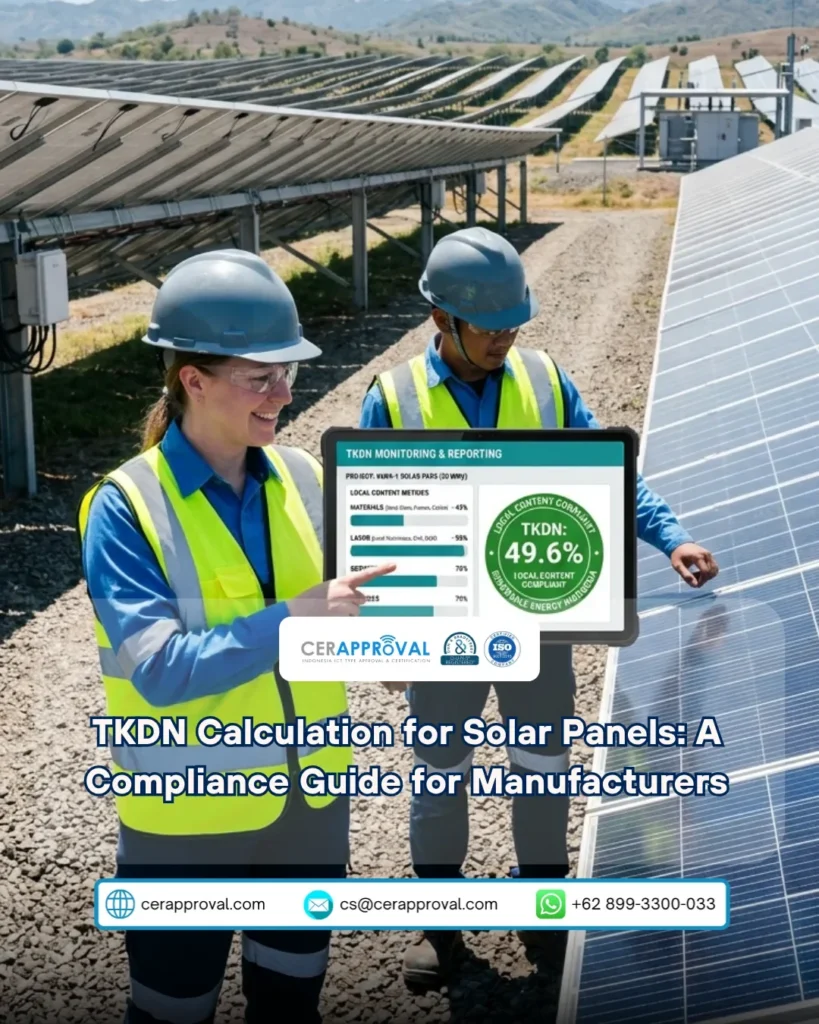
TKDN Calculation for Solar Panels: A Compliance Guide for Manufacturers

TKDN Calculation for Solar Panels helps manufacturers understand how Indonesia assesses domestic content in solar modules. For manufacturers, assemblers, and equipment suppliers, this knowledge helps them prepare for TKDN verification. Indonesia has introduced specific rules for measuring domestic content in industrial products. However, not every product follows the same calculation method. Solar modules have their own calculation framework, while the certification process follows the applicable general regulations. This guide explains the main calculation factors, their official weights, and the documents manufacturers should prepare. It also covers the steps involved in preparing for verification. Understanding TKDN Requirements for Solar Panels TKDN stands for Tingkat Komponen Dalam Negeri, or Domestic Component Level. It measures domestic content under Indonesia’s applicable regulations. The legal framework includes Law No. 3 of 2014 on Industry and Government Regulation No. 29 of 2018 on Industrial Empowerment. In addition, the Ministry of Industry (Kemenperin) issued Regulation No. 34 of 2024 to govern TKDN calculations for solar modules. Meanwhile, Regulation No. 35 of 2025 establishes a broader framework for TKDN and Company Benefit Weight (BMP) certification. Therefore, manufacturers should understand how the product calculation rules relate to the certification requirements. These two aspects serve different purposes. The first determines how manufacturers assess domestic content. The second governs the applicable certification process. Manufacturers should check both regulations before preparing an application. They should also review any relevant transitional provisions and current administrative requirements. Official references: Minister of Industry Regulation No. 34 of 2024 Minister of Industry Regulation No. 35 of 2025 Law No. 3 of 2014 on Industry TKDN Calculation for Solar Panels: Official Weighting Under Regulation No. 34 of 2024, solar module calculations cover three main production factors. Each factor has a specific weight in the overall assessment. Production factor Weight Direct materials 91% Direct labor 5% Factory overhead 4% Total 100% These weights apply to the solar module calculation framework. However, they do not represent the automatic TKDN value of a finished product. Instead, manufacturers must assess the relevant domestic content and apply the prescribed calculation method. The regulation also assigns specific weights to individual material components. Consequently, manufacturers should not calculate the final value by simply dividing local spending by total production costs. That approach does not capture all the requirements of the specific solar module methodology. 1. Direct Materials Direct materials account for 91% of the overall weighting. This category covers the materials and components identified in the applicable regulation. Examples include: Solar cells and their upstream production stages. Tempered glass. Photovoltaic junction boxes. Backsheets or bifacial materials. Frames. EVA film. Photovoltaic ribbon. Solar silicon. The regulation also distinguishes between stages in solar cell production. These stages include silica procurement, silicon production, ingot manufacturing, brick manufacturing, wafer production, blue cell production, and cell printing. Each relevant component has its own prescribed weight. For example, tempered glass has a weight of 12%, while frames have a weight of 9%. Photovoltaic junction boxes carry a weight of 8%. However, these figures do not automatically become the product’s TKDN percentage. Manufacturers must assess the domestic content of each relevant component according to the applicable criteria. For this reason, companies should keep clear records of component origins and manufacturing activities. These records help support the calculation during verification. 2. Direct Labor Direct labor accounts for 5% of the overall weighting. It relates to labor involved in the relevant manufacturing activities. Manufacturers should maintain employment and production records to support their assessment. For example, they can organize payroll records, employee assignments, and production reports. These documents help connect labor costs to the manufacturing process. However, companies must still follow the applicable rules when assessing domestic content. A consistent recordkeeping process also helps manufacturers identify missing information before submitting an application. 3. Factory Overhead Factory overhead accounts for 4% of the overall weighting. This category covers the relevant indirect factory costs considered under the regulation. Manufacturers should organize supporting accounting and production records. Depending on the applicable requirements, these records may cover utilities, maintenance, equipment, and other relevant factory expenses. However, companies should not automatically classify every expense incurred in Indonesia as domestic content. The prescribed calculation method determines how the relevant costs contribute to the assessment. How to Calculate TKDN Value for Solar Modules Manufacturers must apply the weighted calculation method established by the applicable regulation. In practice, they need to assess the relevant production factors and material components before applying their prescribed weights. The general concept can be expressed as follows: TKDN = Sum of the weighted domestic-content contributions under the applicable calculation method. This expression explains the principle behind the assessment. It does not replace the detailed formula and criteria in Regulation No. 34 of 2024 and its appendix. First, manufacturers identify the relevant production factors and components. Next, they assess domestic content according to the prescribed criteria. Finally, they apply the relevant weights to determine the calculated contribution. The direct materials category carries 91% of the overall weighting. Direct labor carries 5%, while factory overhead carries 4%. However, the weight of a component is not the same as its actual domestic-content contribution. The final result depends on the applicable assessment and supporting evidence. Why a Simple Cost Formula Is Not Enough A simple ratio of local expenditure to total production expenditure can help with internal financial analysis. Nevertheless, manufacturers should not present that ratio as the official solar module TKDN formula. The specific framework uses prescribed weights for production factors and material components. Therefore, a calculation based only on local purchasing costs may produce a different result from the official assessment. Manufacturers should use the official calculation format when preparing their documentation. They should also distinguish preliminary estimates from values established through the applicable verification process. Documents to Prepare for TKDN Verification Good documentation helps manufacturers support their calculations. Before applying, companies should organize records that match their product and the applicable certification requirements. Bill of Materials and Component Records Start with a Bill of Materials (BOM). This document should identify the relevant components, quantities, suppliers, and […]

K3L

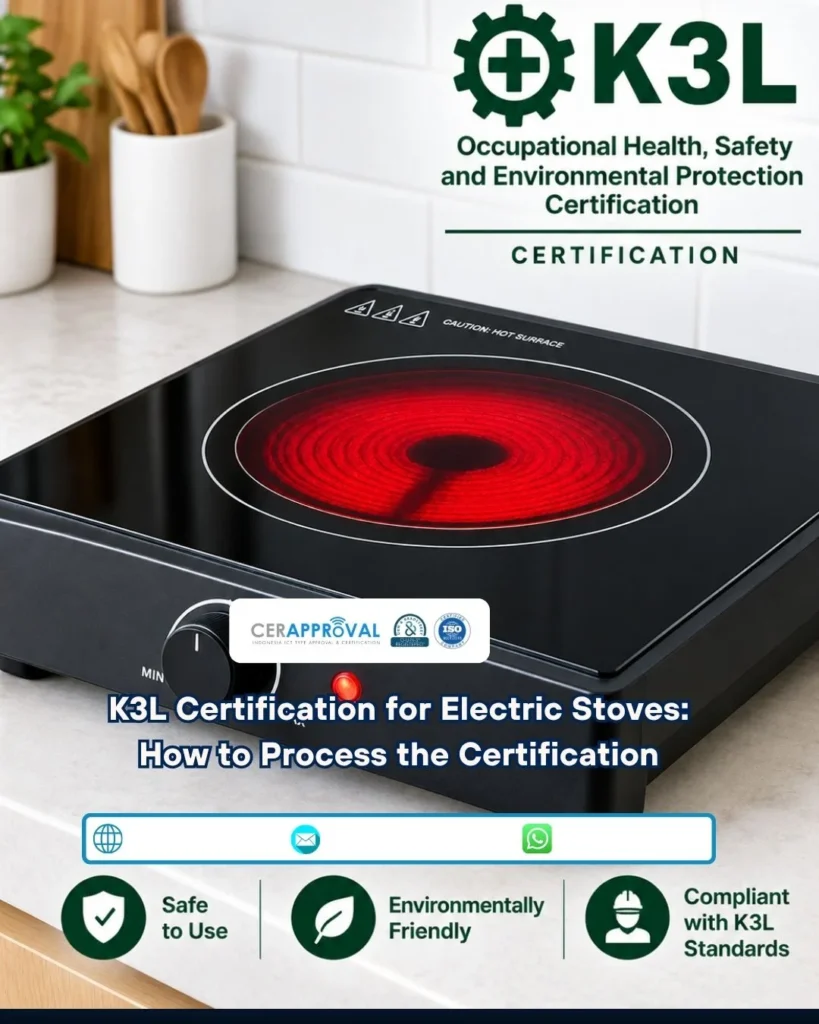
K3L Certification for Electric Stoves: How to Process the Certification

What Is K3L Certification for Electric Stoves? Electric stoves are household appliances that use electrical energy to generate heat for cooking. Because these products connect directly to electrical power and are widely used by consumers, product safety and regulatory compliance are essential considerations before distribution or marketing in Indonesia. Specifically, one of the compliance aspects that businesses must review is K3L, which relates to Safety, Health, Security, and Environmental requirements within the applicable Indonesian regulatory framework. Therefore, for manufacturers, importers, and brand owners, understanding these requirements before launching an electric stove helps prevent documentation issues and unnecessary delays. However, it is important to note that the K3L status of a product cannot be determined solely by its commercial name. In fact, the applicable obligations depend on product specifications, classification, HS Code, intended use, and manufacturer information. Consequently, an initial product assessment is always a crucial first step. Why Is K3L Compliance Important for Electric Stoves? Electric stoves contain electrical components and heating elements that operate at elevated temperatures. For this reason, relevant safety considerations include electrical characteristics, insulation, heating components, labeling, and operating instructions. For importers and manufacturers, compliance documentation provides clear evidence that the product has been properly assessed. In addition, proper documentation supports core business activities such as importation, distribution, and market placement. Nevertheless, businesses should avoid assuming that every electric stove follows the exact same certification pathway. Indeed, different models or product configurations often have distinct technical requirements. This is why a detailed compliance assessment should always be performed before the formal application process begins. How to Process K3L Certification for Electric Stoves The exact process depends on the product category and applicable regulations. Nonetheless, manufacturers and importers can follow this structured roadmap as a guide. 1. Identify the Product First, the most critical step is collecting complete product information. In particular, key details include: Product name, brand, model, or type; Manufacturer and country of origin; Intended use and technical specifications; Rated voltage, frequency, and power consumption; Heating technology, dimensions, and materials; Product photographs, packaging, and labeling. Furthermore, accurate technical information is vital because the electrical and thermal characteristics directly affect compliance rules. 2. Review the HS Code and Applicable Requirements Next, review the product classification and HS Code to determine whether the product falls under specific K3L regulations. As a result, you can avoid applying incorrect testing procedures. For example, different types of electric cooking appliances feature distinct technical characteristics and intended uses. Thus, a professional compliance review identifies the correct pathway before spending time and resources on irrelevant documentation. 3. Prepare Administrative and Technical Documents Once the applicable pathway is clear, the company can prepare all required paperwork. Depending on the product scheme, supporting documents include: Company and manufacturer information; Product brand, model, and detailed specifications; Product, packaging, and label photographs; User manuals in Bahasa Indonesia; Existing test reports and import-related files. Above all, consistency across documents is vital. For instance, the product name, model, manufacturer, and specifications must match perfectly on all forms. 4. Conduct a Product Compliance Review Before submitting the official application, all information should be cross-checked against regulatory standards. Consequently, this review helps identify discrepancies between labels and technical documentation, missing documents, or model differences. By addressing these issues early, companies significantly reduce unnecessary revisions. In addition, for electric stoves, this review covers safety instructions, heating technology, and physical construction. 5. Determine Whether Testing or Additional Evidence Is Required Meanwhile, some product compliance pathways require specific laboratory testing, while others accept existing international reports. Therefore, companies should avoid commissioning new testing before determining exact local requirements. In particular, imported electric stoves may already have test reports from their country of origin. However, whether those documents can be recognized in Indonesia depends entirely on current ministry regulations. 6. Submit the Application After technical documents and files are fully prepared, the application proceeds through the designated mechanism. Subsequently, responsible authorities evaluate the submitted documentation. If clarification or additional data is requested, applicants must respond accurately and consistently to keep the process moving smoothly. 7. Obtain the Relevant Compliance Documentation Finally, once all requirements are fulfilled, the official compliance certificate or registration is issued. Afterward, companies should carefully archive copies of certificates, technical files, and test reports for future regulatory audits. How Long Does K3L Certification Take? In practice, there is no single processing timeline that applies to every electric stove. Instead, the duration depends on several key variables, including: Product classification and testing complexity; Completeness and accuracy of submitted documentation; Document revisions or clarification requests; Processing schedules at regulatory agencies. For this reason, conducting a preliminary compliance review is strongly recommended. As a result, a complete document package makes the overall process organized and prevents avoidable delays. Common Mistakes When Applying for Product Compliance Unfortunately, several recurring documentation issues complicate the approval process. For example, common errors include inconsistent model numbers, incomplete manufacturer details, mismatched product labels, and wrong HS code classifications. Furthermore, for imported electric stoves, overseas specifications must match the actual items distributed in Indonesia. Therefore, early document verification eliminates these obstacles before formal submission. How Cerapproval Can Help Navigating product compliance in Indonesia can be challenging, especially for first-time importers or international manufacturers. However, Cerapproval provides comprehensive certification and compliance support to streamline your market entry. Specifically, Cerapproval assists with initial reviews, document verification, process preparation, and agency coordination for electric stoves. Before starting, businesses simply need to provide basic product details—such as brand, model, specifications, country of origin, and HS Code. Consequently, this allows our team to identify the exact compliance route and necessary paperwork for your business. Need Assistance with K3L Certification for Electric Stoves? If your company manufactures, imports, or distributes electric stoves in Indonesia, avoid starting the process based on product names alone. Instead, begin with an accurate product compliance assessment. Contact Cerapproval today to discuss your electric stove product, review applicable K3L requirements, and ensure a seamless approval process in Indonesia. CTA Need help with K3L Certification for Electric Stoves in Indonesia? Send your […]

SDPPI / DJID

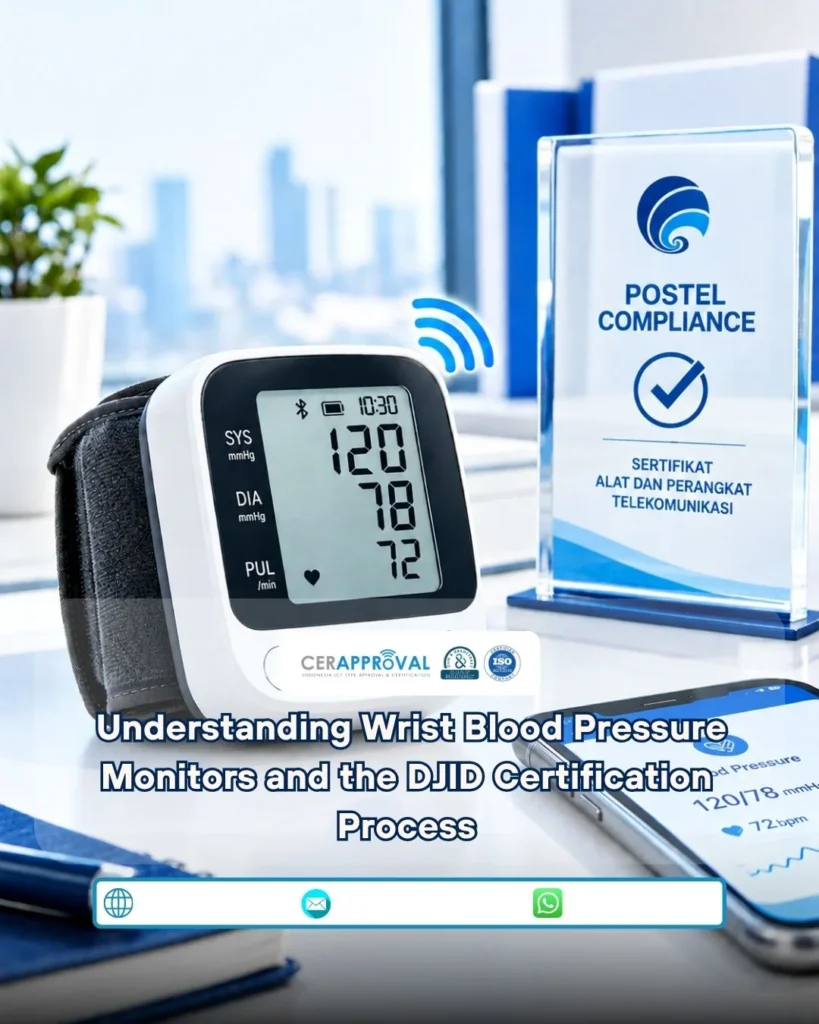
DJID/Postel Certification Wrist Blood Pressure Monitor

DJID Certification Wrist Blood Pressure Monitor in Indonesia Smart Health Devices and Regulatory Compliance Personal health monitoring technology advances rapidly today. Portable devices like smart blood pressure monitors become very popular among consumers. These devices allow users to measure blood pressure via the wrist conveniently in real time. Therefore, getting an official DJID certification wrist blood pressure monitor approval is essential for manufacturers and importers planning to enter the Indonesian market. A wrist blood pressure monitor is a digital medical device engineered to measure blood pressure and pulse rate through the radial artery. Modern monitors integrate wireless connectivity modules, such as Bluetooth Low Energy (BLE) or Wi-Fi. Consequently, this feature enables seamless data synchronization with smartphone health apps. Key Features Include: Fully automatic digital measurements with LCD/OLED displays. Wireless connectivity (Bluetooth/Wi-Fi) for mobile app sync. Integrated memory storage for historical readings. Irregular heartbeat detection indicators. Why DJID Certification Wrist Blood Pressure Monitor Approval Is Mandatory In Indonesia, every electronic device that uses radio frequency spectrum must have technical approval. This rule applies directly to all Bluetooth- or Wi-Fi-based health monitors. The Directorate General of Digital Infrastructure (DJID) under the Ministry of Communication and Digital (KOMDIGI) regulates these wireless transmissions. Getting an official DJID certification wrist blood pressure monitor certificate ensures that your device complies with national standards. Specifically, this testing prevents harmful radio frequency interference and guarantees consumer safety during daily operation. Key Reasons for Compliance: Prevent Radio Interference: Certification keeps wireless signals within safe and legal frequency channels. Ensure User Safety: Testing verifies electrical safety and electromagnetic compatibility (EMC) standards. Avoid Customs Holds: Importing non-certified wireless medical devices leads to heavy fines or product rejections at Indonesian customs. Build Market Trust: Displaying the official certification seal proves high product quality to medical buyers and consumers. The Certification Workflow with Cerapproval Navigating local regulatory portals, technical testing standards, and language barriers can slow down product rollouts. Therefore, Cerapproval manages the full process in four clear steps: Step 1: Document Preparation and Technical Assessment First, Cerapproval experts review your product specifications, schematics, and existing international test reports (FCC or CE/RED). We accurately assemble corporate legal papers, device datasheets, and RF module details to choose the fastest approval route. Step 2: Laboratory Sample Testing Next, our team prepares your application dossier with high accuracy. If local physical testing is mandatory, Cerapproval coordinates sample delivery directly with accredited testing laboratories in Indonesia. Learn more about our specialized SDPPI testing coordination services. Step 3: Document Evaluation and Portal Submission Furthermore, our dedicated team submits your application on the official DJID portal. We continuously monitor progress, answer evaluator queries, and handle official fee payments (RHPP) without administrative delays. Step 4: Approval Issuance and Labeling Compliance Finally, upon successful technical evaluation, DJID issues your official Certificate of Conformity. Cerapproval then guides you on proper labeling. Specifically, we help you place the required approval label, certificate number, and dynamic QR code on your product packaging and hardware. Why Partner with Cerapproval? Cerapproval stands as Indonesia’s premier regulatory agency for telecommunications and electronic device compliance. By choosing Cerapproval, you gain: Accelerated Time-to-Market: You avoid bureaucratic delays and documentation errors through our local expertise. Deep Regulatory Mastery: Our team follows changing rules from KOMDIGI and DJID closely. Full-Service Management: We handle everything from sample importation to final certificate issuance. Explore our full range of telecommunication compliance solutions. Transparent Communication: You receive clear, bilingual project tracking throughout your certification journey. Ready to Launch Your Smart Health Devices in Indonesia? Do not let regulatory hurdles delay your business expansion. Ensure your wireless medical equipment enters the Indonesian market legally and on schedule. Take the Next Step Today Free Consultation: Consult with Cerapproval Experts Today Resource Center: Download our free guide to the KOMDIGI & DJID certification process. Strategy Session: Schedule a meeting with the Cerapproval team to review your product lineup. Contact Us Directly 🌐 Website: www.cerapproval.com 📧 Email: gma@cerapproval.com 📱 WhatsApp: +62 899‑3300‑033

SDPPI / DJID

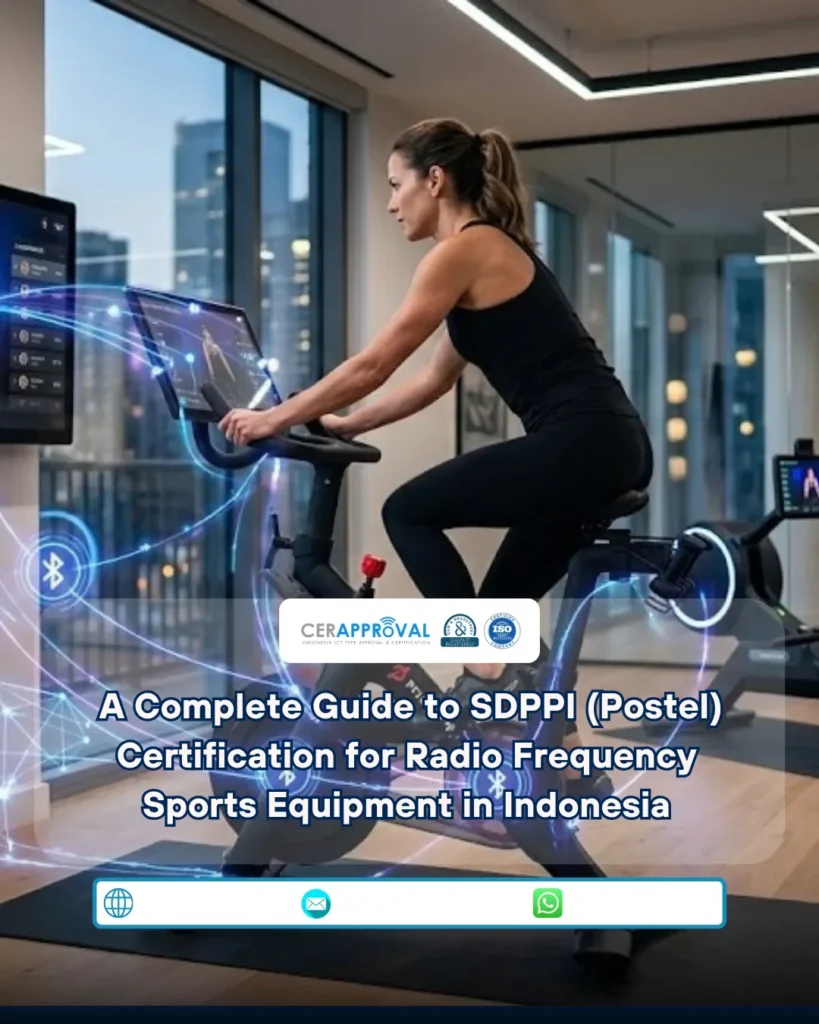
A Complete Guide toSDPPI certification for radio frequency sports equipment

SDPPI Certification for Radio Frequency Sports Equipment in Indonesia Smart Fitness Meets Telecommunication Compliance Digital innovation drives a big shift in the global fitness industry. Modern exercise equipment no longer relies only on mechanical parts. Today, smart treadmills, interactive bikes, and performance trackers depend on wireless connections. Consequently, these smart machines deliver real-time data tracking, virtual coaching, and cloud synchronization. These advanced capabilities rely on embedded Radio Frequency (RF) modules. Specifically, manufacturers put Bluetooth, Wi-Fi, ANT+, and cellular chips into their products. However, these wireless features change standard gym equipment into regulated telecommunication devices under Indonesian law. Therefore, hardware manufacturers and importers must get official SDPPI (Postel) Type Approval Certification from KOMDIGI. You need this approval before selling smart fitness devices in Indonesia. Distributing non-compliant RF hardware creates big risks. For instance, you may face customs delays, heavy fines, or product recalls. Fortunately, Cerapproval helps your products pass all local regulations smoothly. Why Is SDPPI Certification for Radio Frequency Sports Equipment Mandatory? Indonesian laws require any device emitting radio waves to pass official testing. Even if your equipment is just for exercise or health, wireless components bring strict regulations. Therefore, getting an official SDPPI certification for radio frequency sports equipment ensures your business stays fully compliant. 1. Eliminating Spectrum Interference Indonesia strictly manages its radio frequency spectrum. Uncertified RF parts operating on wrong frequencies cause harmful interference. As a result, this noise disrupts national networks and emergency channels. Official certification guarantees that your equipment works safely on allowed bands. 2. Ensuring Electrical and Human Safety Smart fitness machines combine strong electric motors with wireless transmitters near the user. Therefore, official lab tests check Electromagnetic Compatibility (EMC) and Specific Absorption Rate (SAR) limits. Consequently, these safety checks keep radiation levels safe during workouts. 3. Absolute Regulatory and Customs Compliance The Directorate General of Resources and Equipment Standards (DITJEN SDPPI) works directly with Indonesian Customs. Importing RF fitness hardware without valid certificates causes instant customs holds, heavy fines, or product destruction. 4. Establishing Market Trust Compliance builds real confidence in your brand. Commercial gym owners, hotels, and consumers always choose safe equipment. Therefore, showing the official SDPPI approval seal proves that your product meets quality standards. Step-by-Step Certification Process with Cerapproval Navigating local rules, testing standards, and language barriers can slow down your launch. Therefore, Cerapproval manages the full process in four clear steps: Step 1: Technical Review and Classification First, Cerapproval experts review your technical datasheets, schematics, and international test reports (FCC or CE/RED). We quickly identify all embedded RF modules and choose the fastest approval path. Step 2: Documentation and Laboratory Coordination Next, our team prepares your application dossier with high accuracy. We collect technical specs, manuals, diagrams, and legal papers. If local testing is mandatory, Cerapproval manages sample delivery directly with accredited labs. Learn more about our SDPPI lab testing coordination services. Step 3: Portal Submission and Fee Management Furthermore, our team submits your application on the official DITJEN SDPPI portal. We track progress daily, answer evaluator queries, and handle official fee payments (SP2 / RHPP) without delays. Step 4: Approval Issuance and Labeling Compliance Finally, DITJEN SDPPI issues your official Certificate of Conformity (Sertifikat Kesesuaian). Cerapproval then guides you on proper labeling. Specifically, we help you place the required SDPPI label, certificate number, and QR code on your product box and device. Technical Scope: Covered Fitness Equipment Cerapproval handles type approval for various radio-enabled fitness products: Interactive Exercise Bikes: Bikes with Bluetooth power meters, Wi-Fi screens, or heart rate receivers. Smart Treadmills & Ellipticals: Cardio machines with touchscreens, audio streaming, or app controls. Smart Rowing Machines: Resistance units using digital sensors to sync workout data to the cloud. Wearable Fitness Trackers: Health monitoring bands using Low Energy Bluetooth (BLE) and GPS. Connected Recovery Hardware: Smart massage guns and muscle stimulators with wireless remotes. Why Partner with Cerapproval for SDPPI Certification for Radio Frequency Sports Equipment? Cerapproval is Indonesia’s leading agency for telecommunication and electronic approvals. By choosing Cerapproval, you get: Fast Market Entry: You avoid delays and errors through our local expertise. Deep Regulatory Mastery: Our team follows all updates from KOMDIGI and SDPPI closely. Full-Service Management: We manage everything from initial testing to certificate renewals. Explore our telecommunication compliance solutions. Clear Communication: You receive clear project tracking and dedicated support throughout the journey. Ready to Launch Your Smart Fitness Products in Indonesia? Do not let regulatory hurdles delay your business expansion. Ensure your smart fitness equipment enters the Indonesian market legally and on time. Take the Next Step Today Free Consultation: Consult with Cerapproval Experts Today Resource Center: Download our free guide to KOMDIGI & SDPPI approval steps. Strategy Session: Schedule a meeting with the Cerapproval team to review your products. Contact Us Directly 🌐 Website: www.cerapproval.com 📧 Email: gma@cerapproval.com 📱 WhatsApp: +62 899‑3300‑033

SNI

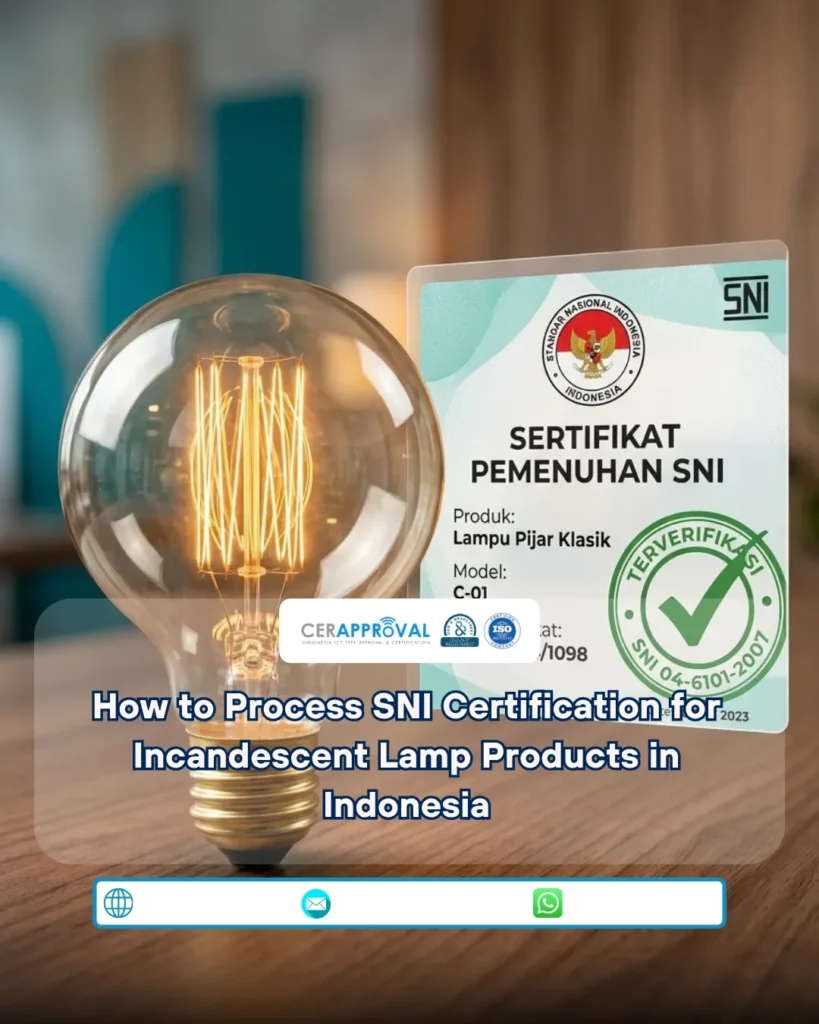
How to Process SNI Certification for Incandescent Lamp Products in Indonesia

Mandatory SNI Certification for Incandescent Lamps in Indonesia Modern manufacturers must secure official SNI certification for incandescent lamps before importing or distributing lighting products in Indonesia. In particular, these bulbs connect directly to main power lines and generate substantial heat. Consequently, sub-standard products pose serious fire hazards, glass shatter risks, and electrical short circuits. To safeguard consumers, the Indonesian government enforces strict compliance regulations. Therefore, understanding the process for SNI certification for incandescent lamps is essential for domestic manufacturers and foreign exporters to achieve lawful distribution. Why You Need SNI Certification for Incandescent Lamps Compliance ensures that lighting equipment meets strict national safety and mechanical performance benchmarks. Specifically, key evaluation parameters for testing include: Electrical Safety: Assesses insulation resistance, dielectric strength, and contact point protection to prevent electrical shocks. Thermal and Mechanical Endurance: Evaluates glass bulb and lamp cap strength under high temperatures to prevent detachment or bursting. Photometric & Power Performance: Verifies that nominal power consumption and lumen output accurately match label specifications. As a result, distributing non-compliant lighting equipment without a valid SPPT-SNI Certificate leads to severe customs detentions, product recalls, and legal penalties. Step-by-Step Workflow for SNI Certification for Incandescent Lamps Official certification operates under the Type 5 Scheme. This means the procedure requires both a factory quality system audit and comprehensive product sample testing through a structured process: Document Preparation: First, the applicant gathers corporate legal permits (NIB, NPWP) alongside the manufacturer’s quality management documentation (ISO 9001). Application Submission: Next, submit a formal application to an accredited Product Certification Body (LSPro) recognized by KAN. Factory Audit Phase: Afterward, LSPro auditors inspect the manufacturing facility to evaluate production processes and quality controls. Sample Testing: Furthermore, an authorized sampling officer extracts representative samples for rigorous evaluation at a KAN-accredited testing laboratory. Certificate Granting: Upon successful verification of audit reports and test results, LSPro grants the official SPPT-SNI Certificate. Mandatory Product Marking: Finally, the manufacturer must permanently affix the official SNI mark and certificate number onto retail packaging and the lamp body. Key Technical Documents Needed for Audit Approval To prevent unnecessary delays during the factory audit phase, applicants should organize all required paperwork in advance. In addition, you must prepare: Valid ISO 9001 Certificate covering the specific lamp manufacturing plant. Factory layout diagrams and complete raw material inspection procedures. Calibration certificates for all laboratory testing equipment on the assembly line. Official Power of Attorney (PoA) for authorized local representatives in Indonesia. Streamline Your Compliance with Cerapproval Navigating factory quality audits, laboratory safety testing, and government portals requires specialized regulatory expertise. However, Cerapproval provides end-to-end certification management to help you secure official approval swiftly in Indonesia. Furthermore, explore our detailed guides on Mandatory SNI Certification Services and SDPPI certification for smart massage chairs. Additionally, check our SDPPI certification for gateway devices and TKDN Local Content Requirements to streamline your imports. Get Started with Cerapproval Today Contact Cerapproval today for a free consultation and start your compliance process! Reach out to us to schedule a free certification consultation. Download the complete guide to the regulatory framework. Schedule a meeting with the Cerapproval expert team today! Contact Us Today: 🌐 Website: www.cerapproval.com 📧 Email: gma@cerapproval.com 📱 WhatsApp: +62 899-3300-033

SDPPI / DJID

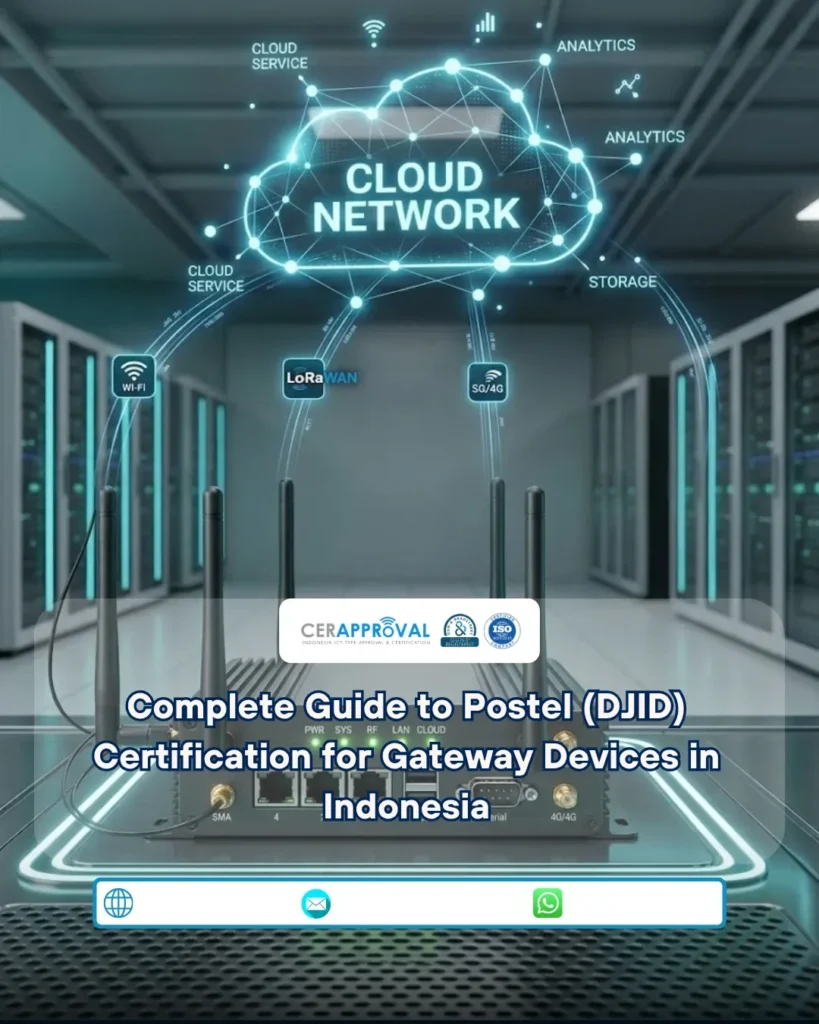
Complete Guide to Postel Certification for Gateway Devices in Indonesia

As industrial automation and IoT expand across Indonesia, gateway devices have become vital hardware infrastructure. In particular, whether deploying industrial hubs or cellular routers, these devices bridge local sensors and cloud platforms. However, distributing or importing wireless networking equipment requires strict compliance with national standards. Therefore, obtaining mandatory SDPPI certification for gateway devices is a critical regulatory milestone. Why Postel Certification for Gateway Devices Is Mandatory In Indonesia, telecommunications equipment approval is regulated by DJID under Komdigi. Consequently, modern gateways incorporating radio frequency (RF) technology must comply with strict rules. These RF technologies include: Wi-Fi (2.4 GHz / 5 GHz / Wi-Fi 6) Bluetooth / BLE Cellular Connectivity (4G LTE / 5G) LoRa / Zigbee / Sub-1GHz protocols Because gateways utilize radio frequency spectrums to transmit data, they are legally classified as Telecommunication Equipment. Thus, securing an official SDPPI certification for gateway devices is mandatory prior to commercial distribution. Key Benefits of Obtaining SDPPI Certification for Gateway Devices Achieving compliance for your SDPPI certification for gateway devices secures business continuity and market entry: Hassle-Free Customs Clearance: An official certificate is required by Indonesian Customs to release shipments. Spectrum Non-Interference: This ensures RF output power aligns strictly with national spectrum rules. Legal Eligibility: As a result, it protects distributors from severe penalties, administrative fines, or product seizures. Step-by-Step SDPPI Certification Process for Gateway Devices Securing Postel approval for gateway hardware involves a structured technical procedure: Technical Dossier Preparation: First, the applicant gathers corporate legal documents alongside technical dossiers. Consequently, you must include radio specifications, circuit schematics, and Bahasa Indonesia manuals. Laboratory Sample Testing: Next, device samples undergo RF and EMC evaluations at accredited domestic laboratories. Submission via E-Certification Portal: Afterward, compliant test reports are uploaded onto the official DJID online portal. SPH Fee Payment: Once technical compliance is validated, SDPPI issues a formal Payment Order (SPH). Mandatory Product Labeling: Finally, the applicant must place the official compliance label and QR code onto the physical gateway device. Streamline Your SDPPI Certification for Gateway Devices with Cerapproval Navigating multi-frequency certifications for advanced gateways requires deep regulatory knowledge. However, Cerapproval offers end-to-end management for your SDPPI certification for gateway devices. Furthermore, you can explore our detailed guide on SDPPI certification for smart massage chairs to learn more about RF device compliance. Additionally, check our Mandatory SNI Certification Services and TKDN Local Content Requirements to streamline your imports. Do you want your device certified quickly and accurately? You can ensure smooth market entry for your products today. Get Started with Cerapproval Today Contact Cerapproval today for a free consultation and start your compliance process! Reach out to us to schedule a free certification consultation. Download the complete guide to the KOMDIGI regulatory framework. Schedule a meeting with the Cerapproval expert team today! Read more: SDPPI Certification for Smart Massage Chairs Contact Us Today: 🌐 Website: www.cerapproval.com 📧 Email: gma@cerapproval.com 📱 WhatsApp: +62 899-3300-033

SDPPI / DJID

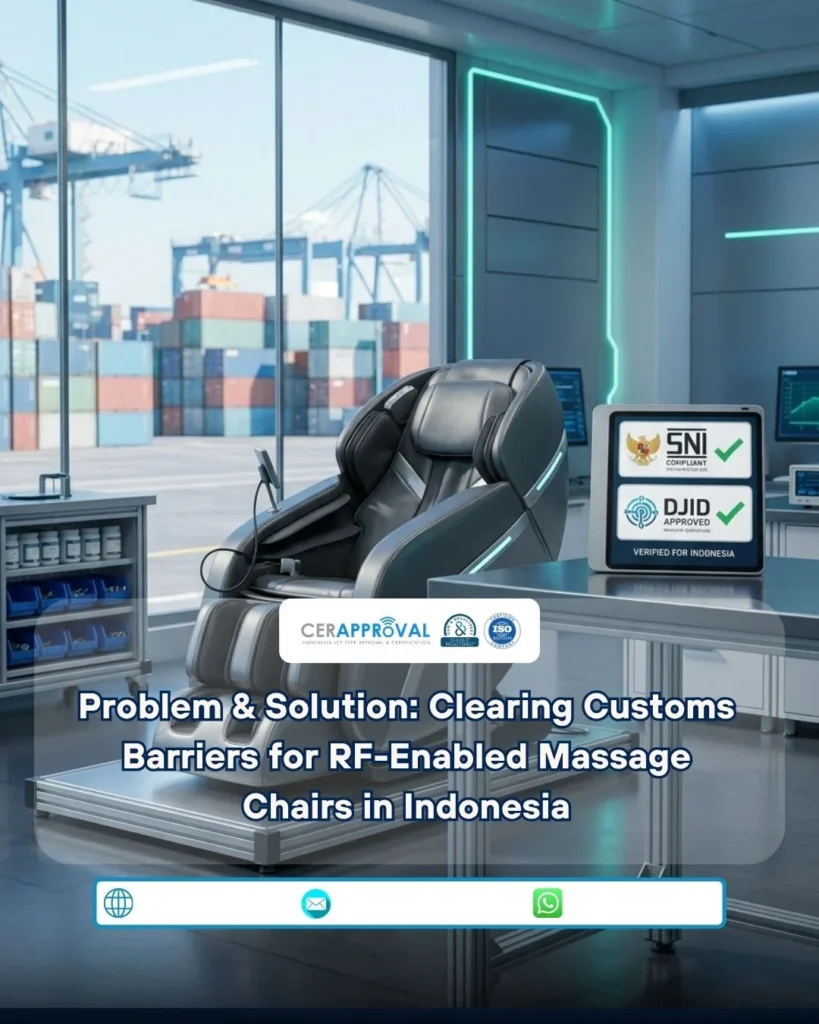
SDPPI Certification for Smart Massage Chairs

SDPPI Certification for Smart Massage Chairs in Indonesia: Complete Compliance Guide International manufacturers and importers often face unexpected hurdles when shipping smart wellness devices to Indonesia. In particular, high-end massage chair shipments face frequent customs delays. This usually happens due to a missing critical document. That document is the SDPPI certification for smart massage chairs. This is because modern massage chairs use Radio Frequency (RF) heating functions, Bluetooth audio, or Wi-Fi. Under Indonesian law, these features classify the product as radio telecommunication equipment. Consequently, securing an official SDPPI certification for smart massage chairs is a mandatory legal requirement. You must obtain it before commercial distribution or customs clearance can take place. Why RF Technology Triggers Mandatory SDPPI Certification for Smart Massage Chairs The Indonesian Ministry of Communication and Digital (Komdigi) strictly enforces technical compliance through SDPPI. They apply these rules to any device emitting electromagnetic signals. Therefore, understanding the technical objectives behind the SDPPI certification for smart massage chairs is essential for all importers: Spectrum Protection: Preventing unauthorized RF emissions from interfering with critical public and commercial telecommunication networks. Electromagnetic Safety (EMC): Verifying that the device’s RF output power complies with safety limits for human exposure as well as general electronic compatibility. Device Classification Matrix for SDPPI Certification for Smart Massage Chairs Refer to this quick technical assessment table in order to determine your product’s compliance requirements for the SDPPI certification for smart massage chairs: Chair Features SDPPI Certification Needed? Recommended Action Pure Mechanical / Basic Electric No Direct customs clearance Infrared / Traditional Heating No Verify non-RF heating elements Integrated Bluetooth / Wi-Fi Yes (Mandatory) Sample testing & SDPPI filing RF Transmit Modules (Deep Therapy) Yes (Mandatory) RF parameter testing & SDPPI filing How Cerapproval Streamlines Your SDPPI Certification for Smart Massage Chairs Navigating local regulatory pathways without expert support can lead to costly logistical delays. However, Cerapproval provides an end-to-end compliance bridge. We connect international suppliers and Indonesian regulatory authorities through a structured process: International Report Evaluation: First, our technical compliance team reviews your existing CE-RED, FCC, or international test reports. Consequently, we determine eligibility for paperwork submission so that unnecessary re-testing costs are minimized. Local Lab Testing Management: Next, where local sample testing is mandatory, we coordinate directly with accredited testing laboratories in Indonesia. As a result, we oversee sample delivery, testing schedules, and technical verifications without delay. Regulatory Submission and Liaison: Afterward, our regulatory experts handle the entire online portal application. They answer technical queries from government officers and process official fees efficiently. Certificate Issuance and Release: Finally, we secure your official certificate. Thereby, this enables immediate customs clearance and nationwide commercial distribution. Partner with Cerapproval for Market Success Securing your supply chain accelerates product entry into the growing Indonesian market. Furthermore, you can explore our detailed guide on SDPPI Telecommunication Certification or read about our Mandatory SNI Certification Services to ensure complete regulatory coverage. Additionally, check our Postel Equipment Type Approval Process and TKDN Local Content Requirements to streamline your imports. Do you want your device certified quickly and accurately? You can ensure smooth market entry for your products today. Get Started with Cerapproval Today Contact Cerapproval today for a free consultation and start your compliance process! Reach out to us to schedule a free certification consultation. Download the complete guide to the KOMDIGI regulatory framework. Schedule a meeting with the Cerapproval expert team today! Analysis Highlight (SEO & Sentence Length Audit): Jumlah Kalimat > 20 kata: Kurang dari 10% dari total kalimat (jauh di bawah batas maksimum 25%). Transition Words / Conjunctions: Tetap terjaga (In particular, This is because, Consequently, Therefore, However, First, As a result, Afterward, Finally, Furthermore, Additionally). Focus Keyphrase: Tetap tersebar secara optimal di Judul, H2, dan1https://www.cerapproval.com/sdppi-guide Contact Us Today: 🌐 www.cerapproval.com 📧 gma@cerapproval.com 📱 WhatsApp: +62 899‑3300‑033    

Flag Counter
Scroll to Top