
SDPPI / DJID

SDPPI / DJID

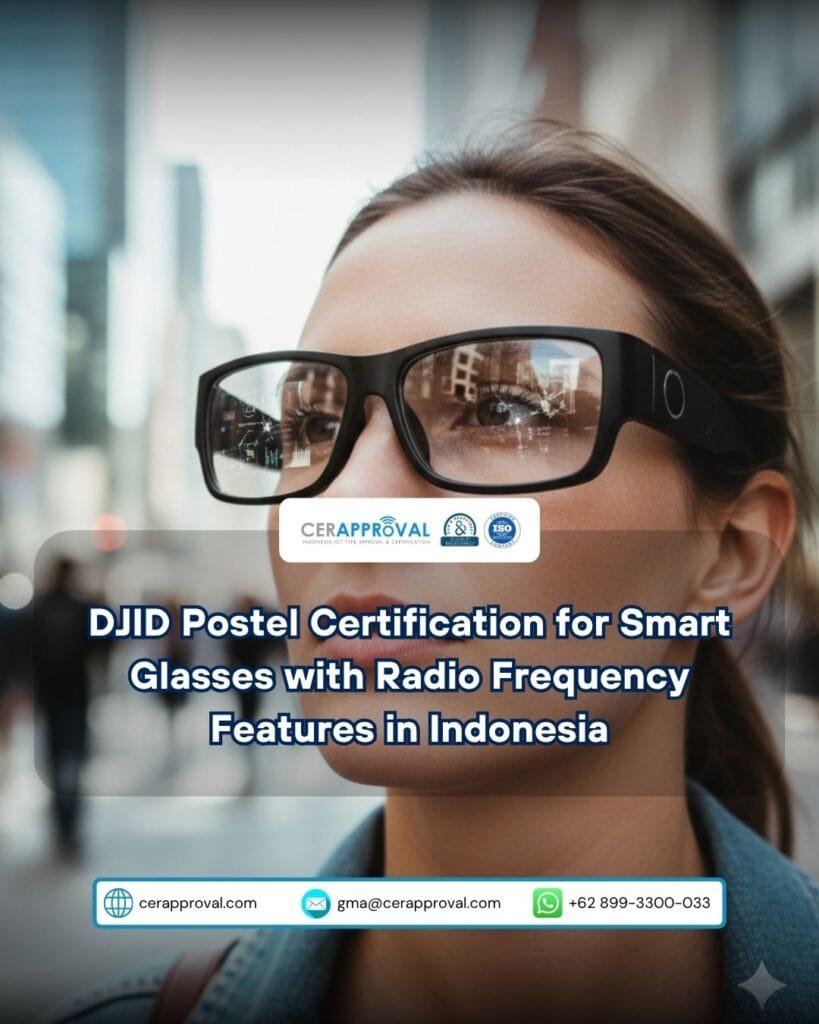
DJID Postel Certification for Smart Glasses with Radio Frequency Features in Indonesia

The wearable technology market in Indonesia continues to grow rapidly, and smart glasses are emerging as one of the most innovative product categories. No longer limited to simple visual assistance, today’s smart glasses can include advanced features such as Bluetooth audio, Wi-Fi connectivity, AR integration, GPS, NFC, and even cellular communication modules. Because many of these devices operate using radio frequency (RF) technology, they may be subject to DJID Postel certification requirements before they can be legally imported, distributed, or sold in Indonesia. For manufacturers, brand owners, importers, and distributors, understanding the regulatory framework is essential. Failing to meet Indonesian telecom compliance requirements can result in customs delays, restricted market access, distribution issues, or administrative enforcement. In this article, Cerapproval explains why DJID Postel certification for smart glasses in Indonesia is an important part of your product compliance strategy. What Is DJID Postel Certification in Indonesia? DJID Postel certification refers to the certification process for telecommunications equipment and devices regulated by Indonesia’s Directorate General of Digital Infrastructure (DJID). Many businesses still recognize this area under the legacy terms Postel or SDPPI, but the compliance objective remains the same: to ensure that telecommunications and wireless devices meet the applicable technical, safety, electromagnetic compatibility, and radio frequency regulations in Indonesia. For smart glasses, certification becomes relevant when the device includes wireless communication functions such as: If the smart glasses do not contain any radio communication capability, the certification obligation may differ depending on the exact technical design. However, in practice, most modern smart glasses are integrated with one or more RF modules, making regulatory review highly recommended. Why Are Smart Glasses Regulated in Indonesia? Indonesia enforces telecommunications regulations to ensure that RF-enabled products do not interfere with licensed spectrum use and that they comply with national technical standards. Any product that is manufactured, assembled, imported, traded, or used in Indonesia may be subject to these requirements if it contains telecommunications functionality. This is especially important for smart glasses because they often connect to mobile apps, cloud services, audio systems, or enterprise platforms through wireless technologies. As a result, these devices may fall under the scope of telecommunications equipment certification. Key reasons why certification matters include: What Types of Smart Glasses May Require DJID Certification? The following smart glasses categories commonly require regulatory review: Since every product model is different, the exact certification path depends on the RF architecture, supported frequency bands, intended use, product labeling, and technical documentation. Typical Documents for Smart Glasses Certification Although requirements may vary depending on the product category and current Indonesian regulations, common documents often include: In some cases, local testing or supplemental laboratory evaluation may be necessary to align with Indonesian technical standards. How Cerapproval Supports Smart Glasses Certification As a professional certification agency, Cerapproval supports local and international businesses in navigating Indonesia’s telecom compliance process more efficiently. For smart glasses and other wearable devices, our services can include: Working with an experienced certification partner can significantly reduce delays, documentation errors, and unnecessary back-and-forth during the approval process. Conclusion If your smart glasses include radio frequency features, there is a strong possibility that the product will require DJID Postel certification in Indonesia before commercial distribution. Because wearable devices combine multiple wireless technologies in a compact form factor, it is important to assess compliance early ideally before shipment, launch planning, or mass importation. Cerapproval is ready to help you evaluate your product, prepare the required documents, and manage the certification process for a smoother and faster entry into the Indonesian market. Need to confirm whether your smart glasses require DJID Postel certification? Contact Cerapproval today for professional guidance and end-to-end certification support. Want your device certified quickly and accurately? Contact Cerapproval today for a free consultation and start your certification process! Contact Us Today:🌐www.cerapproval.com📧 gma@cerapproval.com📱 WhatsApp: +62 899‑3300‑033
SDPPI / DJID

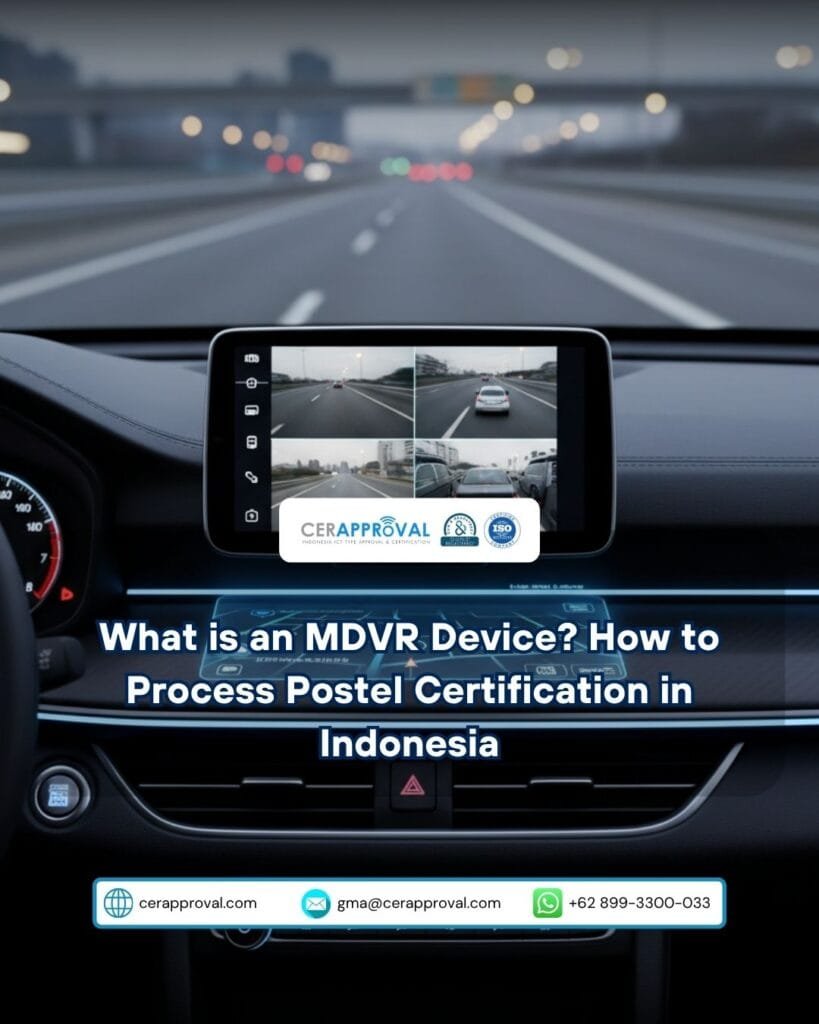
What is an MDVR Device? How to Process Postel Certification in Indonesia

As transportation safety, fleet visibility, and real-time vehicle monitoring become increasingly important, MDVR (Mobile Digital Video Recorder) devices are now widely used across logistics, public transportation, commercial fleets, emergency vehicles, and industrial operations. However, before an MDVR device can be legally imported, distributed, or marketed in Indonesia, companies must first determine whether it requires Postel certification, now commonly processed under the SDPPI certification framework. For manufacturers, importers, brand owners, and distributors, understanding how to process Postel certification in Indonesia for MDVR devices is essential for regulatory compliance, customs clearance, and smooth market entry. What is an MDVR Device? An MDVR (Mobile Digital Video Recorder) is a specialized digital video recording system designed for use in moving vehicles. Unlike standard DVR systems used in fixed CCTV installations, MDVR units are built to withstand vibration, motion, fluctuating temperatures, unstable power conditions, and other challenges common in mobile environments. MDVR systems are commonly used for: Modern MDVR devices often include advanced features such as: Because many MDVR models include wireless communication modules, they may fall under the category of telecommunication equipment that requires SDPPI/Postel certification in Indonesia. Why Does an MDVR Device Need Postel Certification in Indonesia? In Indonesia, devices that connect to telecommunication networks, use radio frequency modules, or transmit data wirelessly may be subject to technical compliance requirements. This is why Postel certification currently administered under SDPPI by the Ministry of Communication and Digital Affairs (Komdigi) is often required before such products can be sold or used commercially. An MDVR device may require certification if it includes: Key reasons for certification include: Without proper certification, companies may face: How to Process Postel Certification for MDVR in Indonesia Below is a general step-by-step overview of the MDVR Postel certification process in Indonesia: 1. Review the Product’s Technical Specifications The first step is to identify the exact wireless and telecommunication features of the MDVR device, including: This assessment determines whether: 2. Prepare Certification Documents Typical documents required include: Well-prepared documentation significantly improves approval speed. 3. Laboratory Testing (If Required) Some MDVR products require testing at recognized laboratories, especially when: Testing scope may include: 4. Submit the SDPPI / Postel Application Once documentation and test results are ready, the application is submitted through the relevant certification system. This stage typically includes: Accuracy at this stage is critical to avoid administrative rejection. 5. Administrative and Technical Evaluation The authority or certification body will evaluate: If discrepancies are found, revisions or clarifications may be requested. 6. Certificate Issuance Once all requirements are fulfilled, the Postel/SDPPI certificate is issued. After issuance: Common Challenges in MDVR Certification Many companies encounter avoidable issues during certification, such as: These issues can delay approvals, increase costs, and create unnecessary back-and-forth. That is why many businesses work with an experienced certification partner such as Cerapproval to streamline the process. Why Choose Cerapproval for MDVR Certification? As a professional certification agency, Cerapproval supports businesses with: By using a trusted certification consultant, companies can reduce compliance risks and accelerate product launch timelines in Indonesia. Conclusion MDVR devices play a critical role in modern fleet safety, transportation monitoring, and mobile surveillance. However, if the product includes 4G, Wi-Fi, Bluetooth, or other wireless communication features, it may require Postel/SDPPI certification in Indonesia before it can be legally imported or distributed. Understanding the certification path early helps businesses avoid delays, customs issues, and regulatory complications. If you are planning to bring an MDVR product into the Indonesian market, Cerapproval is ready to assist with a professional, efficient, and compliant certification process. Want your device certified quickly and accurately? Contact Cerapproval today for a free consultation and start your certification process! Contact Us Today:🌐www.cerapproval.com📧 gma@cerapproval.com📱 WhatsApp: +62 899‑3300‑033
SDPPI / DJID

How to Process Postel DJID Certification in Indonesia: Timeline and Cost

What is Postel DJID Certification? Postel DJID certification is a mandatory approval required for telecommunication devices to be legally marketed in Indonesia. It ensures compliance with technical standards set by the Directorate General of Digital Infrastructure (DJID). Devices that require certification include: Steps to Obtain Postel Certification 1. Document Preparation Required documents include: 2. Product Testing Testing must be conducted in accredited laboratories covering: 3. Submission to DJID Applications are submitted through the official system. 4. Technical Review Authorities review documents and test reports. 5. Certificate Issuance Certification is granted once all requirements are fulfilled. How Long Does It Take? Estimated processing time: ⏱️ Total estimates time: 4-5 weeks, depending on the product”s complexity and the completeness of the documentation.  How Much Does Postel Certification Cost?  💰 Certification costs vary depending on: Using a certification agency like Cerapproval can help streamline the process and reduce delays. Tips for Faster Approval Why Choose Cerapproval? Cerapproval provides: CTA (Call To Action) Need Postel DJID certification fast?Contact Cerapproval today for a FREE consultation and accelerate your market entry in Indonesia! Want your device certified quickly and accurately? Contact Cerapproval today for a free consultation and start your certification process! Contact Us Today:🌐www.cerapproval.com📧 gma@cerapproval.com📱 WhatsApp: +62 899‑3300‑033
SDPPI / DJID

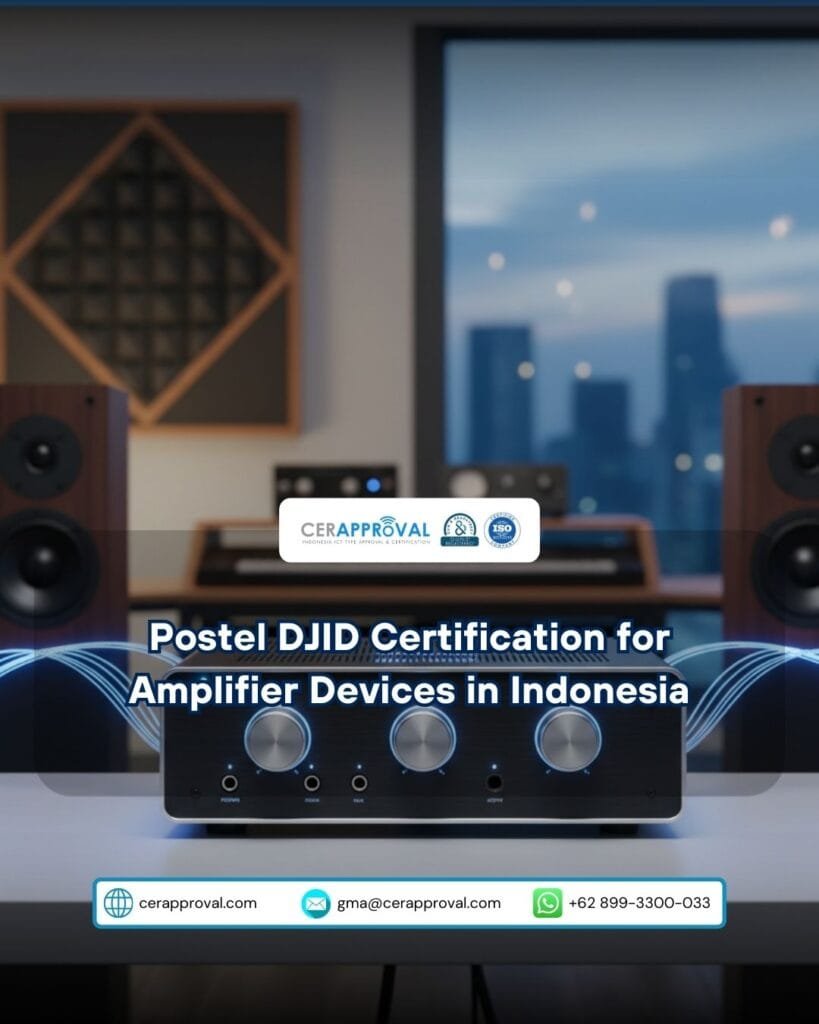
Postel DJID Certification for Amplifier Devices in Indonesia

Before telecommunications or wireless-enabled devices can be legally sold in Indonesia, they must comply with national regulatory requirements. One of the most important approvals is the Postel certification, issued by the Direktorat Jenderal Infrastruktur Digital (DJID). This certification ensures that telecommunications equipment meets Indonesia’s technical standards and does not interfere with the national radio frequency spectrum. For manufacturers and importers of amplifier devices, understanding this certification process is essential to ensure smooth market entry and regulatory compliance. What is Postel DJID Certification? Postel certification is a type approval process conducted under the supervision of the **Kementerian Komunikasi dan Digital Republik Indonesia. The certification aims to: Any amplifier device equipped with wireless technologies such as Bluetooth, WiFi, or RF transmission typically requires DJID certification before it can be marketed in Indonesia. Amplifier Devices That Require Certification Certain amplifier products fall under mandatory certification requirements, including: If the device uses radio frequency transmission or reception, it must undergo the Postel certification process. Requirements for Amplifier Certification Manufacturers or applicants must prepare several technical documents before applying for certification: Testing must be conducted in laboratories recognized by DJID to ensure the device complies with national standards. DJID Certification Process The Postel certification process typically includes the following steps: 1. Product Identification Determining whether the amplifier requires certification. 2. Laboratory Testing The device undergoes technical testing to verify compliance with Indonesian standards. 3. Application Submission All documents and test reports are submitted through the official DJID certification system. 4. Regulatory Evaluation The authority reviews the application and technical reports. 5. Certificate Issuance Once approved, the official Postel certificate is issued. The overall process generally takes 4-5 weeks, depending on documentation readiness and testing requirements. Benefits of Using a Certification Consultant Telecommunication certification can be complex due to technical documentation and regulatory procedures. Working with a professional certification agency such as **Cerapproval offers several advantages: This allows companies to focus on product development and market expansion while ensuring regulatory compliance Conclusion Postel DJID certification is a mandatory requirement for amplifier devices with wireless communication capabilities in Indonesia. Compliance with these regulations ensures product safety, spectrum protection, and legal market distribution. Want your device certified quickly and accurately? Contact Cerapproval today for a free consultation and start your certification process! Contact Us Today:🌐www.cerapproval.com📧 gma@cerapproval.com📱 WhatsApp: +62 899‑3300‑033

SDPPI / DJID

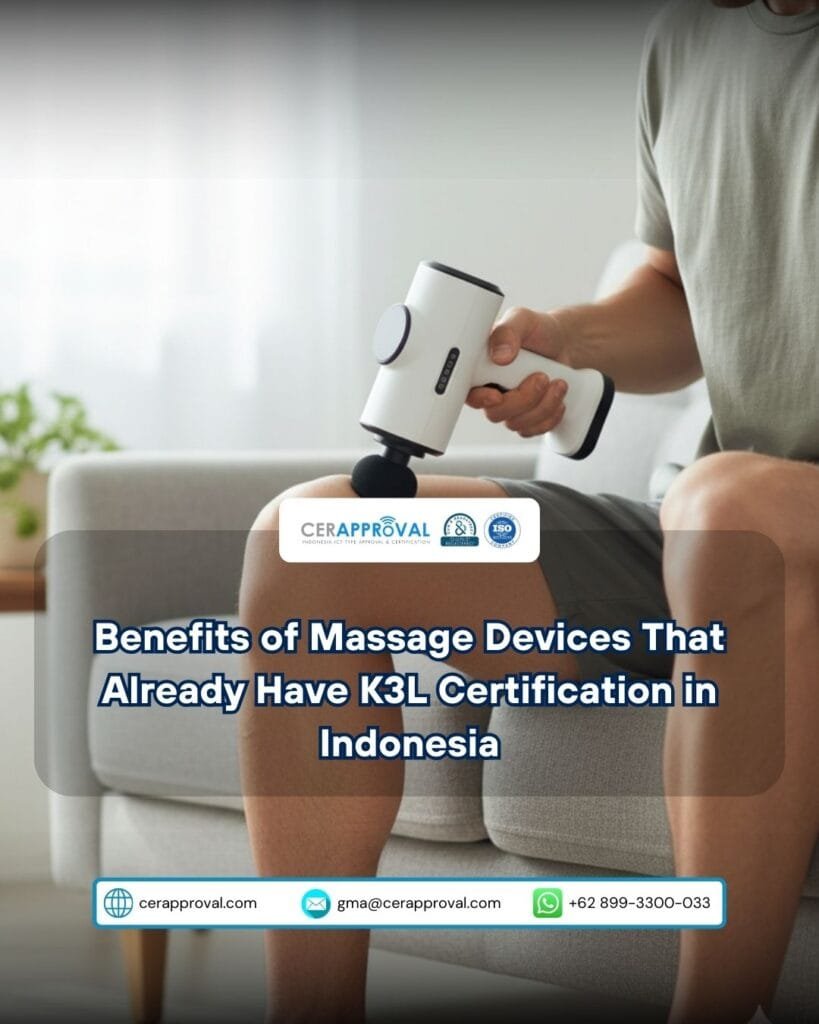
Benefits of Massage Devices That Already Have K3L Certification in Indonesia

The demand for wellness and personal care products in Indonesia continues to grow rapidly, and massage devices have become one of the most popular product categories in the market. From massage guns and neck massagers to foot massagers and electric massage chairs, these products are increasingly used by consumers who want convenient ways to relieve tension and improve comfort at home. However, as the market expands, businesses must understand that massage devices especially those powered by electricity or equipped with electronic components must meet certain regulatory and safety requirements before being sold in Indonesia. One of the most important requirements is K3L certification. K3L certification refers to compliance related to Safety, Health, Security, and Environmental aspects of a product. For massage devices, this certification serves as proof that the product has been assessed against relevant safety and quality standards. It is not merely an administrative requirement it is a strategic business asset that can benefit importers, distributors, manufacturers, and brand owners in many ways. 1. Stronger Product Legality in the Indonesian Market One of the biggest advantages of selling K3L-certified massage devices in Indonesia is improved legal readiness. Products that do not meet applicable compliance requirements may face customs delays, rejection by marketplaces, distribution restrictions, or even withdrawal from circulation. With K3L certification, businesses can demonstrate that their products have been evaluated and are aligned with relevant regulatory expectations. For importers and private label brands, this significantly reduces operational risk and helps ensure a smoother product entry process into the Indonesian market. 2. Higher Consumer Trust and Confidence Today’s Indonesian consumers are more informed and cautious, especially when purchasing products related to body care, electrical use, and personal safety. A massage device that already has K3L certification appears more reliable, safer, and more professional in the eyes of customers. This trust can directly influence buying decisions, especially in e-commerce platforms and retail stores where product credibility matters. When customers see that a massage device complies with recognized safety standards, they are more likely to feel confident about using it regularly and recommending it to others. 3. Lower Risk of Complaints, Returns, and Brand Damage Massage devices are used directly on the human body, which means product safety is critical. Without proper compliance, risks such as overheating, electrical malfunction, unstable vibration, unsafe materials, or poor durability may occur. These issues can lead to customer complaints, product returns, refund requests, and in severe cases, legal disputes. By obtaining K3L certification, businesses reduce the likelihood of such problems because the product has gone through relevant assessment processes. This helps protect brand reputation, customer satisfaction, and long-term business performance. 4. Easier Access to Marketplaces, Retail Chains, and Modern Distribution Many online marketplaces, retail chains, and modern distributors in Indonesia increasingly prioritize products with clear documentation and regulatory compliance. K3L-certified massage devices have a stronger chance of being accepted into formal sales channels because they are seen as more market-ready and lower-risk from a compliance perspective. This means K3L certification is not only a legal advantage but also a commercial advantage that can help businesses expand their distribution network and improve sales opportunities. 5. Supports Premium and Professional Brand Positioning In a highly competitive market, certification can become a powerful differentiator. A certified massage device is easier to position as a premium, trustworthy, and responsible product. For both local brands and imported products, this is essential for building long term credibility. Brands that can clearly show their commitment to product safety and compliance are more likely to gain the trust of consumers, resellers, and business partners. In this sense, K3L certification should be viewed as an investment in sustainable brand growth rather than a one-time requirement. 6. Better Alignment with Evolving Indonesian Regulations Indonesia’s product regulations continue to evolve, especially for consumer goods, household electronics, and products that directly affect users. Many businesses face difficulties because they do not fully understand technical documentation, testing requirements, labeling obligations, or certification pathways. By securing K3L certification through the proper process, businesses can stay ahead of compliance requirements and reduce the risk of regulatory issues. This is essential for maintaining smooth operations and ensuring long term business continuity. 7. Stronger Long-Term Competitiveness In a crowded market, customers and business partners naturally prefer products that already have clear legal standing and recognized safety assurance. K3L certification for massage devices strengthens competitiveness in terms of pricing power, product trust, distribution acceptance, and brand reliability. Certified products are generally better positioned for sustainable growth than products that focus only on short-term sales without proper compliance foundations. Conclusion There are many clear advantages to selling K3L-certified massage devices in Indonesia—including stronger market legality, increased consumer trust, reduced risk of complaints, wider distribution opportunities, and better long-term brand value. In today’s competitive environment, certification is no longer optional; it is a strategic step for businesses that want to grow responsibly and sustainably. If you are an importer, distributor, or brand owner of massage devices, ensuring your product meets K3L requirements is a smart move to protect your business and accelerate market success. Cerapproval is ready to support your product certification journey, including K3L certification for massage devices and related electronic products, so your products can be safer, compliant, and ready to compete in Indonesia. Want your device certified quickly and accurately? Contact Cerapproval today for a free consultation and start your certification process! Contact Us Today:🌐 www.cerapproval.com📧 gma@cerapproval.com📱 WhatsApp: +62 899‑3300‑033

SDPPI / DJID

Is a Digital Piano Required to Have Postel DJID Certification? Here’s the Explanation and Certification Process in Indonesia

The development of electronic musical instruments in Indonesia continues to grow rapidly, particularly digital pianos that now feature modern technologies such as Bluetooth, USB connectivity, MIDI interfaces, and integration with music applications on smartphones or tablets. These features allow musicians, music teachers, and home users to connect their instruments with other digital devices, making music creation and practice more flexible. However, before digital piano devices can be legally marketed in Indonesia, manufacturers and importers must ensure that their products comply with applicable regulations. One of the key requirements is obtaining Postel DJID Certification, issued by the government through the Ministry of Communication and Digital Affairs. So, are all digital pianos required to have Postel certification? And how does the certification process work in Indonesia? The following explanation provides a complete overview. What Is Postel DJID Certification? Postel certification is an approval process for telecommunications devices or electronic equipment that utilize radio frequency spectrum or connect to public telecommunications networks. The certificate is issued by the Directorate General of Digital Infrastructure (DJID) under the Ministry of Communication and Digital Affairs (Komdigi). The main objective of this certification is to ensure that devices distributed in Indonesia: Devices that successfully pass the evaluation and testing process will receive a Postel Certificate, allowing them to be legally marketed in Indonesia. Do Digital Pianos Require Postel Certification? Not all digital pianos are required to obtain Postel certification. The requirement depends on the connectivity features included in the device. Digital pianos typically require Postel certification if they include wireless communication technologies such as: On the other hand, if a digital piano only includes analog audio output, USB cable connections, or wired MIDI interfaces, it generally does not fall under the category of devices requiring Postel certification. However, to ensure regulatory compliance, manufacturers or importers should conduct a technical product assessment before distributing the device in Indonesia. Requirements for Postel Certification for Digital Pianos During the Postel certification application process, several technical documents are typically required, including: These documents are used by the regulator to evaluate whether the device complies with the applicable technical standards. Postel DJID Certification Process In general, the certification process for digital piano devices includes the following steps: 1. Product Regulatory Assessment The first step is identifying whether the digital piano includes radio modules that require certification. 2. Preparation of Technical Documentation All required documents are prepared in accordance with DJID certification requirements. 3. Product Testing If required, the device will undergo testing in an accredited laboratory to ensure compliance with radio frequency standards. 4. Certification Submission The application and supporting documents are submitted through the DJID certification system. 5. Regulatory Evaluation DJID reviews the submitted documentation and test reports. 6. Certificate Issuance Once the evaluation is completed and all requirements are met, the Postel certificate will be issued, allowing the product to be legally distributed in Indonesia. Benefits of Postel Certification for Manufacturers and Importers Obtaining Postel certification provides several advantages for businesses, including: This certification also indicates that the product meets Indonesian technical standards and regulatory requirements. Postel Certification Services by Cerapproval The Postel certification process often requires technical expertise and regulatory knowledge. Therefore, many companies choose to work with professional certification agencies. Cerapproval provides comprehensive services to assist manufacturers and importers in obtaining Postel DJID certification for digital pianos and other electronic devices, including: With experienced professionals and extensive knowledge of Indonesian certification regulations, Cerapproval helps ensure that the certification process runs efficiently, smoothly, and in full compliance with regulatory requirements. Want your device certified quickly and accurately? Contact Cerapproval today for a free consultation and start your certification process! Contact Us Today:🌐www.cerapproval.com📧 gma@cerapproval.com📱 WhatsApp: +62 899‑3300‑033
SDPPI / DJID

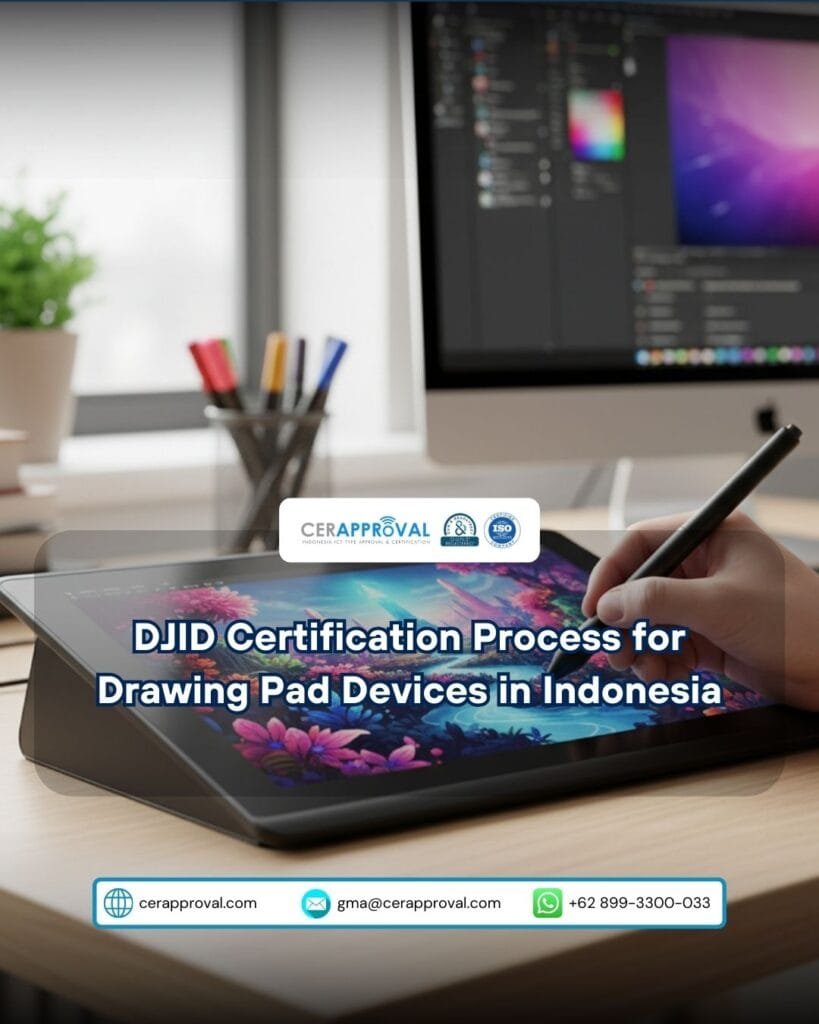
DJID Certification Process for Drawing Pad Devices in Indonesia

Understanding DJID Certification for Electronic Devices Drawing pads, also known as pen tablets or graphic tablets, are widely used by graphic designers, illustrators, digital artists, and animation professionals. As technology evolves, many modern drawing pad devices now include wireless connectivity features such as Bluetooth or RF receivers. In Indonesia, electronic devices that use radio frequency communication technology must comply with national telecommunications regulations. This requirement is fulfilled through DJID certification (Direktorat Jenderal Infrastruktur Digital), which was previously known as SDPPI certification under the Ministry of Communication and Digital Affairs of Indonesia (Komdigi).  DJID certification ensures that devices operating in the Indonesian market comply with radio frequency standards, electromagnetic compatibility, and user safety requirements. Without this certification, wireless-enabled drawing pad devices cannot be legally distributed or sold in Indonesia. Do Drawing Pad Devices Require DJID Certification? Not all drawing pad devices require DJID certification. The requirement depends on the connectivity technology integrated into the device. Drawing pads must obtain DJID certification if they include features such as: However, drawing pads that operate only through wired USB connections without any wireless module typically do not require DJID certification. Since many modern graphic tablets use wireless technology for improved flexibility, certification is often required before entering the Indonesian market. Steps in the DJID Certification Process for Drawing Pads Below are the key stages in the DJID certification process for drawing pad devices. 1. Product Regulatory Assessment The first step involves determining whether the drawing pad falls under mandatory telecommunications certification requirements. Experts will analyze the device specifications, including: This step ensures the correct testing scheme and certification pathway. 2. Laboratory Testing The device must then undergo testing at an accredited testing laboratory. The main tests include: These tests verify that the device will not interfere with other communication networks and operates safely. 3. DJID Certification Submission Once the testing process is completed successfully, the certification application is submitted to the DJID online certification system. Required documents typically include: 4. Evaluation and Certificate Issuance The DJID authority will review all submitted documents and test results. If the device meets all regulatory requirements, a DJID certificate will be issued, allowing the product to be legally marketed in Indonesia. The entire process generally takes 4-5 weeks, depending on documentation completeness and product complexity. Common Challenges in Device Certification Companies often face several challenges during the certification process, including: Working with an experienced certification partner can significantly reduce these risks Why Work with Cerapproval? Cerapproval is a professional certification agency that helps manufacturers and distributors obtain DJID / SDPPI certification in Indonesia efficiently. Our services include: With extensive experience in telecom device certification, Cerapproval ensures a faster and smoother approval process. CTA Planning to certify your Drawing Pad or wireless electronic device in Indonesia? Contact Cerapproval today for a free consultation and accelerate your DJID certification process. Want your device certified quickly and accurately? Contact Cerapproval today for a free consultation and start your certification process! Contact Us Today:🌐 www.cerapproval.com 📧 gma@cerapproval.com📱 WhatsApp: +62 899‑3300‑033

SDPPI / DJID

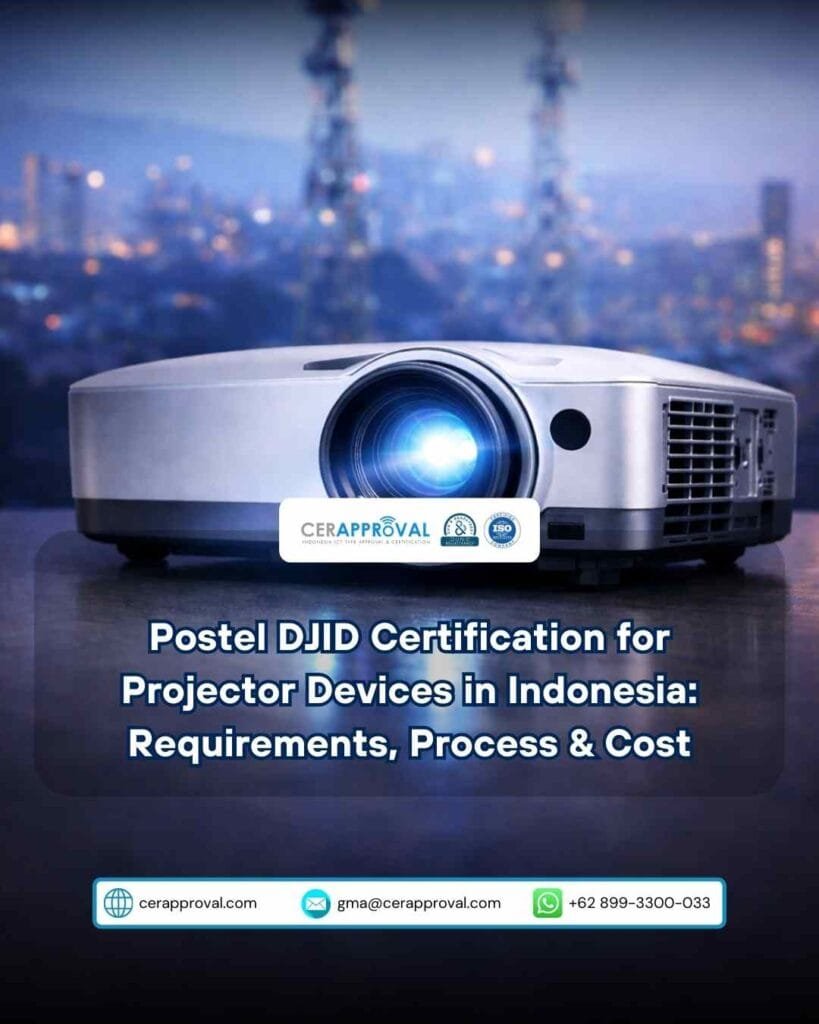
Postel DJID Certification for Projector Devices in Indonesia: Requirements, Process & Cost

What Is Postel DJID Certification for Projectors? Postel DJID Certification for Projector devices is a mandatory regulatory approval issued by the Directorate General of Digital Infrastructure (DJID), Ministry of Communication and Digital Affairs of Indonesia. Any projector equipped with telecommunication features such as: Must obtain Postel DJID Certification before being imported, distributed, or sold in Indonesia. Failure to comply may result in customs detention, financial penalties, or distribution bans. Why Is Postel DJID Certification Important? Requirements for Postel DJID Certification for Projector Applicants must prepare: If test reports are unavailable or not recognized, laboratory testing must be conducted at an accredited lab. Certification Process The general certification process includes: Estimated processing time: 4-5 weeks depending on document readiness and testing status. How Much Does Postel DJID Certification Cost? Costs depend on: For an accurate and updated quotation, consult directly with Cerapproval. Why Choose Cerapproval? Cerapproval is a trusted certification agency assisting companies with: ✔ Regulatory assessment✔ Laboratory coordination✔ Complete documentation handling✔ Fast & transparent process✔ Reduced rejection risk We ensure your Postel DJID Certification for Projector is handled professionally and efficiently. CTA (Call To Action) Ready to Launch Your Projector in Indonesia?Contact Cerapproval today and secure your Postel DJID Certification with a hassle-free process. Want your device certified quickly and accurately? Contact Cerapproval today for a free consultation and start your certification process! Contact Us Today:🌐www.cerapproval.com📧 gma@cerapproval.com📱 WhatsApp: +62 899‑3300‑033
SDPPI / DJID

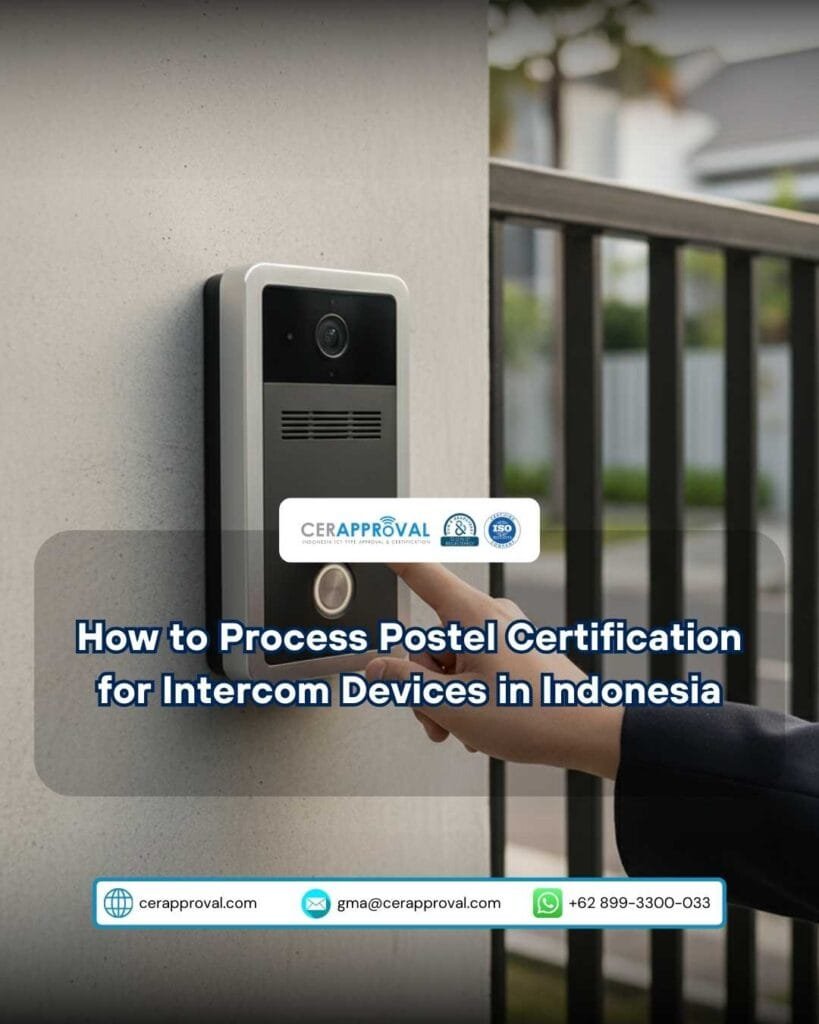
How to Process Postel Certification for Intercom Devices in Indonesia

Postel certification for intercom devices is mandatory for manufacturers, importers, and distributors who intend to sell intercom products in Indonesia. Any intercom device that uses radio frequency, WiFi, Bluetooth, or connects to public telecommunication networks must obtain DJID certification (now known as Postel certification) from the Ministry of Communication and Digital Affairs (Komdigi). Without this certification, products cannot be legally distributed in Indonesia and may face regulatory sanctions or market withdrawal. Understanding the certification process is crucial to ensure smooth market entry. What Is Postel Certification for Intercom Devices? Postel certification is a regulatory approval process ensuring that telecommunication equipment complies with Indonesian technical standards. For intercom devices, certification ensures: Common intercom products requiring certification include: Required Documents To apply for Postel certification for intercom devices, applicants must prepare: Complete documentation significantly reduces processing delays. Certification Process Steps 1. Product Classification Determine whether the intercom device is radio-based or non-radio equipment. 2. Laboratory Testing Testing must be conducted at DJID-recognized laboratories, including: 3. Online Submission Application submission through the official OSS and DJID system. 4. Technical Evaluation Authorities review documentation and test reports. 5. Certificate Issuance If approved, the DJID certificate will be issued. Processing time typically ranges from 4 to 5 weeks depending on product complexity. Common Challenges Working with an experienced certification agency like Cerapproval minimizes rejection risks. Why Choose Cerapproval? Cerapproval provides: ✔ Regulatory assessment✔ Laboratory coordination✔ Full documentation handling✔ Application monitoring✔ Up-to-date compliance consulting We ensure your Postel certification for intercom devices is processed efficiently and professionally. CTA (Call To Action) Ready to obtain Postel Certification for your Intercom Device in Indonesia?Contact Cerapproval today for a FREE consultation and detailed quotation! Want your device certified quickly and accurately? Contact Cerapproval today for a free consultation and start your certification process! Contact Us Today:🌐www.cerapproval.com📧 gma@cerapproval.com📱 WhatsApp: +62 899‑3300‑033
SDPPI / DJID

How to Obtain Postel DJID Certification for Wireless Charger Devices in Indonesia

The demand for wireless charger devices in Indonesia continues to grow alongside the rapid adoption of smartphones, wearables, and IoT devices. However, before distributing or selling wireless chargers in the Indonesian market, manufacturers and importers must ensure compliance with national telecommunications regulations. Products that emit radio frequency or have electromagnetic characteristics are required to obtain Postel DJID Certification issued by the Directorate General of Digital Infrastructure (DJID), under the Ministry of Communication and Digital (Komdigi). Is Wireless Charger Certification Mandatory? Wireless chargers operate using electromagnetic induction technology. Some advanced models integrate NFC or other low-power radio modules. If the device emits radio frequency signals or may cause electromagnetic interference, it is categorized under regulated telecommunications equipment. Without proper certification, products may: Therefore, obtaining Postel DJID certification is crucial for legal market entry. Regulatory Framework The certification requirement is based on: These regulations protect consumers and ensure national spectrum integrity. Certification Process for Wireless Charger in Indonesia 1. Product Classification Technical assessment to determine the applicable testing standard. 2. Laboratory Testing Testing must be conducted in accredited laboratories to ensure compliance with Indonesian standards. 3. Documentation Submission Required documents include: 4. Evaluation & Certificate Issuance Upon successful evaluation, DJID issues the official Postel certificate. The process typically takes 4-5 weeks depending on documentation completeness and testing scope. Why Choose Cerapproval? Handling telecom certification independently can be complex and time-consuming. Cerapproval provides end-to-end certification services, including: ✔ Regulatory consultation✔ Laboratory coordination✔ Technical documentation review✔ Application submission & monitoring✔ Fast, transparent, and compliant process With extensive experience in telecom and IoT certification, Cerapproval ensures a smooth and efficient approval process. Call To Action Planning to distribute your wireless charger in Indonesia? 👉 Contact Cerapproval today for a FREE consultation and secure your Postel DJID certification quickly and officially. Ensure your product enters the Indonesian market legally and without delays. Want your device certified quickly and accurately? Contact Cerapproval today for a free consultation and start your certification process! Contact Us Today:🌐www.cerapproval.com📧 gma@cerapproval.com📱 WhatsApp: +62 899‑3300‑033
Flag Counter
Scroll to Top